About the Book
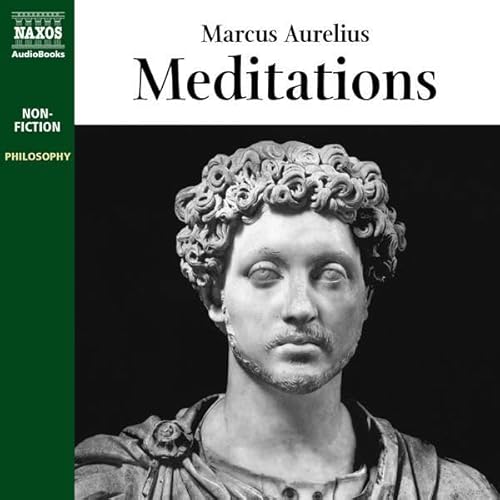
Meditations is a collection of personal writings by the Roman Emperor Marcus Aurelius, composed in the second century AD. It was never intended for publication, these are private notes Aurelius wrote to himself, working through the principles of Stoic philosophy as a daily discipline. The result is a text that reads more like a personal journal than a formal treatise.
The book is organized into twelve books, each containing numbered passages of varying length. Some entries are a single sentence; others extend into longer arguments. Recurring themes include the impermanence of life, the importance of reason over emotion, duty to others, and the practice of accepting what you cannot control. Because the entries are self-contained, there is no continuous narrative, it is a book you dip in and out of rather than one that builds toward a conclusion.
Meditations has remained in print for centuries and is widely read today by people with no prior background in philosophy. It is frequently cited in discussions of Stoicism alongside Epictetus and Seneca. If you are new to the tradition, this is one of the more accessible entry points, though some translations vary considerably in readability.
Narration & Audio Performance
Duncan Steen delivers a measured, clear reading that suits the contemplative nature of the text. His tone is calm and unhurried, which works well for material that benefits from slow absorption rather than dramatic performance. Philosophy of this kind does not reward theatrical narration, and Steen avoids that trap.
Because Meditations consists of short, self-contained entries rather than flowing prose, the narrator's job is largely to maintain a consistent rhythm across material that constantly shifts in subject and length. Steen handles this competently, there are no jarring transitions or changes in register that distract from the content. Character voice differentiation is not relevant here, as this is a single-author, single-voice text throughout.
Production quality from Strelbytskyy Multimedia Publishing is serviceable. This publisher handles a large volume of public domain audio releases, and the production tends to be clean but unremarkable. If you want to gauge whether Steen's delivery style works for you, the Audible sample is worth checking before committing a credit.
The Audible Verdict
Meditations is a genuinely useful book, but the audio format is a mixed fit. The short, aphoristic structure means you can lose your place easily while listening, and the lack of a linear narrative makes it harder to track where you are in the text. Steen's narration is competent and unobtrusive. This is a reasonable use of a free trial credit, particularly if you want ambient exposure to the ideas rather than deep study, but readers who want to annotate, re-read, or cross-reference passages will likely prefer a print copy.
Listen on AudibleIs This Book a Good Fit for Audio?
Meditations presents a specific challenge for the audio format. The text is structured as hundreds of short, numbered entries across twelve books. In print, readers naturally pause between entries, return to specific passages, and mark sections for later. In audio, that structure largely disappears, entries flow into one another without clear breaks, and there is no easy way to jump back to a passage that resonated.
That said, some listeners find this format works in their favor. Played at a moderate pace during a commute or walk, the short entries arrive in a kind of meditative stream that mirrors the way the book was likely written, as daily reflection rather than structured reading. If your goal is regular exposure to Stoic ideas rather than scholarly engagement, audio can serve that purpose.
If you plan to study the text seriously, highlight passages, or compare it with other translations, the print version will serve you better. Several well-regarded translations are widely available, including Gregory Hays's modern translation published by Modern Library, which is frequently recommended for readability.
Popular Listener Questions
Is this a complete, unabridged version?
Abridgement status is not confirmed in the metadata for this edition. Check the Audible product page, it will list whether the version is unabridged before purchase.
Is this the best translation of Meditations?
Translation is not specified for this audio edition, and it matters more for this book than most. Older public domain translations can feel archaic and harder to follow. If translation quality is important to you, confirm which version is used before purchasing, or consider the Gregory Hays translation, widely regarded as the most readable modern version.
Do I need any background in philosophy to follow this?
No prior knowledge is required. Meditations is written in plain, direct language and does not assume familiarity with philosophical terminology. It is one of the more accessible Stoic texts for general readers.
Can this be listened to in any order, or does it need to be heard start to finish?
The entries are largely self-contained and do not build on one another, so the order matters less here than in most books. Many readers open it at random and read a few entries at a time.
Is this part of a series?
No. Meditations is a standalone work. It is often read alongside other Stoic texts by Epictetus and Seneca, but it stands entirely on its own.
Similar Audiobooks
Letters from a Stoic
Seneca's letters cover similar Stoic themes, mortality, reason, and daily conduct, and share Meditations' short-form, reflective structure. A natural companion listen.
Discourses and Selected Writings
Epictetus, alongside Marcus Aurelius, is one of the central figures of Stoicism. His Discourses cover much of the same intellectual ground and are frequently read together with Meditations.
How to Think Like a Roman Emperor
Donald Robertson's book uses the life of Marcus Aurelius as a framework for applying Stoic principles today. A useful companion if you want historical context alongside the primary text.
Ryan Holiday draws heavily on Marcus Aurelius and Stoicism throughout. Listeners who come to Meditations through modern self-development often encounter Holiday's work first, or vice versa.
On the Shortness of Life
Another short Stoic text, this one by Seneca, that deals directly with time, mortality, and how to spend attention wisely. Similar in length and format to individual books within Meditations.
Audiobook Details
| Title | Meditations |
|---|---|
| Author | Marcus Aurelius |
| Narrator | Duncan Steen |
| Genre | Stoic Philosophy |
| Year | 2020 |
| Publisher | Strelbytskyy Multimedia Publishing |
| Abridged | Unabridged |
| Cast | Single narrator |
| Author-narrated | No |
Ready to listen?
Meditations is available on Audible and works reasonably well as background listening for those new to Stoic philosophy. If you have a free trial credit available, this is a low-risk way to spend it.
Open on Audible