About the Book
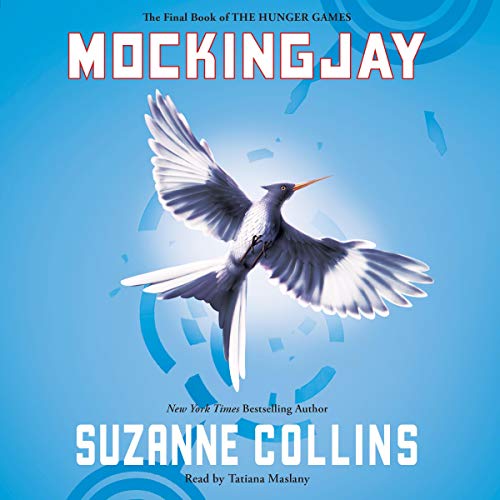
Mockingjay is the third and final book in Suzanne Collins's Hunger Games trilogy. After surviving two trips into the arena, Katniss Everdeen finds herself at the center of a full-scale rebellion against the Capitol, not as a fighter she chose to be, but as a symbol that others have decided she should play. The book shifts away from the survival-competition structure of the first two installments and into something closer to wartime political drama.
The Capitol is retaliating. District 12 has been destroyed. Katniss is in District 13, which has its own leadership and its own agenda. The story follows her as she's asked, and pressured, to become the Mockingjay, the face of the rebellion, while dealing with the aftermath of trauma and the manipulation of everyone around her, including those on her own side. Peeta is in Capitol hands, and his situation becomes one of the book's central anxieties.
This is a darker and more psychologically focused book than its predecessors. Collins pulls back on action set pieces and spends more time on propaganda, moral compromise, and the human cost of war. Readers who came for the arena sequences will find a different kind of story here, one that doesn't offer easy resolution and doesn't particularly try to.
Narration & Audio Performance
Tatiana Maslany, known for playing multiple distinct characters in the television series Orphan Black, is a logical fit for Katniss. She's a technically skilled performer with a demonstrated ability to shift between emotional registers without losing coherence. Her reading of Katniss tends to be restrained rather than dramatic, which suits the character's exhausted, traumatized state in this particular book. Katniss in Mockingjay is not at her most active or decisive, and Maslany's measured delivery reflects that without making the narration feel flat.
Character differentiation is competent. The supporting cast, Gale, Haymitch, Coin, Beetee, are distinguishable without being caricatured. Peeta's scenes, which require conveying psychological damage and distortion, are handled with enough nuance to carry weight. Listeners who found earlier narrators of the series too theatrical may find Maslany's approach a better fit for Mockingjay specifically, since the book's tone is more internal and somber than the earlier entries.
Production quality from Scholastic Press audiobooks is generally clean, and there are no known issues with audio editing or mastering in this release. If you're uncertain whether Maslany's approach works for you, the Audible sample will give you a clear read on her style, it's consistent throughout.
The Audible Verdict
Mockingjay is a linear, voice-driven narrative, and Tatiana Maslany is a capable narrator with the range to handle its tonal demands. The book's introspective, war-weary mood is actually well-served by audio, it's the kind of story you can sit with over long listening sessions. If you've listened to the first two books in audio format, finishing the trilogy here is a natural choice and Maslany's performance makes it worth the credit.
Listen on AudibleIs This Book a Good Fit for Audio?
Mockingjay translates well to audio. The story is told in first-person, present tense, entirely from Katniss's perspective, there are no charts, timelines, or structural elements that require a visual page. It's a straightforward linear narrative, and the audio format loses nothing essential.
If anything, the audio format suits this particular book slightly better than the earlier entries. Mockingjay is slower, more internal, and more dependent on Katniss's emotional state than on action or worldbuilding. Listening rather than reading gives the quieter moments room to register. The book's pacing has been a point of criticism in print, some readers find it sluggish in the middle, but audio tends to smooth that over, since you're moving through it at a set speed rather than skimming.
The one caveat: if you haven't read or listened to the first two books, starting here will leave you without important context. The series should be experienced in order.
Popular Listener Questions
Is this the final book in the Hunger Games trilogy?
Yes. Mockingjay is the third and concluding book in the original Hunger Games trilogy by Suzanne Collins. A prequel, The Ballad of Songbirds and Snakes, was published later but follows a different protagonist.
Do I need to have read or listened to the first two books before starting Mockingjay?
Yes. Mockingjay picks up directly from the events of Catching Fire and assumes familiarity with the world, the characters, and the events of both prior books. Starting here without that context will leave significant gaps.
Who narrates the Mockingjay audiobook?
Tatiana Maslany, best known for her role in the television series Orphan Black. She is not the author, and this is not a full-cast production.
Is Mockingjay appropriate for younger listeners?
It's published as young adult fiction, but it's the darkest entry in the trilogy. It deals with war, psychological trauma, civilian casualties, and morally ambiguous outcomes. Parents of younger children should preview it first.
How does this book compare in tone to The Hunger Games and Catching Fire?
It's significantly darker and more introspective. The arena survival format is gone, this is a wartime story focused on rebellion, propaganda, and the psychological toll of conflict. Readers expecting the pace of the first two books may find it slower.
Similar Audiobooks
The essential starting point before Mockingjay, same world, same protagonist, and the audio editions make the trilogy easy to work through in sequence.
Direct predecessor to Mockingjay; the events of Catching Fire set up everything that happens in this final installment.
The Ballad of Songbirds and Snakes
Suzanne Collins returns to Panem with a story centered on a young Coriolanus Snow, different in tone but set in the same world, and worth considering after finishing the original trilogy.
Another YA dystopian series with a female protagonist navigating factionalized society and political violence, comparable in scope and darker tonal shifts in its final volume.
Scythe
Neal Shusterman's dystopian series deals with systemic power, moral compromise, and survival in ways that appeal to the same readers drawn to the Hunger Games trilogy.
Pierce Brown's series shares the rebellion-against-authoritarian-society arc and has been frequently recommended to older Hunger Games readers looking for a more complex treatment of similar themes.
Audiobook Details
| Title | Mockingjay |
|---|---|
| Author | Suzanne Collins |
| Narrator | Tatiana Maslany |
| Genre | Young Adult Dystopian Fiction |
| Year | 2010 |
| Publisher | Scholastic Press |
| Abridged | Unabridged |
| Cast | Single narrator |
| Author-narrated | No |
Ready to listen?
Mockingjay is available on Audible with Tatiana Maslany narrating, a reasonable use of a paid credit if you're finishing the trilogy in audio. If you're new to Audible, it's a solid choice for a free trial.
Open on Audible