About the Book
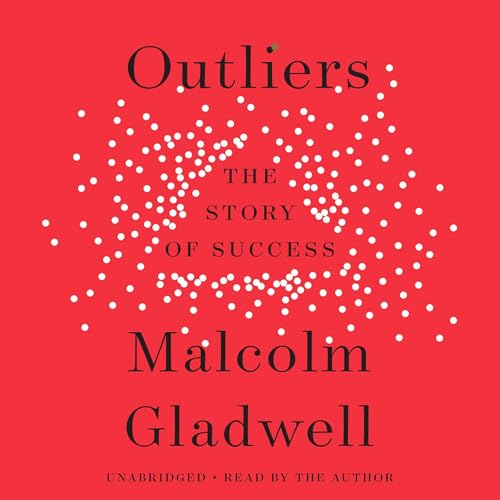
Outliers is Malcolm Gladwell's 2008 argument that exceptional success is less about individual talent or intelligence than it is about circumstance, timing, and accumulated opportunity. He draws on case studies ranging from Canadian hockey players to Bill Gates to Korean Air flight records to build a picture of success as something deeply shaped by external factors, birth month, cultural background, the era someone happened to grow up in.
The book is structured around a core thesis: that the stories we tell about high achievers tend to omit the conditions that made their achievement possible. Gladwell introduces ideas that have since become widely referenced in popular culture, including the 10,000-hour rule, the claim that elite performance in any field requires roughly 10,000 hours of deliberate practice. Whether you find this persuasive or reductive tends to shape your overall reaction to the book.
This is pop social science, accessible, anecdote-heavy, and written for a general audience rather than an academic one. Gladwell is a skilled explainer, and the book moves quickly through its examples. Critics have noted that some of his arguments oversimplify the research he cites, and subsequent studies have complicated aspects of the 10,000-hour rule in particular. That context is worth having before you come to the book expecting settled science.
Narration & Audio Performance
Gladwell narrates his own work here, and it works in his favor. His voice is calm and measured, with a natural storytelling cadence that matches the way the book is written. He moves through anecdotes with an easy pace, not too fast, not overly deliberate, and the delivery feels more like a long-form podcast than a formal reading.
He doesn't attempt character voices or dramatic inflection, which suits the material. This is a book of ideas and case studies, not scenes and characters, and Gladwell treats it accordingly. The result is consistent and easy to follow over long listening sessions. There's nothing showy about the performance, but it holds attention.
Author narration can go either way, some writers are clearly uncomfortable in front of a microphone, others read in a flat monotone. Gladwell avoids both traps. His background in long-form journalism and public speaking comes through. If you've heard any of his Revisionist History podcast, you already have a reasonable idea of what to expect.
The Audible Verdict
Outliers is a good audiobook pick, and Gladwell's self-narration makes the format work. That said, the book doesn't dramatically benefit from audio over print, it's a linear argument you could read just as easily. The narration is solid but not exceptional enough to justify a paid credit on its own. A free trial credit is the right call here, especially if you're new to Gladwell or to popular social science as a genre.
Listen on AudibleIs This Book a Good Fit for Audio?
Outliers translates well to audio for one simple reason: it's built like a series of connected essays, each making a discrete point before building toward the next. There are no charts, no footnotes to track, and no visual elements that require you to see the page. You can follow every argument through listening alone.
The anecdote-driven structure also suits the format. Gladwell spends significant time inside individual stories, a hockey player's career path, a lawyer's immigrant family background, before drawing broader conclusions. That rhythm of story-then-argument is comfortable to listen to and doesn't require you to flip back or cross-reference anything.
Where audio is slightly weaker is for anyone who wants to underline passages or return to specific sections. The book is quotable and the ideas are the kind you might want to note down. If you're listening primarily to absorb the argument, audio is fine. If you want to annotate or reference specific claims, the print version or Kindle edition would serve you better alongside a listen.
Popular Listener Questions
Is this audiobook narrated by Malcolm Gladwell himself?
Yes. Malcolm Gladwell narrates Outliers. His delivery is conversational and relaxed, consistent with his podcast work on Revisionist History.
Is Outliers part of a series?
No. Outliers stands alone. It shares thematic ground with Gladwell's other books, The Tipping Point, Blink, David and Goliath, but each can be read or listened to independently in any order.
Is this suitable for listeners who don't have a background in psychology or social science?
Yes. Gladwell writes for a general audience and explains every concept from the ground up. No prior knowledge of psychology or statistics is assumed.
How does Outliers compare to Gladwell's other audiobooks?
It's representative of his style, case studies, accessible social science, a single unifying thesis. If you've enjoyed The Tipping Point or Blink in audio, Outliers follows the same format and narration approach.
Similar Audiobooks
Gladwell's earlier book on how small factors cause large social change, same format, same narration style, directly comparable listening experience.
Blink
Gladwell on rapid decision-making and intuition. Another self-narrated pop social science book with an identical structure to Outliers.
David and Goliath
Gladwell examines underdogs and perceived disadvantage, a natural companion to Outliers' argument about success and circumstance.
Grit
Angela Duckworth's research on perseverance and achievement covers overlapping ground with Outliers, including some of the same debates about practice and talent.
Range
David Epstein's book challenges the 10,000-hour rule that Outliers helped popularize, a useful listen for anyone who wants a counterargument to Gladwell's thesis.
Kahneman's exploration of human decision-making appeals to the same readers drawn to Outliers, though it's denser and more research-focused.
Audiobook Details
| Title | Outliers |
|---|---|
| Author | Malcolm Gladwell |
| Narrator | Malcolm Gladwell |
| Genre | Popular Social Science |
| Year | 2008 |
| Publisher | Penguin UK |
| Abridged | Unabridged |
| Cast | Single narrator |
| Author-narrated | Yes |
Ready to listen?
Outliers is available on Audible with Gladwell's own narration, a reasonable use of a free trial credit if you haven't read it yet.
Open on Audible