About the Book
Ready Player Two picks up directly after the events of Ready Player One. Wade Watts has won the OASIS, the sprawling virtual reality world built by the late James Halliday, and with that inheritance comes a new discovery locked away in Halliday's archives. This new technology promises to make the OASIS more immersive than ever, but it also carries serious risks. Before Wade can fully process what he's found, a new quest emerges, and the stakes extend beyond the virtual world.
The novel follows Wade and his friends, known as the High Five, as they work through a new series of pop culture-soaked challenges, this time structured around a different set of nostalgic touchstones than the first book. The puzzle design here leans heavily into specific franchises, including a long section centered on the music of Prince and another drawing from the Tolkien universe.
This is a direct sequel, and while Cline provides enough context to orient new readers, the emotional weight of the story depends significantly on familiarity with the first book. Readers who haven't read Ready Player One will likely want to start there before picking this one up.
Narration & Audio Performance
Wil Wheaton returns here after narrating Ready Player One, which is a meaningful continuity point. Wheaton has a long association with geek culture and clearly understands the material, his delivery of the pop culture references feels natural rather than performed. His voice suits Wade's first-person narration well, and he keeps a consistent pace that makes long listening sessions manageable.
That said, the narration is not without critics. Some listeners find Wheaton's performance flatter in this second installment, particularly during the more extended lore-dump passages where the book stalls and the narration can feel like it's just moving text rather than shaping a scene. His character differentiation is serviceable but not especially distinctive, most voices stay close to his natural register. The production itself is clean and free of obvious technical issues.
If you enjoyed Wheaton's performance in Ready Player One, you'll likely find this consistent enough to stick with. If you found him monotonous there, this book doesn't give him more to work with, the script is, if anything, more reliant on exposition than the original.
The Audible Verdict
Wheaton's narration is competent and consistent with the first audiobook, but Ready Player Two's pacing problems, lengthy lore sections, extended franchise deep-dives, are more noticeable in audio than in print. Whether the audiobook works for you depends heavily on your tolerance for that kind of extended exposition read aloud. The sample will give you a clear sense of Wheaton's current rhythm and whether the format suits how you engage with this kind of material.
Listen on AudibleIs This Book a Good Fit for Audio?
Ready Player Two is a linear first-person narrative, which is structurally a good fit for audio. There are no charts, diagrams, or visual elements that require the print edition, and the story moves forward without the kind of non-linear structure that confuses audio listeners.
The challenge is specific to the book's content rather than its format. Large sections of the novel involve detailed explanations of fictional technology and extended homages to specific pop culture properties. In print, readers can skim or adjust pace through dense passages. In audio, those same sections arrive at a fixed speed with no easy way to accelerate through them. Listeners who are deeply invested in the specific franchises being referenced, particularly Prince's catalog, may find those sections more engaging. Those who aren't may find audio makes the pacing issues harder to work around.
For fans of the first audiobook who are continuing the story, the audio version is a reasonable choice. For casual readers curious about the sequel, the print version gives you more control over the experience.
Popular Listener Questions
Do I need to read Ready Player One before this?
Yes, practically speaking. Ready Player Two references events, characters, and relationships from the first book extensively, and the emotional stakes of the story assume you've experienced them. Starting with Ready Player One is strongly recommended.
Is this the same narrator as Ready Player One?
Yes. Wil Wheaton narrated Ready Player One and returns for this sequel, giving the two books a consistent audio identity.
What kind of pop culture does this book focus on?
The references shift from the first book's heavy 1980s video game and film focus. Ready Player Two spends significant time on Prince's music catalog and Tolkien's world, among other properties.
Is this a standalone story or does it end on a cliffhanger?
The main plot of Ready Player Two resolves within the book. It functions as a self-contained story, though it leaves room for the world to continue.
Similar Audiobooks
The obvious starting point, Wil Wheaton's narration originated here and the story setup is essential for getting the most out of the sequel.
Armada
Ernest Cline's other novel follows a similar formula of heavy pop culture reference and gaming culture, useful if you want more of his voice before committing to Ready Player Two.
First-person sci-fi narration with a nerdy protagonist and a problem-solving structure, a comparable listening experience that many Ready Player One fans also enjoy.
Neal Stephenson's foundational virtual reality novel covers similar thematic ground about immersive digital worlds and corporate control, with more satirical edge.
For the Win
Cory Doctorow's novel about the economics of virtual worlds appeals to many of the same readers drawn to the OASIS and its social implications.
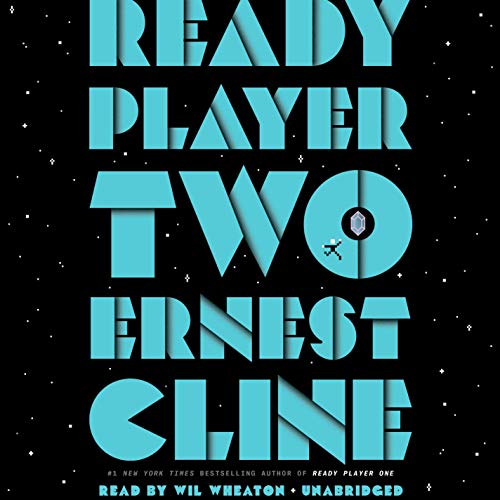
Audiobook Details
| Title | Ready Player Two |
|---|---|
| Author | Ernest Cline |
| Narrator | Wil Wheaton |
| Genre | Science Fiction |
| Year | 2021 |
| Publisher | Ballantine Books |
| Abridged | Unabridged |
| Cast | Single narrator |
| Author-narrated | No |
Ready to listen?
Ready Player Two is available on Audible with Wil Wheaton narrating, if you're on the fence, the free trial credit is a low-risk way to find out whether his pacing works for you on this one.
Open on Audible