About the Book
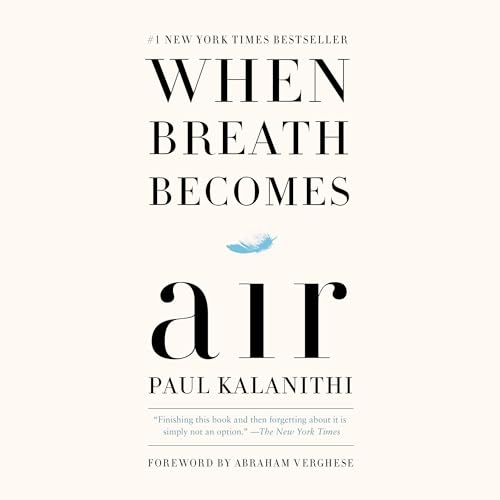
When Breath Becomes Air is the memoir of Paul Kalanithi, a neurosurgery resident at Stanford who was diagnosed with stage IV lung cancer at thirty-six, just as he was completing a decade of medical training. The book moves between two phases of his life: his years as a surgeon grappling with questions about mortality, meaning, and what makes life worth living, and the period after his diagnosis when those questions became urgently personal.
Kalanithi came to medicine by way of literature and philosophy, and both are present throughout. He writes about his patients, his marriage, his intellectual formation, and the experience of suddenly becoming the kind of patient he had spent years treating. The book was completed with help from his wife, Lucy, who contributed an epilogue after Paul died in 2015, before the book's publication.
This is not a book about fighting cancer or beating the odds. It's a slower, more interior account, concerned less with the clinical facts of his illness than with the questions he was still trying to answer about purpose, identity, and what a life amounts to.
Narration & Audio Performance
Sunil Malhotra narrates with a calm, measured delivery that suits the reflective tone of the writing. His pacing is unhurried, which works for a memoir this contemplative, there's no sense of being rushed through the more philosophical sections. His voice carries a quiet gravity that matches the subject matter without veering into overt sentimentality.
Character voice differentiation isn't a major factor here given the memoir format, but Malhotra handles the shifts between Kalanithi's more clinical passages and his personal reflections without making them feel jarring. Some listeners have found his performance a touch detached, there are moments where a more emotionally variable read might have served the material. That said, the restraint is arguably appropriate for a book this carefully written.
Production quality is clean and standard for a Random House release. If you're uncertain whether Malhotra's style will suit you, the Audible sample gives a reasonable sense of what to expect across the full listening experience.
The Audible Verdict
The audiobook is a solid way to experience this memoir, but the writing itself is dense and literary enough that some readers will get more from the print version, where they can slow down and reread. Malhotra's narration is competent and tonally appropriate, but not so distinctive that it adds a dimension the text alone wouldn't provide. A free trial credit is the right call, worth experiencing, but the audio format isn't essential to appreciating what Kalanithi wrote.
Listen on AudibleIs This Book a Good Fit for Audio?
Memoirs generally translate well to audio, and When Breath Becomes Air is no exception in structural terms. It's linear, personal, and written in a single voice, all of which make it easy to follow without visual reference.
The one complication is the density of the prose. Kalanithi writes with precision and deliberate literary intent, and some passages reward the kind of slow, rereading attention that audio doesn't allow. If you find yourself wanting to sit with a sentence or return to a paragraph, audio can feel like it moves you past those moments before you're ready.
For long commutes or drives, this works well, the pacing is calm enough to absorb during sustained listening without demanding active note-taking. It's less suited to fragmented, short-session listening where you might lose the thread of his longer reflections.
Popular Listener Questions
Is this book part of a series?
No. When Breath Becomes Air is a standalone memoir with no companion volumes or follow-up works by the same author.
Does Paul Kalanithi narrate his own memoir?
No. The audiobook is narrated by Sunil Malhotra. Kalanithi died in March 2015, before the book's publication in January 2016.
Who wrote the epilogue, and is it included in the audiobook?
The epilogue was written by Paul's wife, Lucy Kalanithi, and describes the final weeks of his life. It is included in the audiobook.
Is this book suitable for someone with no medical background?
Yes. While Kalanithi discusses neurosurgery and medical training, the book is primarily a philosophical memoir rather than a medical text. Technical terms are generally explained or contextualized in plain language.
How does this book handle the subject of death, is it emotionally difficult to listen to?
It is emotionally serious, but Kalanithi's tone is measured and reflective rather than graphic or despairing. Listeners who have experienced illness or loss in their own lives may find certain sections hit harder in the audio format, without the option to pause and process at their own pace.
Similar Audiobooks
Being Mortal
Atul Gawande's examination of medicine, aging, and end-of-life care covers overlapping territory from a physician's perspective, with a similarly measured, non-sensational tone.
Siddhartha Mukherjee's history of cancer is a longer, more expansive work, but readers drawn to Kalanithi's blend of medicine and meaning often find it a natural companion read.
Ta-Nehisi Coates's letter-format memoir shares the same careful, literary prose style and first-person reckoning with mortality and identity that characterizes Kalanithi's writing.
The Spirit Catches You and You Fall Down
Anne Fadiman's account of a Hmong child and the American medical system examines what medicine gets right and wrong about the meaning of illness, a thematic match for Kalanithi's concerns.
Option B
Sheryl Sandberg and Adam Grant's account of grief and resilience after sudden loss shares the honest, forward-looking tone of Lucy Kalanithi's epilogue, and appeals to a similar readership.
Audiobook Details
| Title | When Breath Becomes Air |
|---|---|
| Author | Paul Kalanithi |
| Narrator | Sunil Malhotra |
| Genre | Memoir |
| Year | 2016 |
| Publisher | Random House |
| Abridged | Unabridged |
| Cast | Single narrator |
| Author-narrated | No |
Ready to listen?
When Breath Becomes Air is available on Audible and is a reasonable choice for a free trial credit, particularly if memoir is a format you return to regularly.
Open on Audible