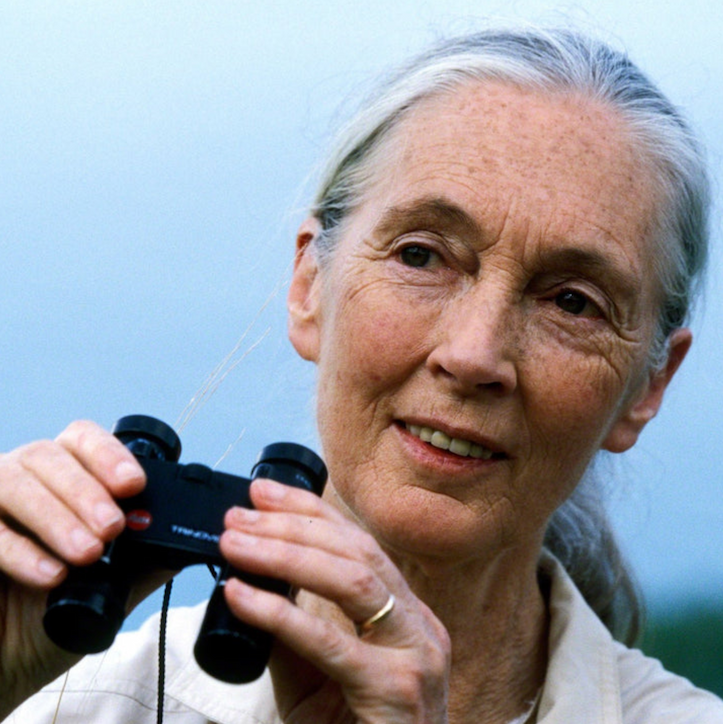
With Dr. Jane Goodall's passing on Wednesday, the world lost an icon. Last November, we had the honor of introducing our collaboration, a trio of complex, raw and wild Woodland Honeys, sourced directly from the Miombo Woodlands, one of the last wild chimpanzee habitats in the world and the center of Jane's conservation work. In the first year of our collaboration, we've purchased over 15,000lbs of honey from trained honey collectors to support this ecosystem, and will donate 5% of all sales to support the Jane Goodall Institute’s conservation and community work in Tanzania. Today, we wanted to share a few reflections from co-founder Ethan on Dr. Jane Goodall's passing and how we're carrying her work forward.
| |
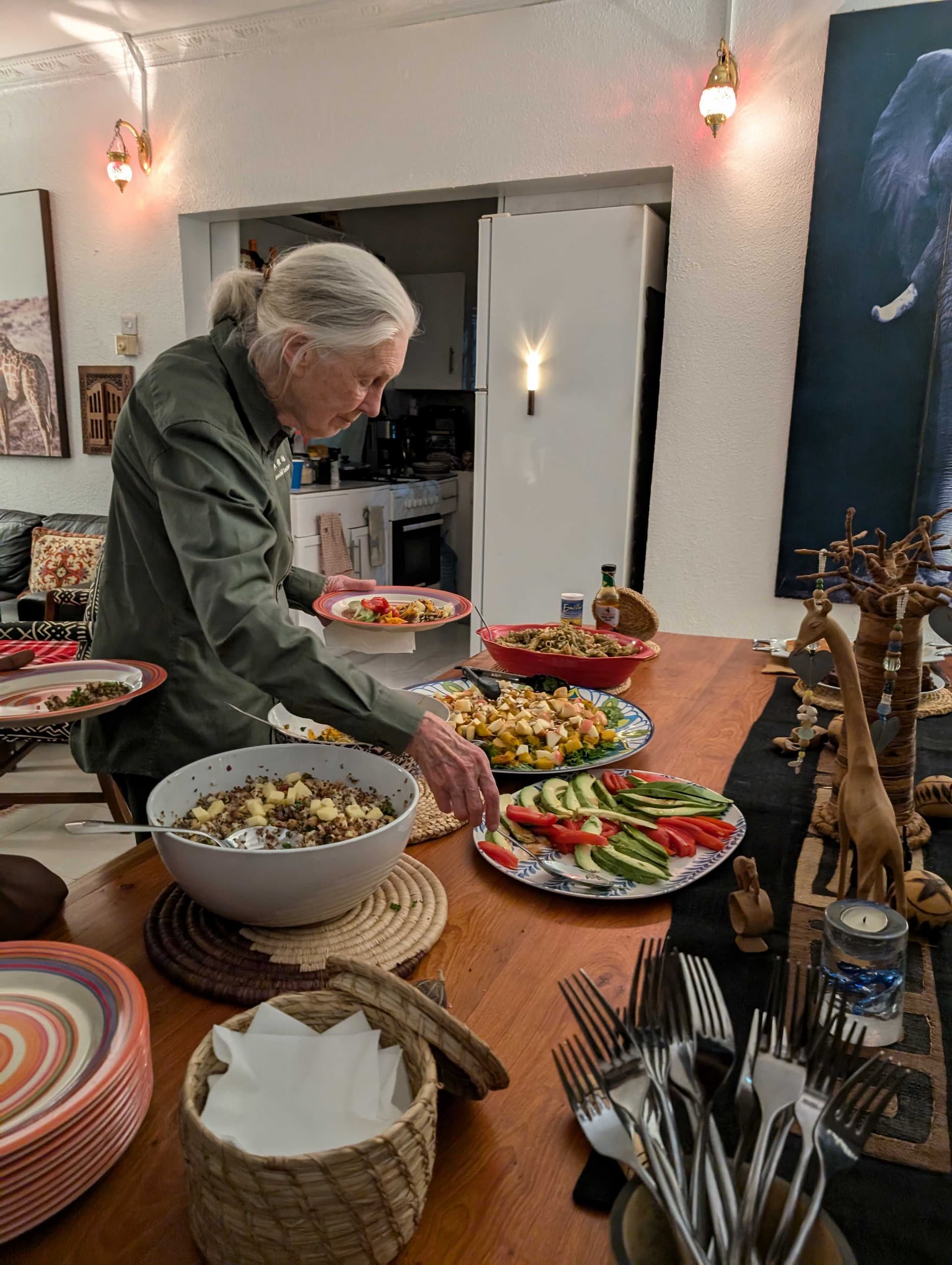
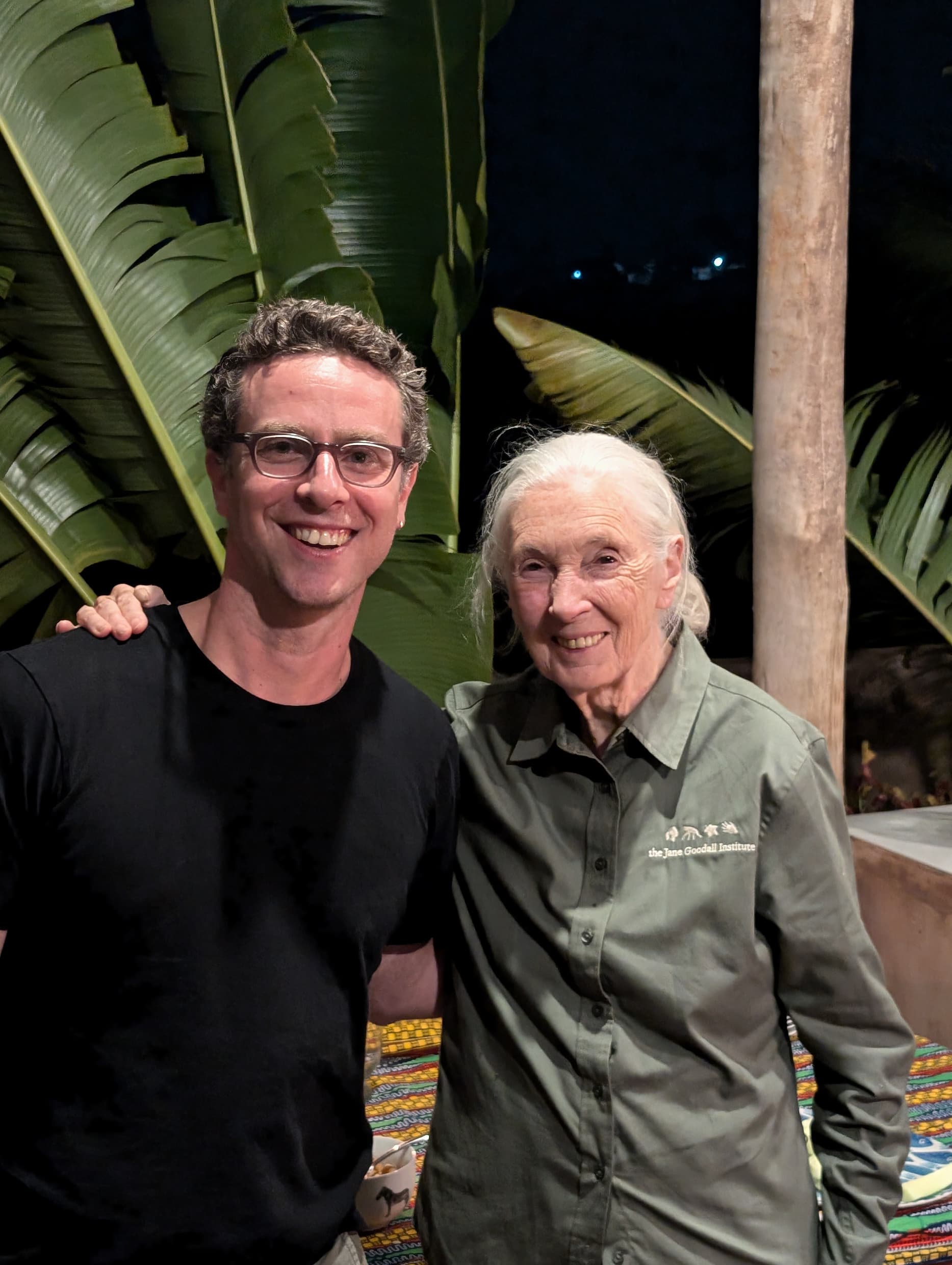
Last summer, I had the remarkable opportunity to meet Dr. Jane Goodall. I had gotten a WhatsApp message from Tanzania: was I available to fly to Kigoma to meet with Jane about bringing wild honey to market in the US? The Jane Goodall Institute (JGI) was supporting the recruitment and training of beekeepers to manage and harvest honey from wild hives in the miombo woodlands, a fragile ecosystem and home to some of the last wild chimpanzees in the world. Honey could be a sustainable lifeline for communities living deep in the forest, who, lacking other options, often resort to using slash-and-burn agriculture or deforestation for charcoal production. Burlap & Barrel had been invited in as the US partner, to work with Dr. Jane Goodall herself to prevent further destruction of natural habitats. So I traveled to Kigoma, Tanzania, a port town on the shores of Lake Tanganyika, near where Jane had once conducted her initial groundbreaking research. Now, the area is a national park with a state of the art research center studying chimpanzees and baboons. There, we gathered in a conference room where Jane listened patiently to our presentations before raising her hand with a question. "What about the bees?" she asked. "How do they feel about having their honey taken away?" Alex assured her that their harvesting techniques were designed to protect honeybee welfare, and while some bees do die in the harvesting process, skilled beekeepers are essential to maintaining healthy bee populations, especially by not harvesting honeycomb containing honeybee eggs and larvae, the next generation. That evening, we met for dinner at our mutual friends Paul and Lynn's house on a hill overlooking the lake. Lynn and I picked a handful of recipes from Jane's recently-published vegetarian cookbook: carrot ribbon salad, topped with roasted nuts and seasoned with wild mountain cumin, pasta with pesto made with local cashews, an avocado salad with plenty of Zanzibar black pepper.
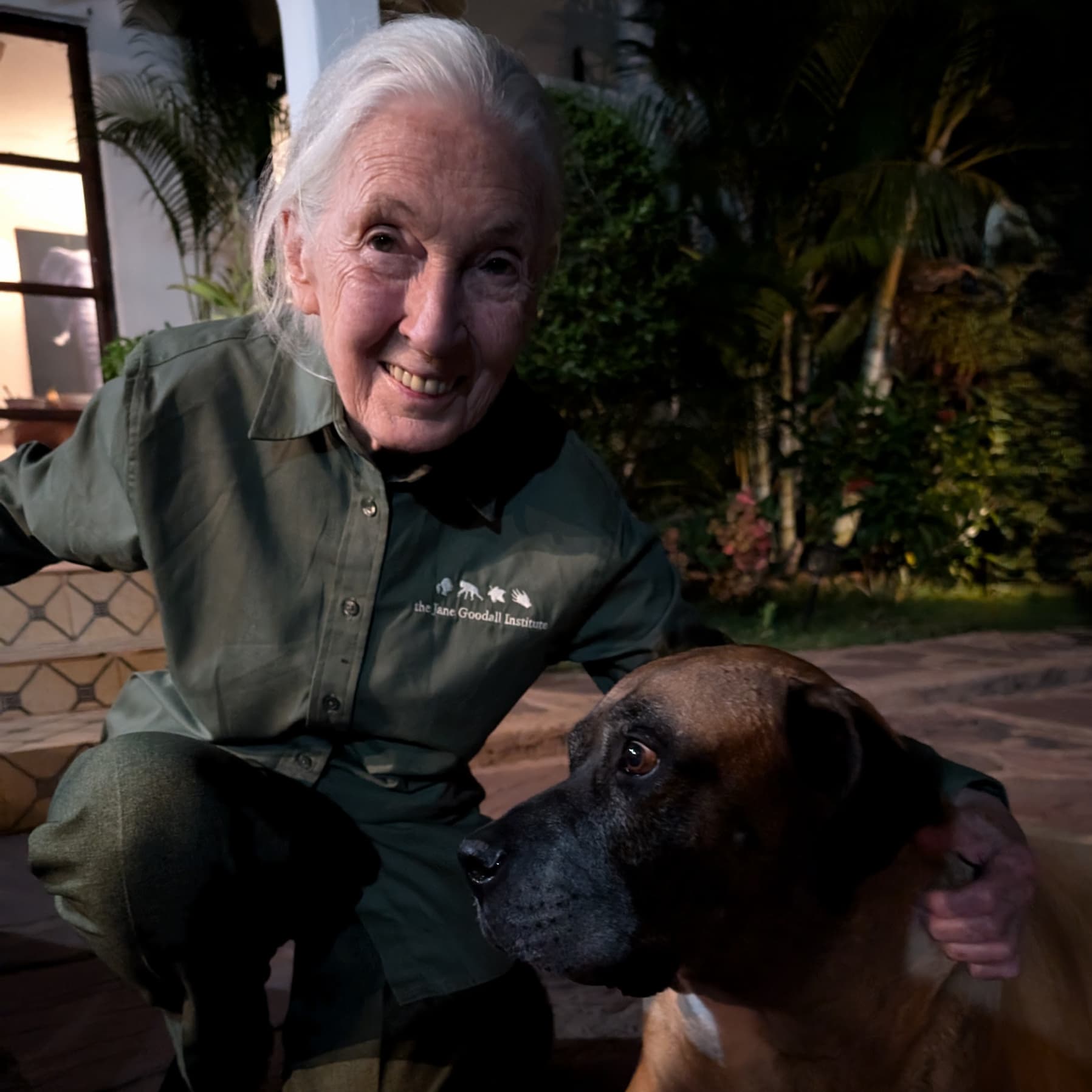
| | I had also brought a few bottles of good whiskey, the customary gift when meeting Jane. She was a whiskey drinker, famously sipping Johnny Walker Black Label during speeches to loosen the vocal chords. After she’d served herself small portions of everything on the table, her grandson brought her a glass of whiskey. Sitting in a circle on the terrace, the sun setting over the lake, she looked around at us. She urged one of her travel companions, a German documentary filmmaker, to share a story of a traumatic experience being caught up and almost killed in the 2004 tsunami in Thailand. He resisted but she insisted. "It's the greatest story I've ever heard," she told us. When he finished his gripping and gruesome account, she turned to the rest of us, and we went around sharing our own stories of near-death experiences. She seemed to want us all to have a memorable experience that evening, with intense sharing and a communal recognition of the fragility of life. "Every day matters," she reminded us. Every so often, when her whiskey glass got a little low, her grandson would add a little more. At the end of the evening, we took a photo together, and as she left, she knelt to embrace Zula, a large, elderly dog who probably weighed more than Jane did. "Dogs are my favorite animals", she announced through face licks and baby talk. | | Up until her death, she was traveling 300 days per year. Late in her life, she decided that she could have a greater impact as an advocate than a researcher, in particular speaking to young people and business leaders as populations with an outsize impact on protecting and rebuilding the environment. I had even heard her speak when I was in high school, 15 years prior in lower Manhattan. What has stuck with me since meeting her was her commitment to the practice of activism. Almost every single day, she got on another airplane, spoke to another audience, repeated her talking points about the fragility of the environment and our role as active members of nature, not beings above it. A few days ago, at an event in New York City, she told Forbes editor Maggie McGrath, “The important thing for everyone to understand is that we are part of the natural world. It seems these days that everybody’s so involved with technology that we forget we’re not only part of the natural world, we’re an animal like the others." “But we depend on it,” she continued. “We depend on it for clean air, water, food, clothing — everything basically comes from the natural world. But what we depend on is healthy ecosystems, and it’s the ecosystems that we are gradually destroying because of unsustainable demands made on natural resources.” | | We're proud of our partnership with Jane and the Jane Goodall Institute, and are committed to continuing her work and carrying her legacy forward. | | Ethan Burlap & Barrel Co-Founder and Co-CEO | | Questions? Feedback? Ideas? We love to hear from you. Just reply to this email.
| | | | |