Dollar Shave Club
Dollar Shave Club is a men's grooming subscription service that delivers razors, shave products, and personal care items directly to customers. Founded in 2011, the company disrupted the razor industry with affordable pricing and a direct-to-consumer model.

-
Dollar Shave Club · Dec 12
-
Dollar Shave Club · Nov 30
-
Dollar Shave Club · Nov 26
-
Dollar Shave Club · Nov 26
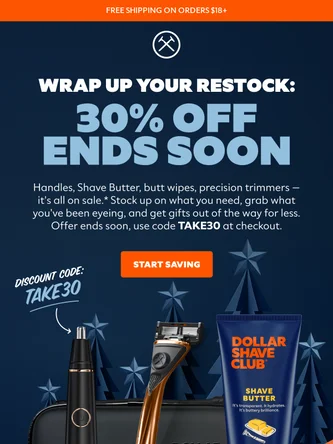
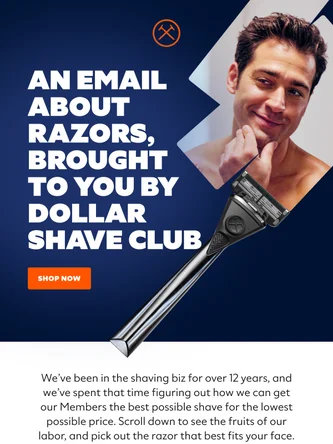
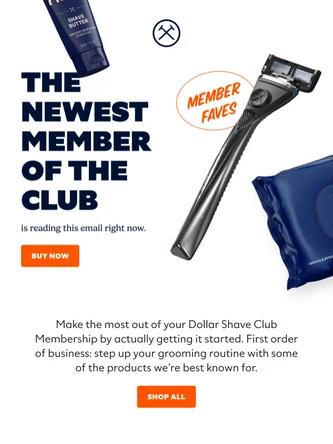


Dollar Shave Club customer service
Use any of the convenient means below to contact Dollar Shave Club customer service.

Returns
What is the return window?
If you're not 100% satisfied with Dollar Shave Club's products, contact them within 30 days of your purchase and they'll refund you in full. The 30 days counts from when your order ships from Dollar Shave Club.
Are there any items that are non-returnable?
Dollar Shave Club has no return or exchange policy, meaning once you get your items, they are yours forever. This is fairly common for this industry as returning even gently used shaving razors is a major health hazard.
How will I receive my refund?
The Dollar Shave Club typically sends out refunds in 5 days or less. Refunds are processed within five business days of approving your request, and the credit will be applied to the same form of payment you used for the original purchase.
Who pays for return shipping?
Dollar Shave Club will not return any shipping fees associated with your order, and shipping and handling fees are non-refundable.
How do I start a return online?
Refund requests must be made directly to Dollar Shave Club at [email protected]. You can also contact them through their live chat feature or help center at ask.dollarshaveclub.com.

Editor's Take
You know that moment when you realize you've been overpaying for something ridiculously simple? That's basically the entire origin story of Dollar Shave Club. Two guys met at a party, complained about razor prices, and decided to do something about it. What started as a friend helping another friend offload 250,000 razor blades from a South Korean warehouse turned into one of the most disruptive brands in grooming history.
Here's the thing about Dollar Shave Club - they didn't just sell razors. They sold an attitude. That infamous 2012 YouTube video (you know the one, with the CEO riding a forklift and declaring their blades are "f***ing great") wasn't some accidental viral moment. Michael Dubin, the co-founder, had trained in improv comedy for eight years at the Upright Citizens Brigade. The $4,500 video shot in a single day generated 12,000 orders in 48 hours and crashed their website. Not bad for a startup.
But let's talk numbers for a second. By 2016, just five years after launching, Unilever bought Dollar Shave Club for $1 billion in cash. One. Billion. Dollars. For a company that started by basically saying "hey, razors shouldn't cost as much as a steak dinner." They went from zero to 3.2 million subscribers, capturing about 15% of the U.S. razor market and forcing Gillette to drop prices by 12% and launch their own subscription service. Gillette's market share fell from 70% in 2010 to 54% by 2018.
What makes Dollar Shave Club interesting isn't just the viral marketing - though that certainly helped. It's how they understood their customer. They knew guys were tired of the razor aisle experience, tired of locked cases and confusing options and prices that made no sense. So they made it simple: pick a plan, get razors delivered, done. The subscription model meant predictable revenue, and the direct-to-consumer approach meant they could undercut traditional retail pricing.
And they didn't stop at razors. The brand expanded into what they call a "men's self care" company - shave butter, hair products, skincare, even something called "One Wipe Charlies" (butt wipes for men, because why not?). They created products with names like "Big Cloud" and "Dr. Carver's Easy Shave Butter," keeping that irreverent tone that made them famous.
The company's had some changes recently. After being owned by Unilever for years, Nexus Capital Management bought a majority stake in 2023, with Unilever keeping 35%. Then in September 2025, they moved their headquarters from Marina del Rey, California to Durham, North Carolina - specifically to the American Tobacco Campus. CEO Larry Bodner has been vocal about wanting to restore the brand's original edgy humor after feeling it got too corporate under Unilever's ownership.
What's kind of fascinating is how Dollar Shave Club became the blueprint for direct-to-consumer brands. They proved you could take a commodity product, add personality and convenience, and build something people actually cared about. They made shaving - literally one of the most mundane daily tasks - into something with a community around it. That's not easy to do.
The brand's still pushing boundaries. They're on TikTok making memes about shaving. They've got automated retail machines at places like Mall of America. They're in tens of thousands of retail stores now, not just online. It's a far cry from that warehouse in Gardena, California where they hand-packed the first orders.
So yeah, Dollar Shave Club took a boring product category and made it interesting. They used humor when everyone else was serious. They went direct when everyone else relied on retail. And they built a brand that guys actually wanted to be part of, not just buy from. That's the real story here - not just disruption for disruption's sake, but actually solving a problem people had and doing it with style.