| | Good morning,
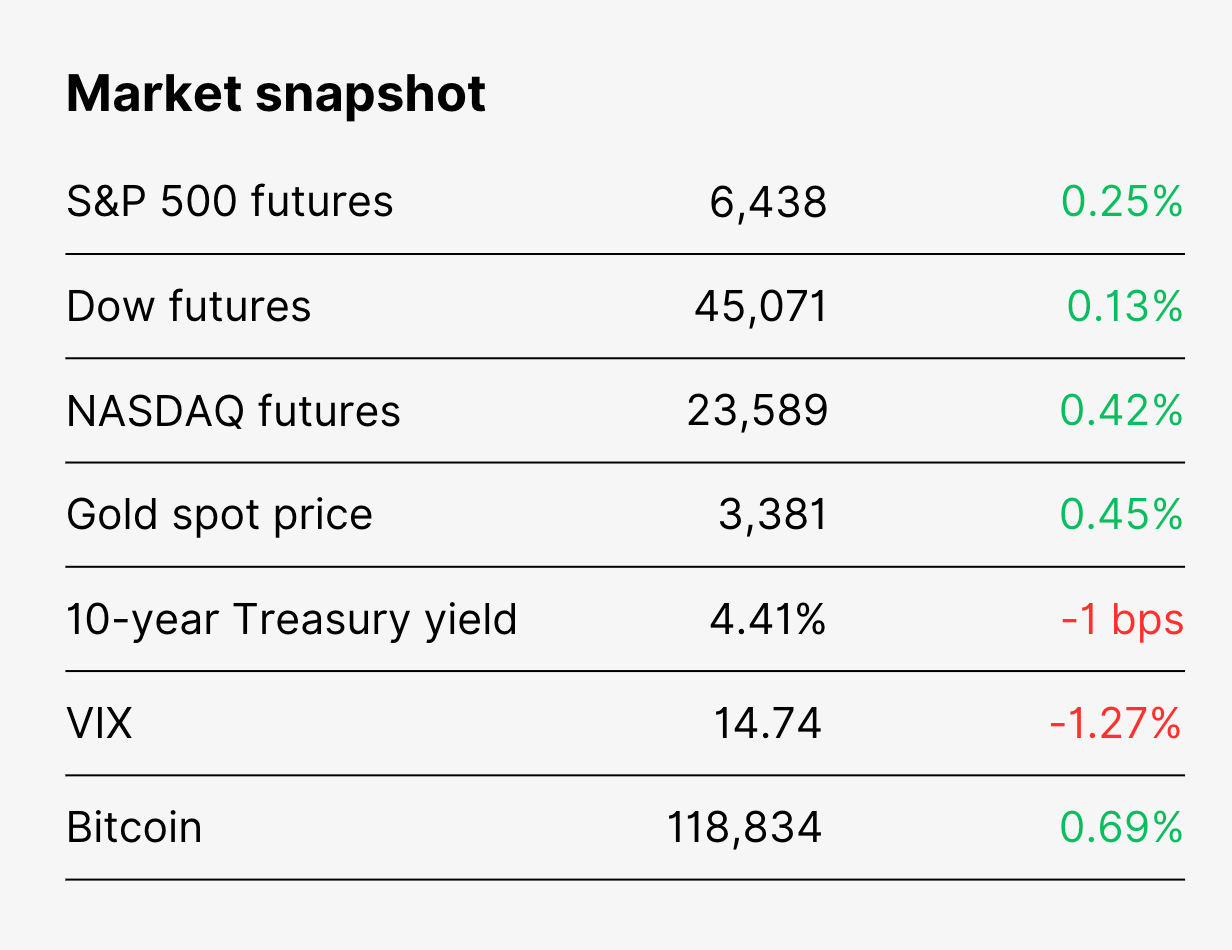
Bankers and farmers rarely sing the same tune, but both are waving red flags this week as shoppers scramble to beat another round of price hikes. The dollar got a lift from recent trade progress, but Trump’s floated “world tariff” plan is stirring new fears just days before the next deadline. Over at the Fed, policymakers kick off their July meeting today. It’s expected to be a non-event, but investors are watching closely for any clues on the timing of rate cuts. Meanwhile, oil whipsawed yesterday as Trump tightened his timeline for forcing a Ukraine truce, which could hit Russian crude supplies and push energy costs higher. On the earnings front, big names from Boeing to Visa and Procter & Gamble are set to report results that may reveal how companies are handling tariffs, rising costs, and cautious consumers.
Let's dig in.
| | | | | Hang tight, Dan Runkevicius, Chief Editor | |  | | | | | “We do not expect the Federal Reserve to cut interest rates on Wednesday, but it’s possible that they make a stronger signal that cuts are on the horizon in the fall, especially as the inflation data continues to stay muted even in this tariff environment.” — RGA Investments founder Rick Gardner | | | | | Six things to know before opening bell | |
🕒 Putin has a new deadline Trump is tightening the screws on Russia, giving Vladimir Putin just 10–12 days to strike a truce with Ukraine or face fresh economic penalties. Speaking in Scotland, he admitted that his promise to “quickly resolve” the conflict has dragged on longer than planned. 🌎 Trump floats a "world tariff" With Friday’s tariff deadline looming, Trump shifted from one-off trade deals to pitching a global import duty of 15–20% for countries without U.S. agreements. That’s nearly double April’s 10% rate. “You can’t sit down and make 200 deals,” Trump said, suggesting most of the world will soon pay a uniform tariff to access U.S. markets. 💵 The dollar just had its strongest day since May The U.S. dollar logged its biggest single-day jump in two months, climbing more than 1% to 98.65. Easing tensions from the U.S.-EU trade deal and prep work for next month’s China talks gave the greenback a confidence boost. “Even imperfect deals let businesses plan,” said Peter Boockvar of The Boock Report. ⚠️ BlackRock sounds debt alarm BlackRock CIO Rick Rieder is warning that America’s ballooning deficit could weigh on both bonds and stocks. “We’re going to issue a lot of debt,” Rieder said, adding that long-term Treasuries are a tough hold. If inflation runs hotter than expected, he cautioned, stocks and the long end of the curve could “get hit” together, marking a reversal of their usual hedge relationship. 🛢️ Oil whiplash Oil futures are on a rollercoaster. A weekend deal boosting U.S. supply pushed prices down, but Trump’s new Ukraine deadline (along with threats of secondary sanctions on Russia) quickly reversed the slide. Traders are bracing for more volatility as supply risks grow. 📊 Packed calendar today Today brings a full plate of economic reports, including wholesale and retail inventories, July consumer confidence, and the latest BLS job openings update. That's on top of earnings from Boeing, UnitedHealth Group, Starbucks, Visa, and Procter & Gamble.
| | | | 🚗 Car buyers rush to beat tariff sticker shock
| | | | There’s growing evidence that Americans aren’t waiting around to see how Trump’s tariff plans will hit their wallets... especially when it comes to cars. According to a new Santander Holdings USA survey, auto buyers shifted sharply over the past three months. Last quarter, many were waiting out potential import duties. But as the Liberation Day tariff shock faded, more shoppers decided to buy now rather than risk higher prices later. 📊 Highlights from the survey: -
Over half of respondents said they delayed a car purchase in the past year due to high prices -
55% plan to buy a vehicle within the next year -
More than 40% of last-quarter buyers rushed purchases specifically to avoid anticipated price hikes For context, last quarter’s share of buyers was 8 points higher than Q1 and marked the first time since 2023 that buyers outnumbered those delaying purchases. 🚘 How high could prices climb? With automakers relying heavily on parts from Canada and Mexico — both facing potential tariff hikes in days — the industry is bracing customers for sticker shock. American Automotive Policy Council president Matt Blunt warned that, on top of a possible 25% import duty on vehicles and parts, U.S. manufacturers remain “at a disadvantage” because of existing 50% steel and aluminum tariffs. Japanese imports could benefit from a recent trade deal, but analysts expect prices to rise across the board. For now, dealers are eating most of the extra costs, but that won’t last. “Car companies and dealers are absorbing more of the burden and not passing the added costs to consumers,” said Cox Automotive analyst Erin Keating. “They can’t keep it up forever.” EV buyers have a different kind of problem because tax credit expirations could soon push electric vehicle prices higher. “If you are in the U.S. and looking to buy a car, place your order now as we may not be able to guarantee delivery orders placed in the later part of August and beyond,” Elon Musk said. 📌 Bottom line: Americans are locking in big-ticket purchases before tariffs show up on price tags. | | | | 🏦 Big banks kick off the week with fresh warnings | | | | After stealing headlines during last week’s earnings blitz, Wall Street’s heavyweights are back in the spotlight... this time with bold calls. ✂️ Wells Fargo: Rate cuts are bad for AI stocks The Fed’s latest policy decision lands tomorrow, but Wells Fargo Securities’ Chris Harvey is already looking past it. The bank’s head of equity strategy says the bigger story is when rate cuts finally arrive, and he thinks that’s when the post-Liberation Day rally could unwind. With Big Tech set to dominate this week’s earnings, Harvey warned that AI stocks in particular could face a shake-up once the Fed starts cutting. “One thing that could potentially hurt the AI trade is if you do get the Fed cutting, if growth is better than expected, if rates do come down, suddenly the contrarian trade starts to look better, and you could see rotation,” he said. “That’s the biggest fear for AI right now.” 📕 JPMorgan’s history lesson Meanwhile, JPMorgan Asset Management CIO Bill Eigen says today’s private credit boom feels uncomfortably familiar. “I’m getting shadows of ’07,” he said, pointing to the rush to package illiquid private assets into mutual funds and ETFs. That kind of mismatch between liquidity and pricing, he warned, fueled the subprime crisis. While JPMorgan remains bullish on the broader market, Eigen flagged that “a lot of private credit out there … should not be trading at par value, but that’s where it’s marked.” 🏦 The bank on everyone’s mind As the Fed kicks off its July meeting today, economists largely agree tomorrow’s announcement won’t bring rate cuts. But EY’s chief economist Gregory Daco says it’s only a matter of time. “Tariff-induced price pressures are starting to filter through the economy,” he said. “Companies are citing weaker earnings and higher input costs, while elevated consumer prices are beginning to weigh on retail sales. More demand erosion is likely in the months ahead.” | | | | 🥩 Beef is having its egg moment | | | | Beef has become one of the most unpredictable items on grocery shelves, drawing comparisons to the egg price shock from earlier this year. 📊 By the numbers: -
USDA reports beef prices are up 9% since January -
Last month, steak prices jumped 12.4% while ground beef climbed 10.3% year-to-date -
A pound of beef hit a record-high $9.26 in June But unlike eggs, Wells Fargo Agrifood Institute economist Michael Swanson says beef won’t bounce back as quickly. Calling it a “whole different beast,” he explained that the egg industry’s centralized supply made price corrections easier, while beef is “fragmented and complex, making recovery slower and more unpredictable.” 🚨 Industry and retailer warnings grow High demand and rising costs for labor, energy, and feed are keeping beef expensive, and tight supply isn’t helping. Tyson Foods’ supply chief said cattle slaughter rates dropped nearly 18%, and CEO Donnie King admitted these are “the most challenging market conditions we have ever seen.” “With the supply side largely fixed, U.S. demand for beef is the linchpin holding together razor-thin profit margins for our nation’s cattle farmers and ranchers,” said American Farm Bureau Federation economist Bernt Nelson. Retailers are sounding similar alarms. Wendy’s CEO Kirk Tanner said beef is driving inflation higher, while Omaha Steaks CEO Nate Rempe warned that “supply pressure is really putting a lot of upward pressure on price, especially as demand is still so strong in the U.S.” The problem has grown big enough that retailers are already adjusting their full-year guidance to account for the cost surge.
| | | | Rate this newsletter | | | Your feedback matters! Before you go, please rate this newsletter and share your thoughts. | | | | | | | | | | | | InvestorsObserver | | You received this email because you signed up on our website or made a purchase from us. | | | | |