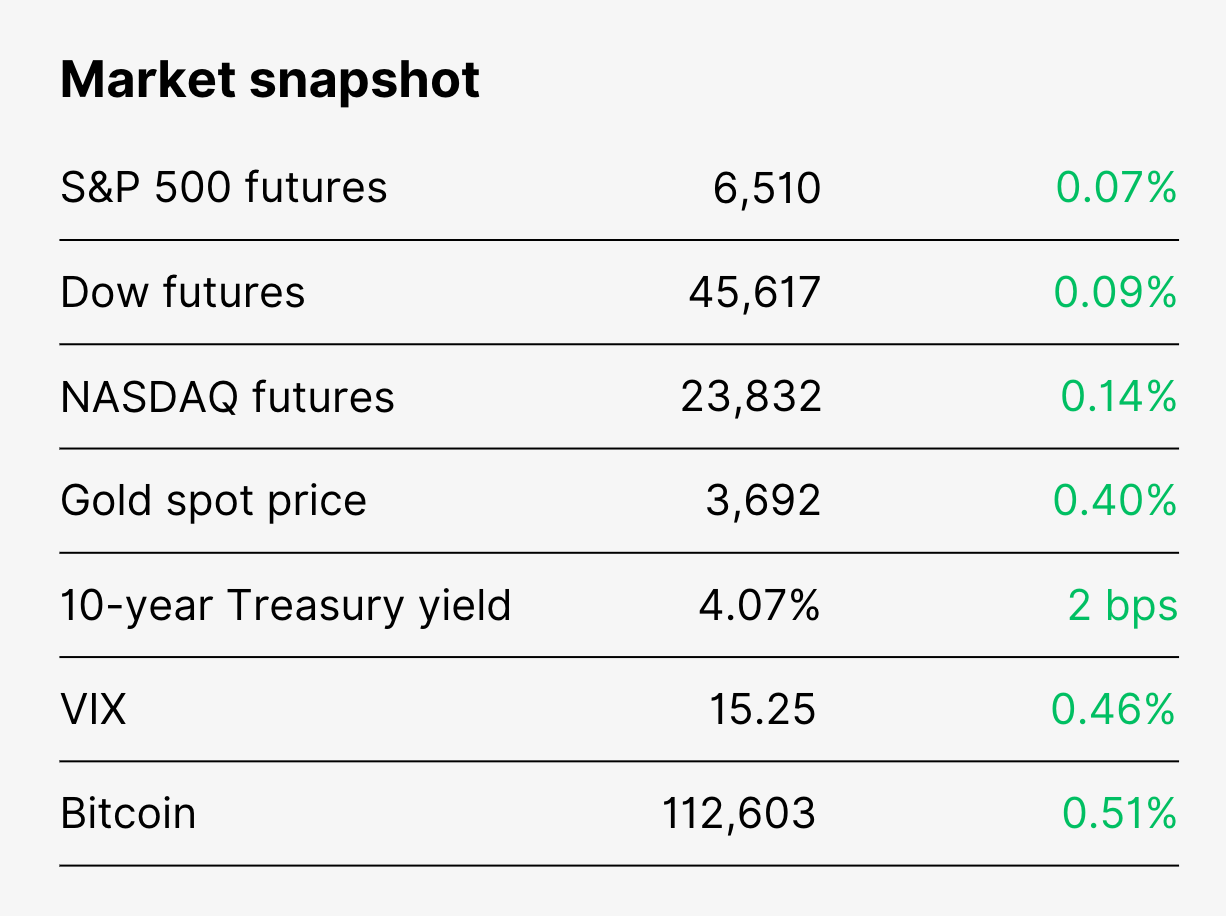
| | Good morning, For the first time since 1996, central banks hold more gold than Treasuries… Part of that is gold being 45% more expensive than a year ago… its best run in more than 50 years. But it’s also the result of unprecedented government hoarding. Most fingers point to Xi Jinping, who’s dying to de-dollarize the world, and he has indeed been a heavy buyer. But the world’s biggest gold buyer lately isn’t China… It’s Poland. The country’s central bank has added 67 tonnes so far in 2025, nearly doubling its reserves in just three years. In fact, Poland now holds more gold than the European Central Bank. Journalists often dub this trend “Sell America.” But this isn’t just about America, and it doesn’t have everything to do with Trump. That’s because this central bank hoarding began well before Liberation Day or last year’s election. The real cue was the Russia-Ukraine war, putting the global order into question. Meanwhile, U.S. Treasuries just hit another high for foreign holdings. And most trade allies are actually increasing their Treasury positions. It’s not "Sell America." It’s "Shi* happens." “Why does the central bank own gold? Because it retains its value even if someone cuts off the supply to the global financial system. Of course, we do not assume that this will happen. But as the saying goes, fortune favors the prepared,” said National Bank of Poland governor Adam Glapiński.
| | | | | Hang tight, Dan Runkevicius, Chief Editor | |  | | | | | “There was a bunch of us outside and inside the Fed that were arguing for a July cut. And our concern, which is playing out in the data, is that Chair Powell had taken too narrow a view of the jobs market. And by that, he was ignoring the weakness that was starting to come to the surface. And the problem, as you know, is that if you don’t address weakness in the labor market, it becomes nonlinear. It accelerates, and it becomes much more damaging. So, yes, I think they have gotten it wrong. I think, once again, they’re late. They will cut in September. And I suspect there will also be a discussion: should they cut by 25 or 50 [basis points]?” — Mohamed El-Erian, Allianz chief economic advisor
| | | | | Five things to know before opening bell | |
🔻 Fed cuts could backfire A September rate cut is virtually a lock, but strategists warn the Fed’s actual sway over long-term borrowing costs is limited. “If the market smells rising inflation, it’s going to push long-term interest rates higher and not lower,” said StoneX’s Jon Hilsenrath. And with Fed independence under the microscope ahead of next week’s meeting, it’s worth recalling mortgage underwriters’ warning earlier this year: a cut seen as political could backfire, counterintuitively lifting long-term rates. 📉 Jobs revision looms large Friday’s weak jobs report was the last big labor print before the Fed’s decision, but more clarity is coming today. The BLS is revising its March payrolls, and economists expect a downgrade of anywhere from 800,000 (Wells Fargo, Comerica) to nearly 1 million (BofA, RBC). A correction of that size would show the job slowdown has been running longer than many thought. 🚀 Nasdaq hits fresh record Tech stocks dragged the Nasdaq to a new all-time high Monday, recouping Friday’s losses. Broadcom tacked on another 3% after its Friday rally, while Nvidia and Amazon each gained around 2%. But not everyone joined the party. Apple slipped ahead of today’s iPhone launch, and Tesla dropped just over 1%. 🏛️ Trump tweaks tariffs again Trump’s latest tariff order took effect yesterday, even as the Supreme Court weighs their legality. The White House exempted gold and certain minerals from duties, calling it a “clarification.” Trade lawyer Sidley Austin called it something else. “If tariffs can change with 3 days’ notice (over a weekend), can a company really plan ahead? Probably not,” he said. Pharmaceuticals also got partial exemptions, but the administration is promising fresh tariffs for the sector soon. 🪙 China piles into gold Global investors have been dumping Treasuries for months, but China is hand down leading the charge. In July, Beijing boosted its gold reserves by about 60,000 ounces, lifting its stash to more than 74 million ounces, worth over $250 billion. The move comes as gold enjoys its best run in nearly 50 years, including another two-thirds of a percent yesterday, while faith in the dollar keeps eroding.
| | | | 📉 Rates are (almost) certainly going down. So what now?
| | | | Wall Street, the White House, and would-be borrowers have been clamoring for lower interest rates for months. Now that a cut is almost a lock, investors are finally exhaling. But beyond its role in jump-starting the jobs market, lower rates can reset the playing field across all kinds of investments. 💵 Last chance for big cash yields? High-yield savings accounts have been paying close to 5%, and premium CDs have been topping 4.5%. That window could close fast. “Taking away the knee-jerk yields crash seen around the ‘Liberation Day’ de-risking, current U.S. 10-year at sub-4.1% is at lows of the year. We think this is set to continue, partly due to softening labor market data flow,” JPMorgan strategist Mislav Matejka wrote Monday. These products aren’t flashy, but certainty has value. And in a falling-rate environment, that certainty could soon be in short supply. 🏗️ Stock sectors set to surge Some sectors stand to benefit more than others. “A reduction in interest rates is likely to provide a boost to margins as well as support property valuations,” said Global X strategist Michelle Cluver, highlighting real estate as a clear winner. Big Tech could also get a fresh boost from lower borrowing costs. “Our favorite growth story is digital infrastructure, which can span asset classes, and within U.S. equities can provide a medium-term tailwind to technology, communications, utilities, materials, and energy, as we see the pace of physical investment backing the artificial intelligence theme happening in real time,” wrote Julia Hermann, strategist at New York Life Investments. ⚠️ There's a catch Investors are treating rate cuts as an across-the-board win for stocks. But that's not necessarily the case all the time. “If they are cutting because the economy is weak, then rate cuts could signal a clear negative for equities,” warned Dave Grecsek, head of investment strategy and research at Aspiriant. “So, perhaps the biggest mistake is assuming all rate cuts will land positively on stocks.” | | | | 🏛️ "Job hugging" is getting real | | | | Much of the recent focus has been on how a cooling jobs market will affect the Fed's rate-cut timeline. But for American workers, the concern is becoming personal... 📊 What the survey shows The New York Fed’s August Survey of Consumer Expectations landed just days after a weaker-than-expected jobs report, offering another clear sign of a downturn. Key takeaways: -
Respondents put the odds of finding a new job if they lost their current one at less than 45%, the lowest reading since the survey began, and down nearly six points from July -
Nearly 40% expect unemployment to be higher a year from now -
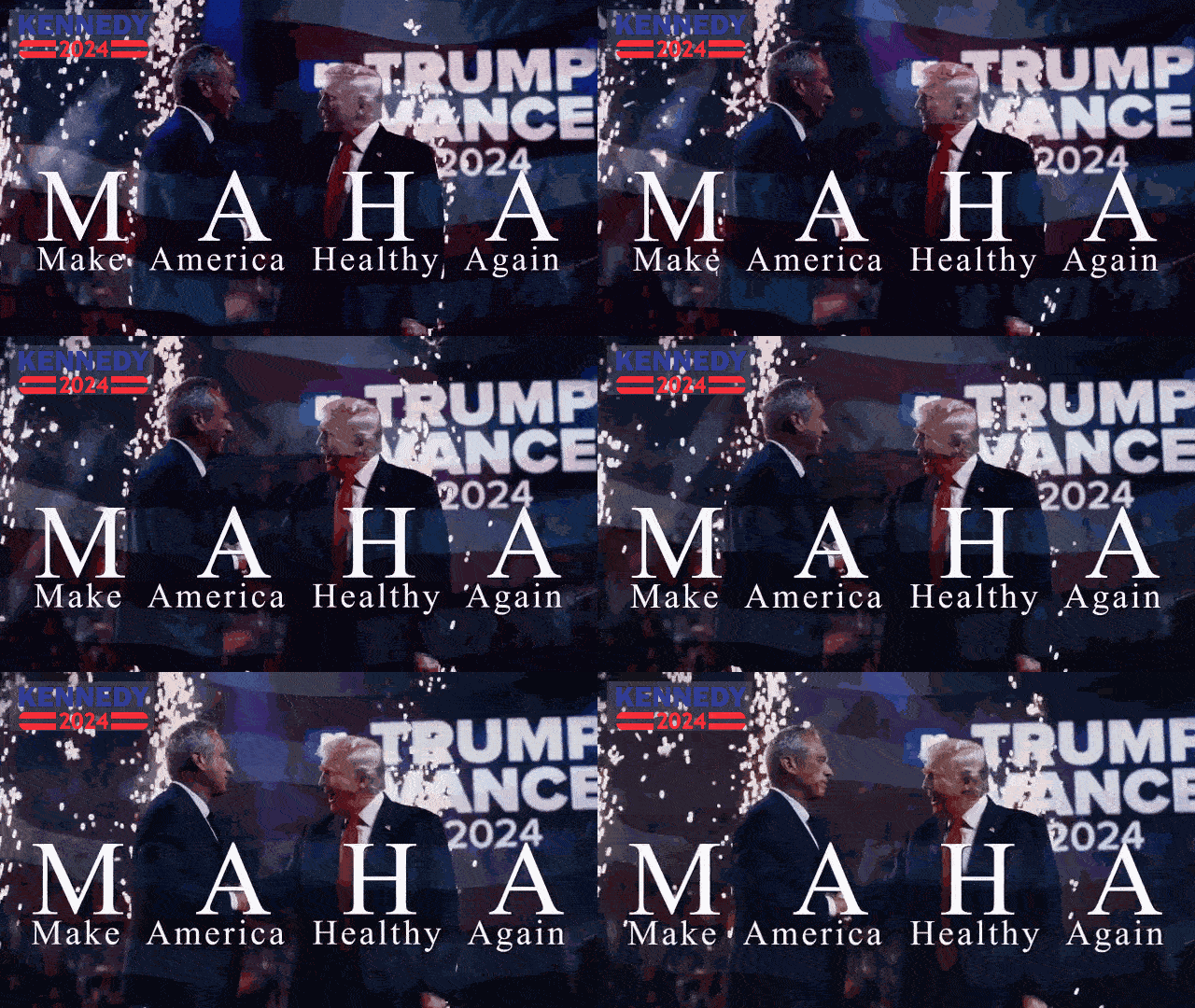
BLS data backs that up. In July, the number of workers quitting with confidence they’d quickly find another job fell more than 5% from a year earlier. 🚧 A frustrating sign of the times If the Fed cuts faster than expected, it will be a signal that policymakers are prioritizing jobs over inflation. And with hiring slowing, that decision may come at a critical moment. “This is wholly appropriate sentiment,” said Elizabeth Renter, senior economist at NerdWallet. “It’s very difficult to find work right now. And unlikely to get better any time soon. Employers aren’t hiring much, so workers are stuck job-hugging, clinging to their current jobs because the market isn’t favorable to job seekers.” Hiring is now running at its lowest non-Covid rate since 2013, and 2025 has marked the slowest first eight months for job creation in 15 years. As Bradley Saunders of Capital Economics put it after Friday’s jobs report, “the labor market has headed off a cliff-edge.” | | | | 💊 Tylenol sell-off shows MAHA’s bite | | | | We’ve already seen food giants bow to pressure from HHS Secretary Robert F. Kennedy Jr. and his “Make America Healthy Again” agenda by cutting certain additives. This week, that same campaign put Big Pharma on notice... and Tylenol’s parent company took the hit. 📉 What happened A federal report expected later this month is set to examine whether acetaminophen use during pregnancy may be linked to autism in babies. The research was reportedly conducted alongside the NIH, though HHS has refused to confirm details ahead of the release. Even without confirmation, speculation sent shares of Kenvue — maker of Tylenol — sliding into last week’s close, and the sell-off extended yesterday. Kenvue was quick to push back. “Nothing is more important to us than the health and safety of the people who use our products,” a spokesperson said. “We have continuously evaluated the science and continue to believe there is no causal link between acetaminophen use during pregnancy and autism.” ⚖️ Pushback builds HHS insists it is using “gold-standard science to get to the bottom of America’s unprecedented rise in autism rates.” But the Autism Society of America called the agency’s rush to publish “harmful, misleading, and unrealistic,” blasting Kennedy’s framing as “inaccurate and stigmatizing.” And as Trump’s MAGA trade policy raises questions about Fed independence, some on Wall Street now worry Kennedy’s MAHA crusade could leave its own lasting market legacy.
- 📉 Losers: Analysts point to drugmakers like Kenvue caught in MAHA’s crosshairs
- 📈 Winners: Kennedy’s camp has been vocal about supporting wearables and health-tech devices, which could give companies like Abbott Labs and DexCom a long-term lift.
| | | | Rate this newsletter | | | Your feedback matters! Before you go, please rate this newsletter and share your thoughts. | | | | | | | | | | | | InvestorsObserver | | You received this email because you signed up on our website or made a purchase from us. | | | | |