| | Good morning,
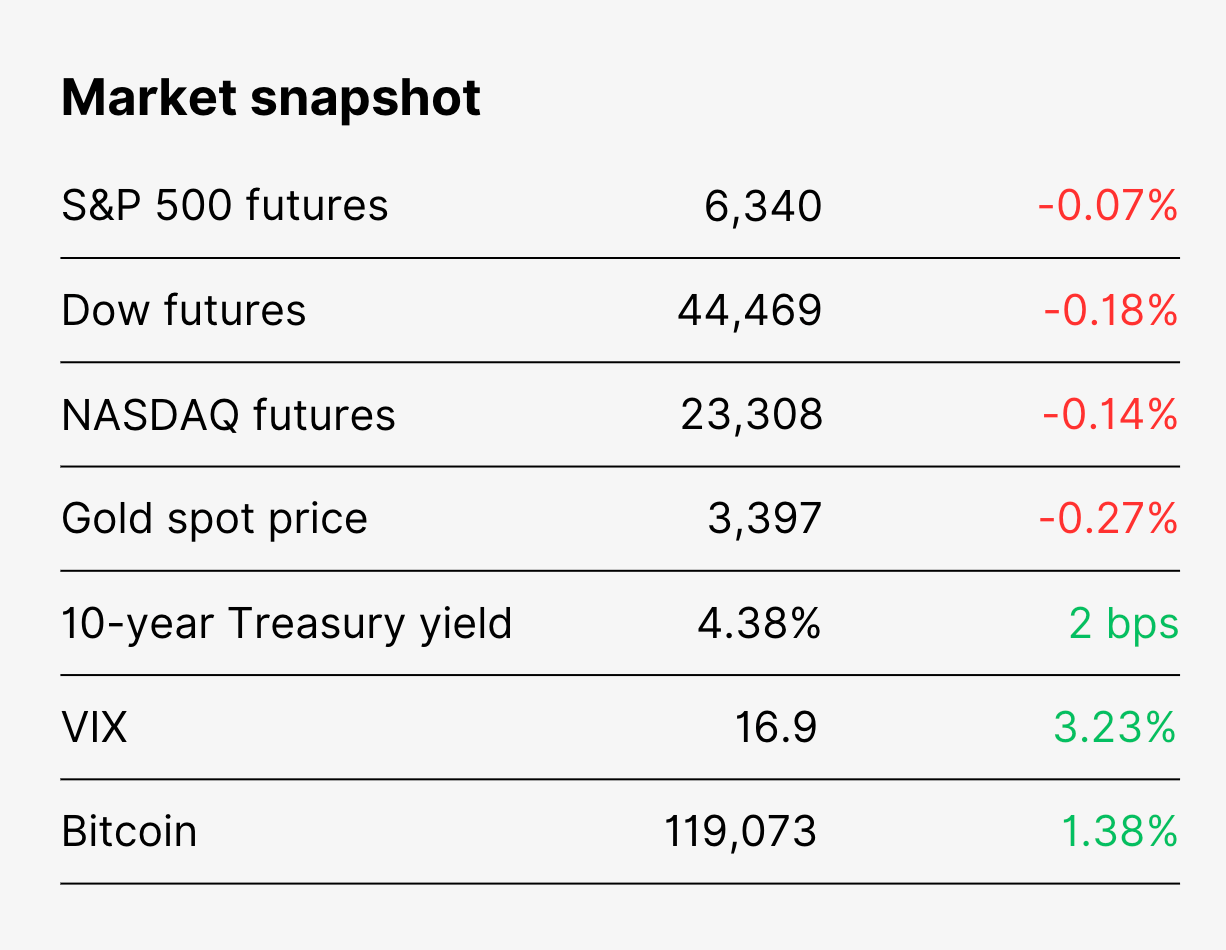
If yesterday taught us anything, it's that Wall Street has put its macro blinders on, and earnings are the only thing in focus for now. The week kicked off a fresh burst of optimism, brushing off tariff threats and geopolitical saber-rattling to chase quarterly upside instead. The S&P 500 and Nasdaq both notched new record highs, while the Dow lost steam into the close. But the trade war is far from over. EU officials are seriously preparing for a no-deal scenario. China’s dumping U.S. Treasuries and stockpiling gold. And the Fed is back in the hot seat as calls grow louder for a policy and personnel shakeup. Let's dive in. | | | | | Hang tight, Dan Runkevicius, Chief Editor | |  | | | | | “Markets do appear to be, as we flirt with all-time highs, sort of sanguine over the very, very near term. But that being said, I would say over the next 12 months, I think markets are going to be higher than where they are today, probably meaningfully so.” — JPMorgan Asset Management global market strategist Jordan Jackson | | | | | Five things to know before opening bell | |
📈 Record highs for S&P 500 and Nasdaq Earnings season buzz and hopes for trade clarity helped push the S&P 500 and Nasdaq to new all-time highs, even as the Dow slipped slightly into the close. All eyes are now on midweek earnings from Tesla and Alphabet for the next big catalyst. 🔥 Treasury Secretary thinks the Fed need an "audit" Treasury Secretary Scott Bessent calls for a sweeping "review" of the Fed's performance. “If this were the FAA and we were having this many mistakes, we would go back and look at why this has happened,” he said in an interview yesterday. His remarks land just ahead of speeches from Powell and Bowman, with the Fed already under fire from all sides. 🏦 Big banks to the Fed: Back off Wall Street’s top lenders will be barging into the Fed’s first-ever banking supervision conference today with a clear message: ease up. JPMorgan, Goldman, and Morgan Stanley execs are lobbying new Vice Chair Phillip Jefferson to ditch plans for tougher capital rules, including Basel III, stress tests, and surcharges for the biggest banks. 💳 Credit rejections drop Consumers are getting more approvals. New York Fed data shows mortgage refi rejections plunged from 42% in February to 15% in June. Auto loan denials were halved to 7%. Even the number of “discouraged borrowers” is down. It’s a sign that lending standards may be loosening, at least at the margins. 💵 Currency markets bet against the dollar For the first time in two weeks, options markets flipped bearish on the dollar, with one-month risk reversals in the Bloomberg Dollar Spot Index turning negative. The move reflects rising anxiety heading into August. | | | | 🇪🇺 EU threatens trade war as tariff clock ticks down
| | | | The EU is gearing up for a showdown. While Trump’s blanket tariffs are set to hit dozens of trading partners on August 1, European officials are taking the lead in pushing back, and they’re not mincing words. “If they want war, they will get war,” said one German official. Behind the scenes, EU reps are meeting this week to craft a formal retaliation plan in case Trump follows through, saying “all options are on the table.” 📊 Here’s what’s at stake: -
Trump has floated 30% blanket tariffs on EU goods -
Even a “deal” would likely include at least 15% duties -
Mexico and Canada are bracing for tariffs of 30% and 35% -
150+ countries are expected to receive new tariff warnings These threats follow Trump’s July 10 announcement outlining three major new tariff campaigns. Europe landed right in the middle. 📉 Earnings > tariffs Analysts say the market isn’t ignoring tariffs... just reprioritizing. “Earnings seasons are always important, but this is the first one that we get some information about how companies are responding to or dealing with tariffs," said Thomas Hainlin, investment strategist at US Bank Asset Management Group. In other words, Wall Street is looking for answers, just not from Washington.
Critics have coined a nickname for Trump’s unpredictable trade strategy: TACO trade, short for “Trump Always Chickens Out.” The White House begs to disagree, saying that’s just how dealmaking works. Treasury Secretary Scott Bessent told reporters Monday the administration is “more concerned with high-quality deals than getting these deals done by August 1.” | | | | 💵 New de facto reserve currency | | | | As deficits balloon and Trump’s tariff threats fly in all directions, U.S. debt is losing its luster as a reserve asset, and the latest Treasury data shows it. 🔻 China has been selling U.S. debt for three straight months Between April and May, China trimmed its Treasury holdings from $757.2 billion to $756.3 billion. Although a modest decline, it's part of a bigger pattern. Since February, Beijing has shed more than $26 billion in U.S. debt. That ongoing selloff pushed China out of the No. 2 spot among foreign U.S. bondholders for the first time in 17 years. Japan remains in the lead, now followed by the UK. 🥇 Gold is a de facto reserve currency With Treasuries losing favor and the U.S. Dollar Index down 15% in a few years, gold is back in the spotlight, especially in Beijing. According to Adam Kobeissi of The Kobeissi Letter, China’s bond divestment has coincided with a massive ramp-up in gold purchases. Gold now accounts for 6.8% of China’s foreign exchange reserves, which is double what it was just three years ago. By comparison, U.S. Treasuries make up only 22% of China's reserves, down from 37% in 2016, the lowest share in at least 15 years.
Famed “Black Swan” author Nassim Taleb says gold is already serving as a de facto reserve currency. While central banks may still settle trades in dollars, he argues, they increasingly convert them into gold soon after. 📌 Bottom line: China’s move isn’t just a symbolic retaliation. It’s part of a slow but steady pivot away from the dollar as a reserve asset. That said, barring a black swan, these shifts tend to play out over decades, not years. | | | | 🥇 $3,200 or $4,000 gold? Take your pick. | | | | With no clear read on Trump’s next moves, Wall Street is falling back on the oldest hedge in the book: gold. 📈 Gold kicks off the week with new highs Gold prices surged to their highest level since mid-June on Monday, rising alongside growing expectations for Fed rate cuts and a weakening dollar. Treasuries also slipped, adding more fuel to bullion’s rally. China’s pivot from U.S. bonds to gold is one factor. But TD Securities says it’s a mix of soft-dollar bets, stagflation fears, and tariff uncertainty driving the move. Commodity strategist Daniel Ghali noted that these forces are “aligned to further boost the price of bullion.” 🔮 What analysts see next Forecasts for gold and silver started the year modest, but after a series of confidence-shaking headlines, analysts are recalibrating. A fresh report from the London Bullion Market Association (LBMA) shows that while geopolitics remains a key driver, analysts are now laser-focused on: -
U.S. monetary policy -
The federal deficit -
Ongoing dollar weakness Meanwhile, price targets are all over the map. The LBMA survey shows 2025 forecasts ranging from just under $3,500 to a high of $4,000, though some expect a pullback by December.
Five out of 13 analysts in the report predicted gold could end the year at or below $3,200. 📌 Bottom line: Even with gold sitting at record highs, analysts see it not only as a hedge but also as a top-performing asset in 2025.
| | | | Rate this newsletter | | | Your feedback matters! Before you go, please rate this newsletter and share your thoughts. | | | | | | | | | | | | InvestorsObserver | | You received this email because you signed up on our website or made a purchase from us. | | | | |