| | Good morning,
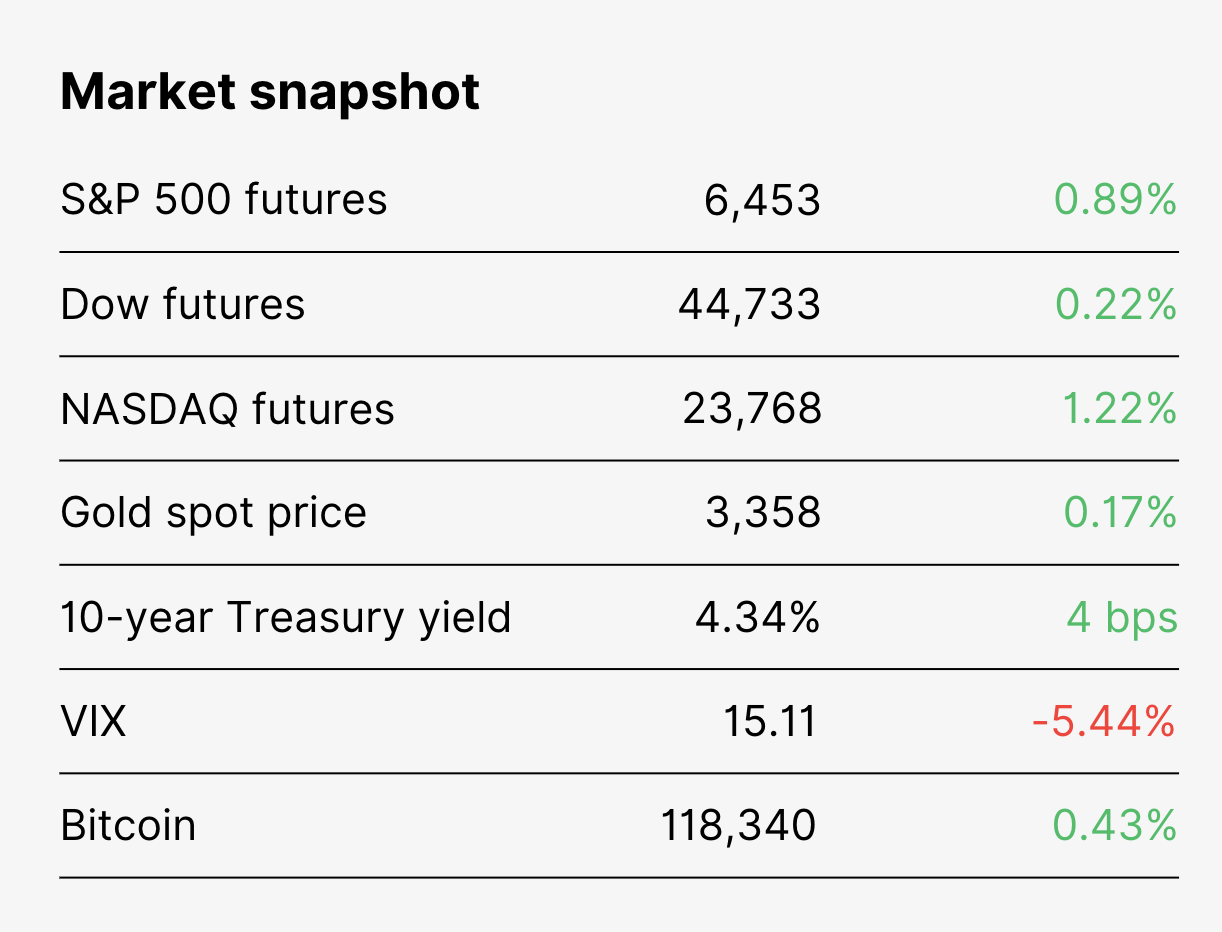
Stock futures are getting an early lift from blockbuster Big Tech earnings, but that’s about the only good news to carry over from yesterday. After the Fed’s “we’ll see” wrap-up, investors are juggling a White House crypto crackdown, copper prices in freefall, grim housing data, and an inflation report that could make or break the week. GDP came in hot (if you read yesterday's edition, you know why), jobs data is holding up (for now), and Trump is doubling down on tomorrow’s tariff deadline with his trademark all-caps flair. Looks like Wall Street isn’t packing up for summer vacation just yet… let’s dive in. | | | | | Hang tight, Dan Runkevicius, Chief Editor | |  | | | | | “For the time being, we’re well positioned to learn more about the likely course of the economy and the evolving balance of risks before adjusting our policy stance. We see our current policy stance as appropriate to guard against inflation risks.” — Fed Chair Jerome Powell, on the FOMC’s decision not to cut interest rates | | | | | Five things to know before opening bell | |
🚀 Big Tech keeps stocks flying U.S. and European stock futures climbed after blowout Big Tech earnings booster confidence in corporate profits. Microsoft is set to open higher on plans to pour $30 billion into AI data centers, while Meta jumped 11% after hours as it doubled down on AI spending. 💼 Jobs surprise on the upside The labor market flexed again in July. ADP reported private payrolls rose by 104,000, easily beating the 75,000 economists expected. ADP chief economist Nela Richardson said hiring has “recalibrated to a lower average level,” but it’s still strong enough to keep Americans spending. 🪙 Copper crashes on new tariffs Copper prices cratered 18% after Trump signed an executive order slapping a 50% tariff on imported copper starting Friday. Nearly half of US copper is imported, making it the latest metal to get hit after steel and aluminum. Copper stocks took a beating in turn. 📈 Inflation check incoming The Fed’s go-to inflation gauge, PCE, drops today. May’s reading showed 2.3% annual inflation, but analysts expect June to tick up to 2.5% as tariffs push prices higher. Core PCE (excluding food and energy) is forecast to stay flat at 2.7%. Oxford Economics chief economist Ryan Sweet said recent CPI data already showed “clear evidence that tariffs are pushing up core goods prices,” and expects that to show up in PCE. ₿ Crypto crackdown cools Bitcoin Bitcoin wobbled yesterday after a White House report laid out new plans to regulate crypto. Proposals include a congressional ban on central bank digital currencies, stronger protections for developers, and updated digital asset tax laws. BTC briefly dipped to $116,000 before recovering above $118,000. | | | | 👀 GDP pops, skeptics roll eyes
| | | | The US economy shook off a shaky start to the year with a stronger-than-expected second quarter. GDP grew at an annualized 3%, topping Bloomberg’s 2.6% forecast.
The headline looks solid, but the details tell a more complicated story. As we expected, much of the rebound came from a drop in imports as tariffs throttled trade flows. Meanwhile, sales to private domestic purchasers — a cleaner measure of core economic activity — slowed to 1.2% growth from 1.9% in Q1. That’s the weakest pace in nearly three years. 🧠 What analysts are saying EY chief economist Gregory Daco called the Q2 bounce an “economic mirage,” warning that policy uncertainty, tariff-driven inflation, and tighter immigration rules are already dragging on activity. On the flip side, Thomas Ryan of Capital Economics isn’t sounding alarm bells just yet. Some of the slowdown, he said, is tied to temporary factors like the post-Liberation Day oil price slump. “We continue to view the economy as broadly healthy,” Ryan added.
In fact, the report doesn’t exactly scream recession. Polymarket’s end-of-year recession odds have plunged from 66% to 14% since spring. Over at Wall Street, JPMorgan pegs a 40% chance of recession over the next 12 months, with Goldman Sachs at 30% and the New York Fed at 28.7%. 📌 Bottom line: GDP got a boost, but the undercurrent still points to a muddy start rather than a sustained sprint.
| | | | 🚫 No extensions: Trump locks in tariff deadline | | | | Dozens of US trading partners without a deal are running out of time before new, higher tariffs kick in, and President Trump isn’t budging. 🗣️ “Will Not Be Extended” In a midweek social media post, Trump went full caps lock. “The August first deadline is the August first deadline — it stands strong, and will not be extended. A big day for America!!!” he wrote. That leaves little room for last-minute dealmaking ahead of tomorrow’s tariff snapback. Treasury Secretary Scott Bessent tried to soothe Wall Street, saying it wouldn’t be “the end of the world” if the tariffs stayed in place for a few weeks while negotiations continued. 📉 Analysts see bigger trouble Goldman Sachs estimates that more than half of all US imports come from countries still without a deal, including major partners like Mexico, Canada, South Korea, and Brazil. Higher rates for these nations could mean significant economic fallout. Ronald Temple, chief market strategist at Lazard Asset Management, warned investors not to get comfortable. “Investors should not be too sanguine about the potential enduring economic effects of trade policy,” he said. Even before today’s PCE inflation reading, economists are bracing for more inflation. Deutsche Bank economist Brett Ryan flagged early signs that tariffs are already inflating costs for household goods, toys, and other consumer products. | | | | 🔐 Those golden handcuffs are only getting shinier | | | | The housing market has been cooling for months, but fresh reports show the slowdown is getting worse... from home sales to apartment rentals. 📉 Contract signings slide Pending home sales took another hit last month. The index dropped 0.8% from May and 2.8% from a year ago, falling to 72, a level not seen since 2001. Economists had expected a modest uptick, making the steep drop a surprise. Adding to the slump, more contracts are being canceled before closing. Bright MLS chief economist Lisa Sturtevant says 2025 could underperform even last year, which saw a three-decade low. “Unfortunately, there is little to suggest any sort of major rebound in home sales as we head into fall,” she said. 🏢 Rental market slows down, too Multifamily rentals are also feeling the chill. Apartment List’s latest supply index shows vacancies at a record 7.1%, the highest in its eight-year history. Other data points: -
Average 28 days to lease a unit -
Rents down 0.8% year-over-year -
Median rent just over $1,400 Normally this would be peak moving season, but tariff-driven uncertainty is weighing on demand. “That uncertainty appears to have modestly dampened demand during this moving season,” the report noted.
The culprit is the Fed’s decision to stand pat, which has locked in mortgage rates. Bankrate analyst Mark Hamrick called the “remarkable rise in mortgage rates” as “a kind of golden handcuffs” for the housing market, preventing many owners from moving. That’s squeezing already thin inventory and making the housing slowdown even harder to reverse. | | | | Rate this newsletter | | | Your feedback matters! Before you go, please rate this newsletter and share your thoughts. | | | | | | | | | | | | InvestorsObserver | | You received this email because you signed up on our website or made a purchase from us. | | | | |