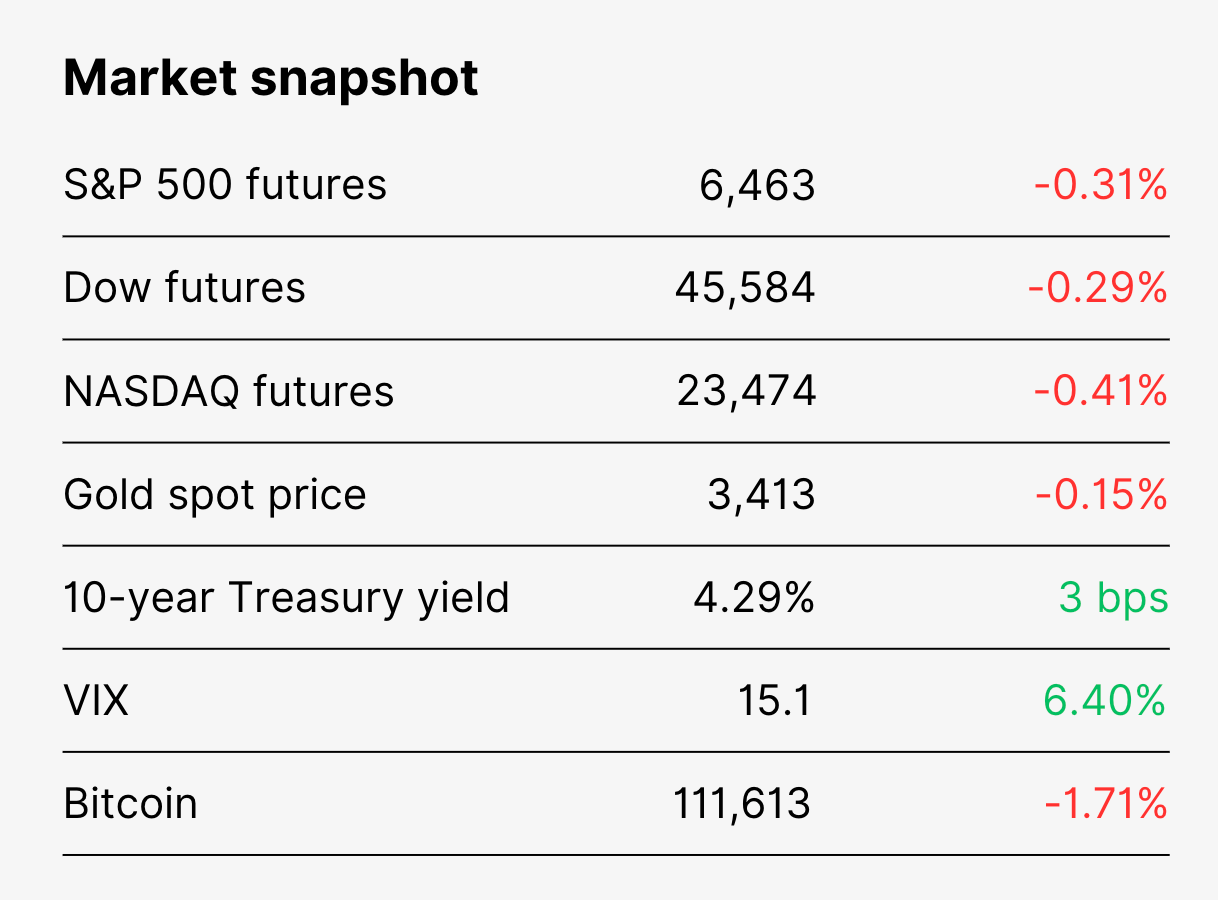
| | Good morning, Wall Street got the Powell sugar high it was waiting for, with stocks ripping to record highs Friday after the Fed chair cracked the door open to a September cut. But that relief rally is brushing up against some less-friendly headlines. Intel is effectively turning into a state-owned company, "sneakflation" is creeping into Wall Street’s vocabulary, and furniture makers are becoming the latest casualties of Trump’s tariffs.
All eyes this week are on Nvidia’s earnings (the bellwether for AI that’s powering this year's rally) and a fresh batch of consumer data (the best read on whether spending can keep the economy afloat). Let's dive in! | | | | | Hang tight, Dan Runkevicius, Chief Editor | |  | | | | | “A lower interest rate environment could send valuation multiples higher. Food stocks trade at historically depressed levels and also at historical high dividend yields. In food, higher valuation multiples have historically correlated with lower interest rates.” — JPMorgan analyst Thomas Palmer | | | | | Five things to know before opening bell | | |
📉 Powell hints, markets rip
Stocks slid into Powell’s Jackson Hole speech on fears the Fed might stay put. But once he nodded to “adjusting our policy stance,” Wall Street exhaled. The S&P 500 finished at a record with all three majors up more than 1.5%. Bitcoin also spiked Friday before cooling off over the weekend. 🥈 Platinum shine grows Gold and silver have both ripped higher this year, up 28% and 32% respectively. Now platinum is stealing the spotlight. Bank of America’s Paul Ciana called it a “buy the dip” setup after the metal hit $1,364 an ounce — nearly 50% higher year to date — with more upside if equities wobble and safe havens stay hot. 💻 Intel goes semi-national Intel shares are surging after the U.S. government confirmed a 10% stake worth more than $11 billion. Trump hailed the deal as a win for American tech, calling chips “fundamental to the future of our Nation.” CEO Lip-Bu Tan, recently pressured by Trump to resign, instead thanked the administration for its “confidence” as investors digested what looks like a partial nationalization. 🛢️ Peace hopes fade Trump’s meetings with Russia, Ukraine, and European leaders last week raised hopes for a breakthrough. But Moscow’s Sergey Lavrov quickly threw cold water on talk of a summit, saying the agenda is “not ready at all.” Oil, down on the month, ticked higher again as investors recalibrated around another dead end in negotiations. 🛋️ Tariffs hit furniture Furniture makers just joined metals, semis, and drugs on Trump’s tariff list. The president promised duties within 50 days to “bring the furniture business back” to the U.S. Import-heavy retailers like Wayfair, Williams-Sonoma, and RH fell in extended trading, while domestic player La-Z-Boy mustered a bump after hours. | | | | 🛍️ "Sneakflation" has arrived
| | | | Wall Street loves buzzwords. We’ve had stagflation (📉 slow growth, high prices) and shrinkflation (📦 smaller packages, same cost). Now tariffs have birthed a new one: sneakflation. The idea is simple: companies stocked up before Trump’s duties hit, keeping sticker prices stable for a while. But those inventories are fading, and the new shipments carry a tariff premium that’s creeping onto shelves. 📊 By the numbers: -
Consumers covered just 22% of tariff costs in June -
Goldman Sachs sees that rising to 67% by October -
Imported goods are already 5% pricier than pre-tariff forecasts -
Domestic goods are 3% higher Harvard Business School professor Alberto Cavallo warns the hit will be slow but impactful. “It could take over a year for us to see the effects … but a year or two from now, we’ll notice consumers paid a significant amount even if they didn’t realize it at the time.” 🔮 What comes next This week’s July PCE report will offer the latest read on tariff inflation, with core inflation expected to tick up from 2.8% to 2.9%. Wells Fargo says tariffs are showing up in services, and now sees core PCE peaking above 3% by year-end. Meanwhile, Pantheon Macroeconomics adds that even after last quarter’s import surge faded, prices held firm, making a pullback in costs unlikely. 💡 Bottom line: Sneakflation isn’t just a witty word twist. It’s higher prices creeping into everyday, and we may not notice until it’s too late. | | | | | AI has been the rocket fuel behind this year’s rally, from soaring corporate spend on data centers to the Nasdaq’s outperformance. But after last week’s pullback, investors are asking whether the rally is running out of steam or just catching its breath. 😱 UBS: don’t panic The Roundhill Magnificent Seven ETF dropped 3.5% in just four days, but UBS analysts say the selloff isn’t a reason to bail. “While some near-term tech volatility is not surprising given the run-up in valuations, we advise investors against becoming overly defensive,” they wrote, pointing to strong Q2 earnings, upbeat guidance, and early signs of revenue from AI integrations. 💻 Nvidia in the spotlight The week’s big test comes midweek when Nvidia reports. Consensus calls for EPS just over $1 on revenue of $46.1 billion. Keybanc’s John Vinh warns Q3 guidance could soften since it’s expected to exclude direct China sales until licensing clears, but he’s still bullish long-term.
Meanwhile, Citi’s Stuart Kaiser says a solid print from Nvidia could re-ignite Big Tech’s rally and put an end to the “sentiment selling” of recent weeks. But he cautions that a miss would do the opposite. The Nasdaq ended Friday nearly 2% higher but still down more than half a point on the week. Nvidia stock is already up nearly 29% this year.
| | | | 🛍️ Consumers are feeling the pinch | | | | Fresh inflation and sentiment data land this week, but Americans hardly need a survey to know their wallets are shrinking. 📉 Shoppers trade down Last week’s retail earnings painted a split-screen. Discount names like TJX and Ross Stores delivered upbeat outlooks and gained ground, while full-price peers Target and Walmart slid. A Redfin survey offered another read: -
35% of workers are delaying big-ticket purchases like homes or cars -
That number jumps to 57% for those earning $50,000 or less -
Nearly 40% say they’re more fearful about job security than six months ago Redfin economist Chen Zhao said workers see companies leaning on AI and other cost-cutting tech, and that’s keeping many would-be buyers on the sidelines. 🍔 Recession on the menu Businesses are picking up on the mood, too. From a Manhattan bar’s “Recession Pop Party” to a San Francisco chain selling a “Recession Burger” combo, the dreaded “R word” is creeping into marketing as consumers pull back. Home Depot noted that while wealthy shoppers are still making big purchases, large discretionary projects — the kind that usually require financing — are fading. “They’re looking to stretch their budget. So, value is very top of mind," said Target CCO Rick Gomez. Meanwhile, the University of Michigan’s sentiment index dropped more than 3 points between July and August. Survey director Joanne Hsu said consumers expect things to get worse across the board: inflation, business conditions, and all. | | | | Rate this newsletter | | | Your feedback matters! Before you go, please rate this newsletter and share your thoughts. | | | | | | | | | | | | InvestorsObserver | | You received this email because you signed up on our website or made a purchase from us. | | | | |