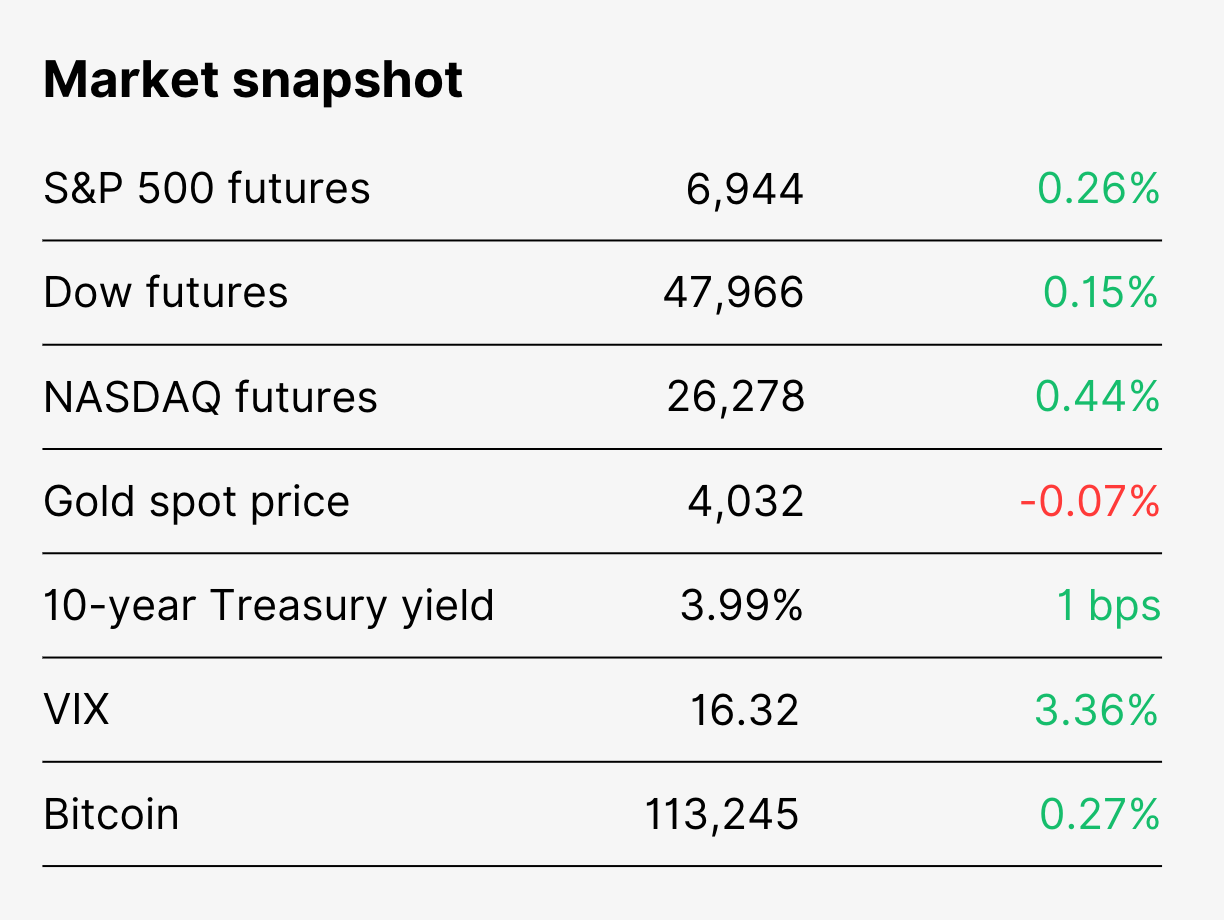
| | Good morning,
Big day on both sides of the Pacific. In Washington, the Fed is set to deliver its latest rate cut, and in Seoul, Trump just sealed a trade deal with South Korea after touching down for the APEC summit. He’s also set for a one-on-one with China’s Xi Jinping, where tariff relief and Nvidia’s new Blackwell chip are expected to top the agenda. Wall Street is watching both meetings like hawks. A 25-basis-point cut is already baked in, but the question now is whether Powell has the guts to cut into next year. As Oxford Economics’ Michael Pearce warned, “as downside risks fade, inflation risks will loom more heavily,” suggesting the Fed could take a step back. Meanwhile, markets are red hot. Apple briefly joined the $4 trillion club, gold slipped under $4,000 as stocks hit new records, and UPS surged 8% after cutting nearly 50,000 jobs to “restore profitability.” The AI boom isn’t cooling either. Microsoft locked in a 27% stake in OpenAI’s new for-profit arm, Nvidia dropped $1 billion on Nokia to co-build 6G infrastructure, and Cathie Wood is calling humanoid robots “the biggest of all embodied AI opportunities.” Let’s dig in.
| | | | | Hang tight, Dan Runkevicius, Chief Editor | |  | | | | | “As the downside risks to the economy fade, inflation risks will loom more heavily in their thinking next year, which we think will justify a more moderate pace of cuts.” — Oxford Economics deputy chief US economist Michael Pearce | | | | | Five things to know before opening bell | | |
🇰🇷 Trump scores a trade deal with South Korea Donald Trump touched down in Seoul for the APEC summit and wasted no time cutting a deal. Next on the agenda is a one-on-one with China’s Xi Jinping, where Trump says he’ll push to lower tariffs tied to the fentanyl crisis and talk tech, specifically Nvidia’s flagship Blackwell chip. Any major de-escalation could send Big Tech through the roof. 🤖 Cathie Wood bets big on AI robots Cathie Wood’s latest obsession isn’t crypto or clean energy; it’s humanoid robots. Speaking this week, the Ark Invest CEO called them “the biggest of all embodied AI opportunities,” pointing to machines designed to mirror human size, movement, and behavior. She says the tech could redefine labor and productivity, with Tesla, AMD, and Palantir among her top picks to benefit. Wood admits the sector is due for a “reality check,” but insists today’s lofty AI valuations will look justified five years from now. 📦 UPS soars on sweeping job cuts Efficiency is the new growth story. UPS shares jumped 8% after the company revealed it had slashed 48,000 jobs (34,000 in operations and 14,000 in management) as part of a restructuring drive. The cost cuts helped deliver $2.2 billion in savings and what CEO Carol Tomé called “our most efficient peak season in history.” 🍎 Apple briefly joins the $4 trillion club Apple became the third company to hit a $4 trillion valuation, joining Nvidia and Microsoft, before slipping back below the mark by the close. The milestone came on strong early demand for the iPhone 17, which outsold last year’s model by 14% in its first ten days across the U.S. and China. Despite concerns about Apple’s AI lag, its brand loyalty and hardware margins remain unmatched. 🧾 ADP hints at a slow jobs rebound Private payroll tracker ADP says U.S. hiring is finally crawling off the floor. Weekly job gains averaged 14,000 in October. That's hardly a boom but better than September’s stall. Chief economist Nela Richardson called it a “tepid recovery,” suggesting the labor market may have bottomed out. With official data still frozen by the shutdown, ADP’s figures are now the best read the Fed has going into today’s decision. | | | | 💸 Two blockbuster deals reignite the AI rally
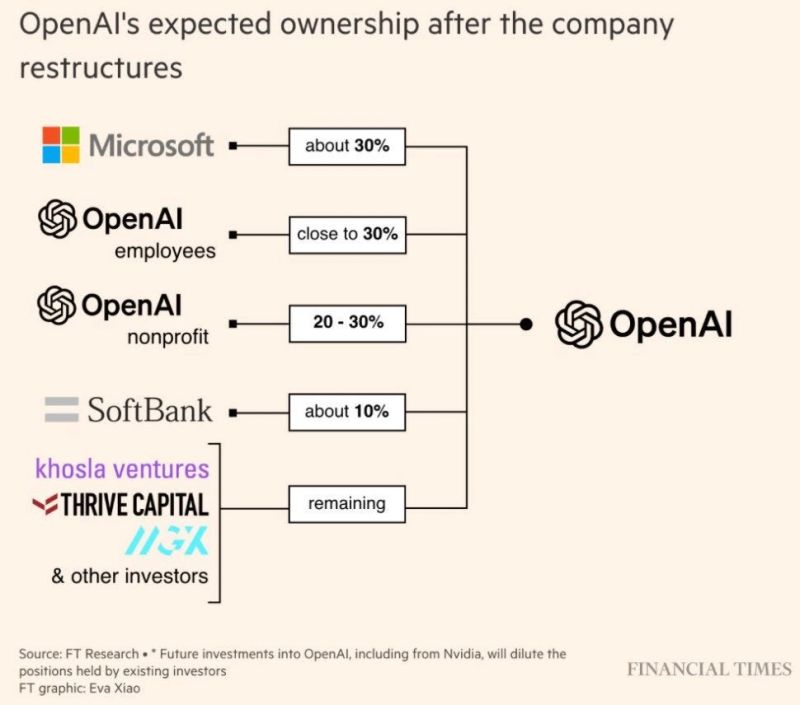
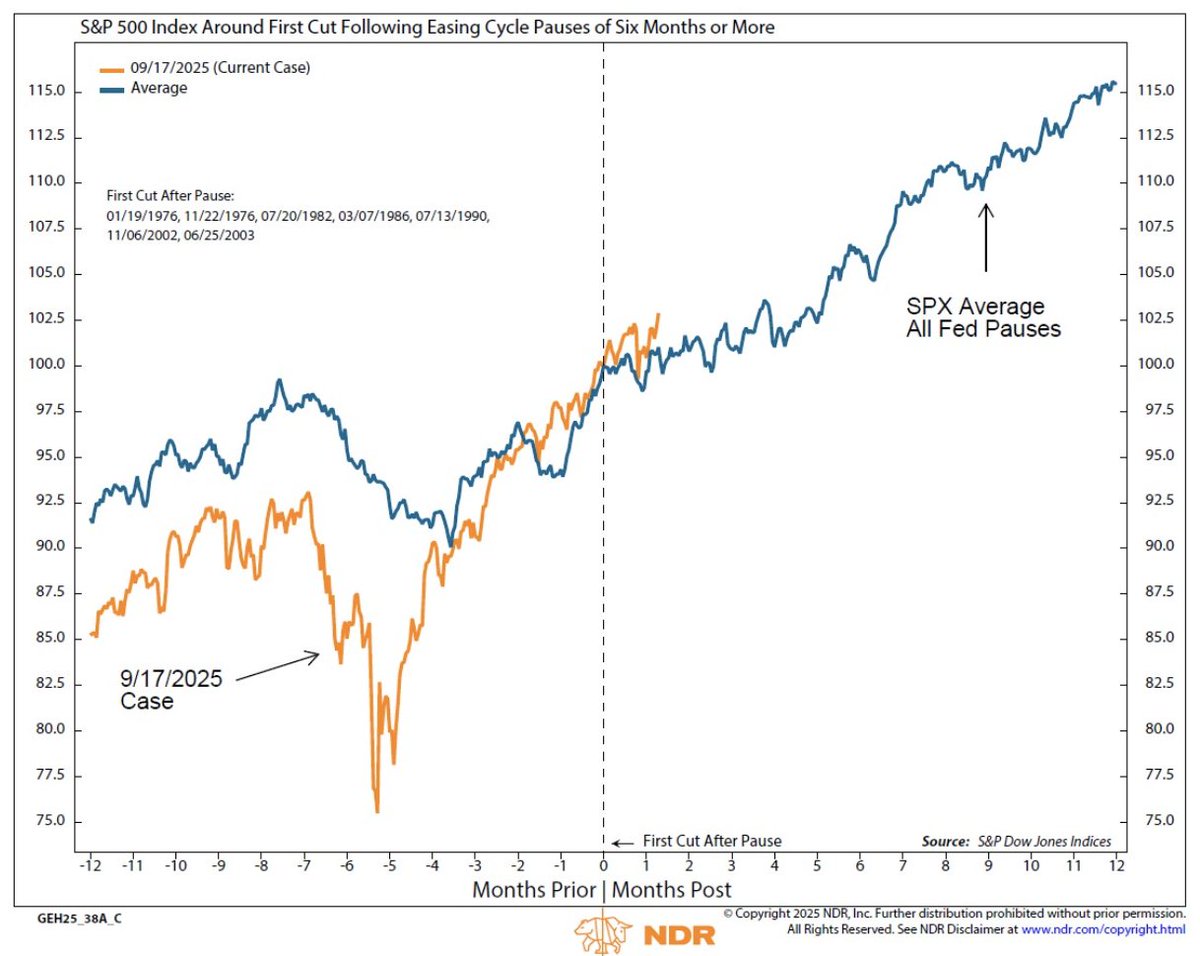
| | | | Big Tech’s spending spree just kicked into a higher gear. After months of warnings that the AI boom might be cooling, two new megadeals this week sent a clear message: the capital pipeline is still wide open. 🪟 Microsoft cements its OpenAI grip The tech giant finalized a sweeping agreement that officially transforms OpenAI into a for-profit corporation, locking in Microsoft’s sway over the most valuable AI company on Earth. Here’s the breakdown of the deal: -
Microsoft will own 27% of the new OpenAI Group PBC, worth roughly $135 billion, about $5 billion more than the nonprofit’s remaining stake -
OpenAI will spend $250 billion on Microsoft’s Azure cloud services through 2032 -
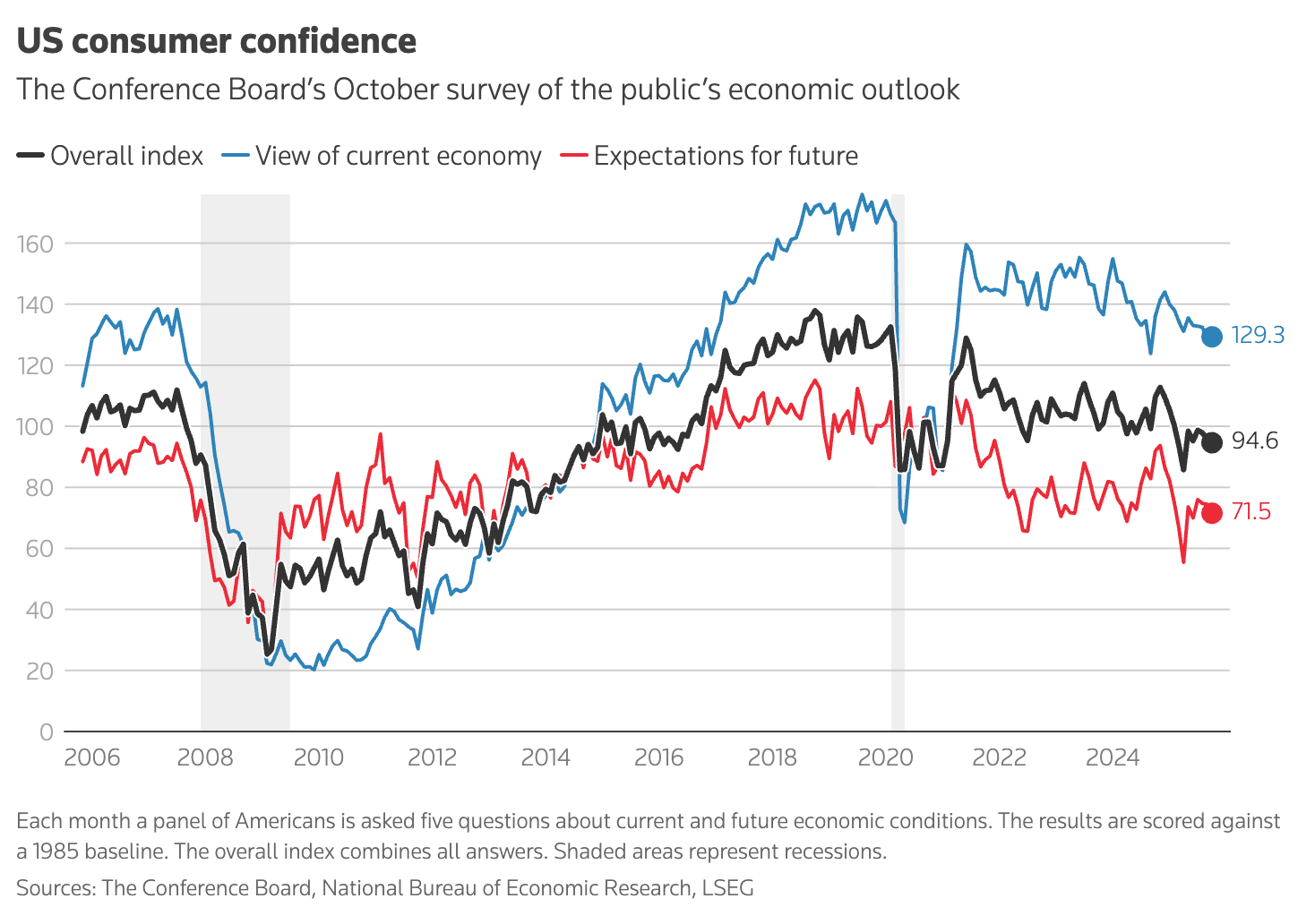
The deal guarantees Microsoft continued access to OpenAI’s newest models, including anything created after reaching artificial general intelligence (AGI) In short, OpenAI just became a permanent tenant inside Microsoft’s ecosystem. 📱 Nvidia bets $1 billion on Nokia Not to be outdone, Nvidia unveiled a $1 billion investment in Nokia to co-develop AI-optimized networking and 6G infrastructure. The plan is to run Nokia’s next-gen software on Nvidia’s processors to create the data backbone of the AI era. For Nvidia, it’s another step beyond chips and into full-stack dominance. The company has been quietly taking stakes in partners like Intel and OpenAI, building a vertically integrated AI empire that stretches from semiconductors to software to connectivity. The announcement sent the chip giant up 5% and Nokia soaring 23%, which is a clear vote of confidence from Wall Street chasing the next big thing in AI hardware. 😈 A devil’s-advocate take Meanwhile, Morgan Stanley’s Andrew Sheets thinks these deals may be way ahead of their time. “It’s usually not about the technology not working, but rather a promising technology being built ahead of demand, and the builders running out of money before demand catches up.” That may be true. But for now, the capital keeps flowing, valuations keep climbing, and the AI arms race shows no sign of slowing down. | | | | 🏦 Historic easing about to start | | | | It’s Fed Day, and while a 25-basis-point cut is basically a lock, there’s far more at stake than a minor tweak to interest rates. With stocks at record highs, investors are asking whether the Fed is engineering a soft landing or quietly inflating the next bubble. 💭 Dalio’s dilemma Bridgewater founder Ray Dalio warned this week that a bubble could already be forming around megacap tech stocks. With most of this year’s market gains concentrated in Big Tech, Dalio argues the U.S. is morphing into a “two-part economy,” reminiscent of the late-’90s dot-com setup. The risk, he adds, is that easy money hides the imbalance for now... until the Fed eventually tightens and exposes it all at once. A new CNBC survey shows over 90% of Wall Street analysts expect a rate cut today, but only two-thirds think it’s actually justified. “Financial conditions are near historically easy, GDP is tracking 3.5–4%, and inflation remains well above target. In more normal times, there’s no way the Fed would be cutting rates,” said RBA’s Richard Bernstein. The counterargument, and Powell’s likely defense, is that a pre-emptive cut could shield the economy from bigger collateral damage caused by the shutdown and tariffs. 📌 Bottom line: The Fed is likely to cut, but it’s running out of excuses. The next move will show whether policymakers are cushioning a recession… or just babysitting a bubble. | | | | 📉 Bull market my ass, says Main Street | | | | Inflation, job uncertainty, tariffs, and the drawn-out government shutdown are wearing Americans down... and the Conference Board just confirmed it. 📉 The latest dip Consumer confidence was down for a third straight month, dropping one point to 94.6 in October for the lowest reading since April. The latest report shows a slight improvement in business conditions, but short-term expectations for income, jobs, and business activity took another downturn. In fact, just 15.8% of respondents in the latest survey expect more jobs to be available six months from now, down from 16.6% last month.
Meanwhile, the board’s Expectations Index remains below the threshold that typically signals a looming recession. 💬 The economist’s positive spin Stephanie Guichard, the Conference Board’s senior economist for global indicators, highlighted one faint silver lining. Views on current business conditions and job availability ticked higher for the first time since late 2024. But expectations for the next six months “weakened somewhat” across the board. “Consumer confidence moved sideways in October, only declining slightly from its upwardly revised September level,” Guichard said.
The slide comes during a partial data blackout, leaving economists flying blind. Layoff announcements hitting the headlines almost daily doesn't help either. 📌 Bottom line: Americans aren’t panicking yet but also not crazy about the future. | | | | Rate today's newsletter*... | | | * We are just a messenger. To avoid confusion, please rate the quality of reporting, not news | | | | | | | | | | | | InvestorsObserver | | You received this email because you signed up on our website or made a purchase from us. | | | | |