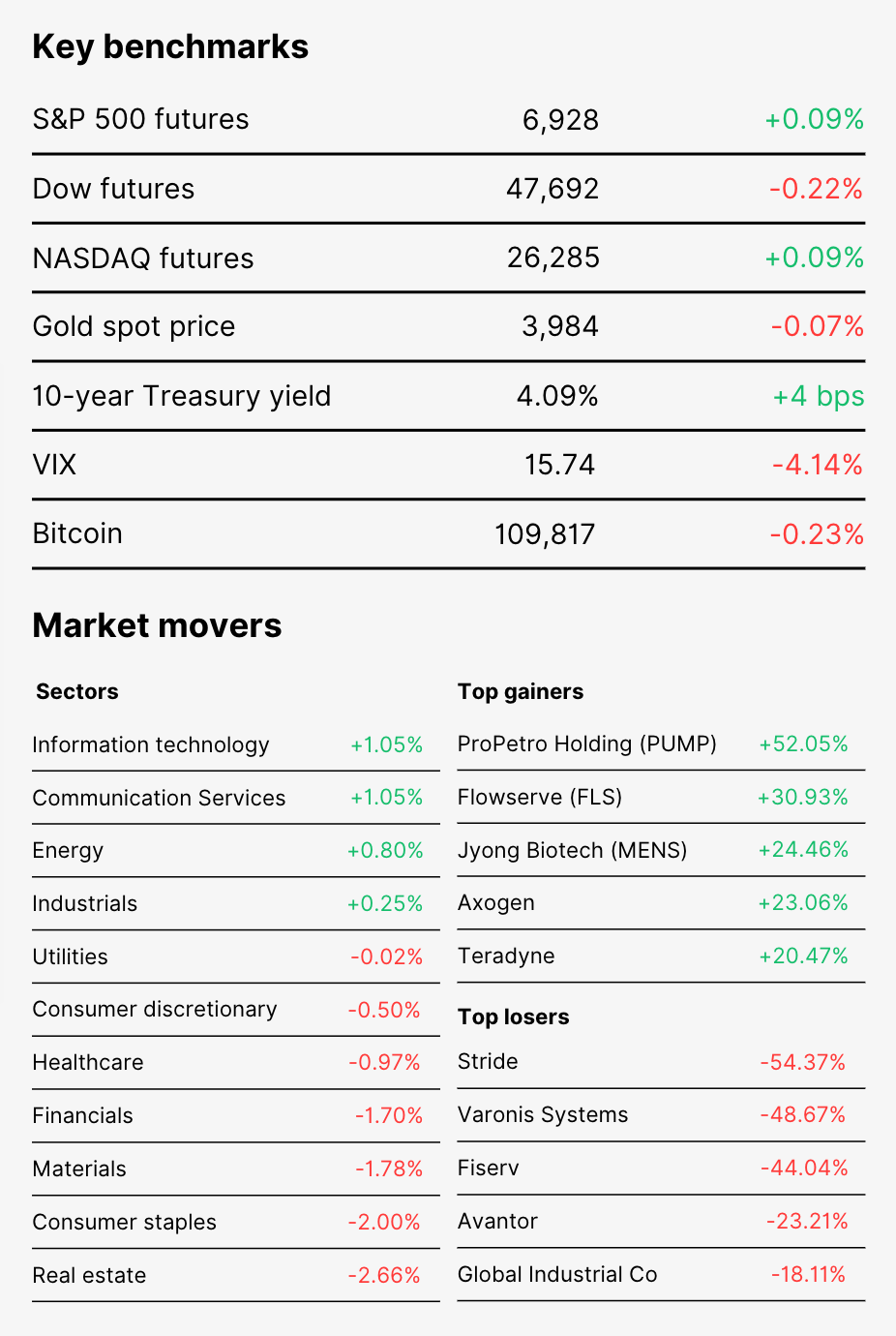
| | Good morning, Trump and Xi just pressed pause on the world’s biggest trade feud... again. The U.S. will cut fentanyl tariffs to 10%, China’s shelving rare-earth export curbs, and both sides are calling it an “amazing” meeting. Looks like even TikTok might dodge a ban. As if the news wasn’t already good enough, the Fed also cut rates. Expected, yes, but it sealed the deal. So far, both appear to be “sell the news” events. Stocks rallied on the Fed’s second straight rate cut, then faded fast after Powell poured cold water on hopes for a December follow-up. “A further reduction … is not a foregone conclusion,” he said. In Fed-speak, that means don’t count on it. Meanwhile, futures are mixed heading into today’s open following the truce. So are the signals from corporate America: from $5 trillion market caps to record layoff sprees. Nvidia officially joined the $5 trillion club, while corporate layoffs keep rolling in from GM to Paramount Skydance, and economists warn of shutdown risks. A fragile peace abroad, a fragile recovery at home... and one Fed chair doing his best not to promise anything. Let's dig in.
| | | | | Hang tight, Dan Runkevicius, Chief Editor | |  | | | | | “In the committee’s discussions at this meeting, there were strongly differing views about how to proceed in December. A further reduction in the policy rate at the December meeting is not a foregone conclusion. Far from it.” — Fed chair Jerome Powell | | | | | Five things to know before opening bell | | |
🇨🇳 Trade Truce 2.0 Trump and Xi called it an “amazing” meeting, and for once, the follow-through matched the headline. The U.S. will slash fentanyl tariffs on Chinese goods to 10%, Beijing is shelving its rare-earth export curbs for a year, and soybean orders are back on the table. Washington is also pausing a rule that targeted subsidiaries of blacklisted Chinese firms. 🪙 Copper the new gold? Copper briefly touched an all-time high before giving it back as markets bet that a U.S.–China truce could boost global demand. The world’s favorite growth barometer is still up 29% this year, its best run since 2017, thanks to tight supply and production headaches from Chile to Indonesia. Morgan Stanley thinks 2025 could bring the tightest copper market in 20 years. ⚙️ GM and Paramount Skydance cut deep Layoffs keep stacking up. GM’s axing 1,700 workers at its Michigan and Ohio plants as EV adoption slows and costs pile up, including a pause in battery-cell output until mid-2026. Meanwhile, Paramount Skydance plans to cut roughly 1,000 roles this week as part of a broader 2,000-person downsizing. 📉 Investors sell the news The Nasdaq eked out a small gain thanks to Nvidia, but the S&P 500 and Dow slipped after Jerome Powell did his best impression of a wet blanket. “A further reduction … is not a foregone conclusion,” he said. The 10-2 vote to cut rates also ends quantitative tightening on December 1. UBS calls it “a dovish shift” that should push yields lower. 🤖 Mag 7 earnings Tech’s top dogs are back in the spotlight. Microsoft crushed expectations with $77.7 billion in revenue and a 40% jump in Azure sales but barely moved the needle after hours. Alphabet cleared $100 billion for the first time thanks to booming cloud growth, while Meta’s post-earnings glow vanished after a $16 billion tax hit linked to the Big Beautiful Bill.
| | | | 🍿 A 12-month peace subscription
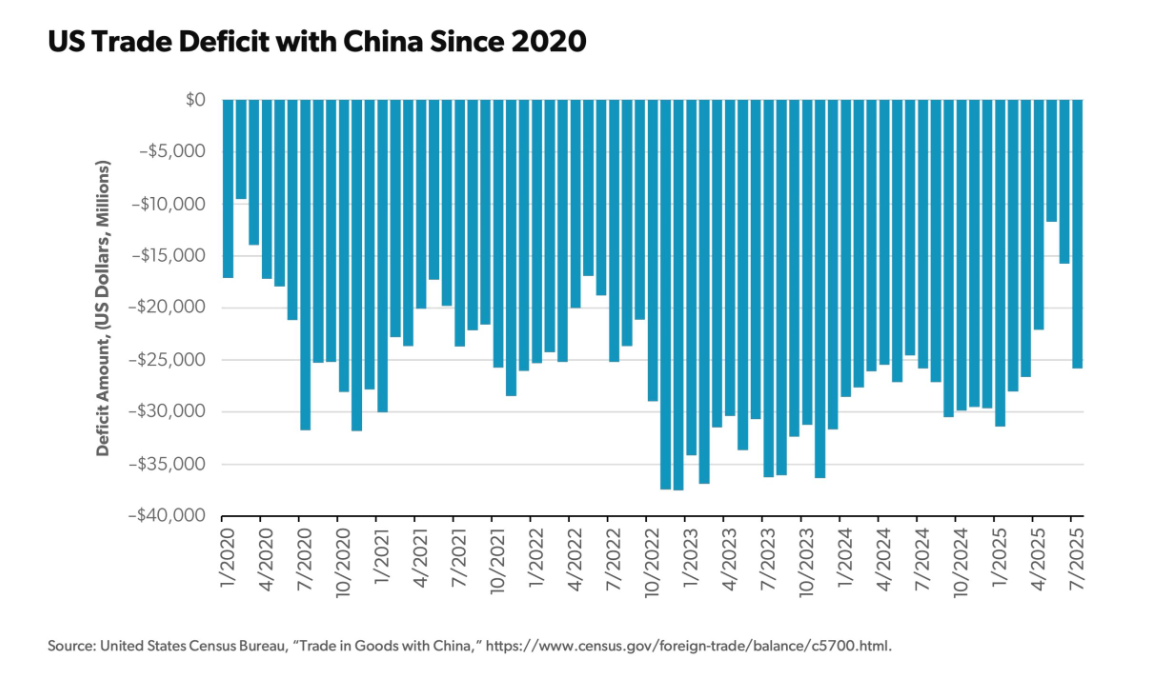
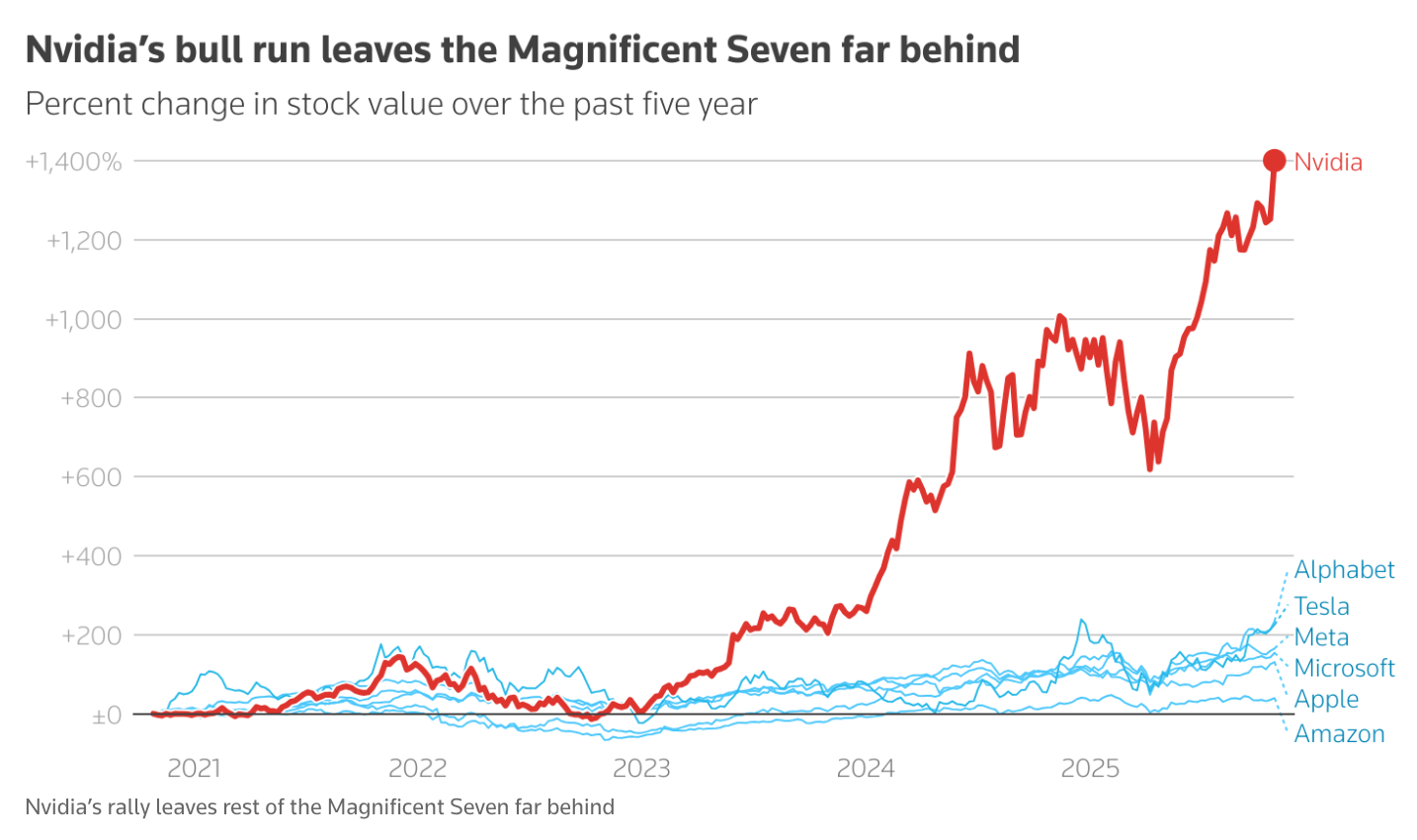
| | | | The world’s two biggest economies just called a ceasefire. After what Trump called an “amazing” meeting with Xi, both leaders agreed to a one-year truce that rolls back some of the nastiest hits from the tariff era. Washington will cut fentanyl-linked tariffs on Chinese goods to 10%, while Beijing is shelving its rare-earth export controls, halting retaliatory shipping fees, and resuming U.S. soybean purchases. Both sides also promised to “properly resolve” TikTok. China’s Commerce Ministry confirmed that the U.S. will suspend the so-called “50% rule,” which would have expanded sanctions to subsidiaries of blacklisted Chinese firms. Trump also hinted at a potential deal for China to purchase oil and gas from Alaska, which plays into his “cheap-oil president” persona. Analysts say such energy sales could reopen a trade channel that’s been dormant for years and help keep global crude prices in check. Brent futures held steady after the announcement. 🧭 A 12-month peace plan Analysts call it what it is: a ceasefire on a timer. Crossbridge Capital’s Manish Singh dubbed it “subscription diplomacy,” a diplomatic equivalent of a streaming plan that needs annual renewal and always comes with new conditions. “It’s perfectly suited to the age,” he said. “Transient, transactional, and free of long-term responsibility.” Economists at Capital Economics said the tariff cuts are more symbolic than transformative, warning that “the underlying forces driving the U.S. and China apart remain unresolved.” In other words, enjoy the détente, but don’t mistake it for detachment. 🧩 The bigger picture Behind the choreographed diplomacy, both sides appear to be buying time to rebuild domestic supply chains before the next round of confrontation. Tsinghua University’s Sun Chenghao said the relationship has entered “a more constructive phase in the short term,” but over the long haul, it’s still about managing rivalry, not ending it. For now, tariffs are lower, freight is calmer, and TikTok's brainrot still online. | | | | 🔥 The world's first $5 trillion stock | | | | Nvidia just did what no other company in history has. After Apple briefly crossed $4 trillion earlier this week, the AI chipmaker left everyone else in the dust, hitting a $5 trillion market cap. The rise has been nothing short of cinematic. Since ChatGPT ignited the AI boom in late 2022, Nvidia’s stock has surged more than 1,100%, turning what used to be a niche GPU maker into the world’s most powerful infrastructure company. CEO Jensen Huang’s personal stake, now worth around $179 billion, rivals that of entire Fortune 500 firms. The story doesn’t stop there. Nvidia announced $500 billion in new AI chip orders at its GTC conference, with Blackwell GPUs now rolling off production lines in Arizona. Those same chips have become bargaining chips in U.S.–China trade negotiations, giving Huang’s empire a rare kind of geopolitical leverage. “$5 trillion is more than a milestone; it’s a statement,” said Hargreaves Lansdown analyst Matt Britzman. Markets seem to agree, pushing NVDA up another 3% by the close. 🔍 What’s next Nvidia isn't stopping in its tracks and is using its first-move leverage to scale across industries: - Pharma giant Eli Lilly’s AI factory will use more than 1,000 Nvidia GPUs to speed drug discovery
- Nokia’s new $1 billion partnership aims to power 6G networks with next-gen chips
- Lucid Motors plans to tap Nvidia systems for autonomous driving
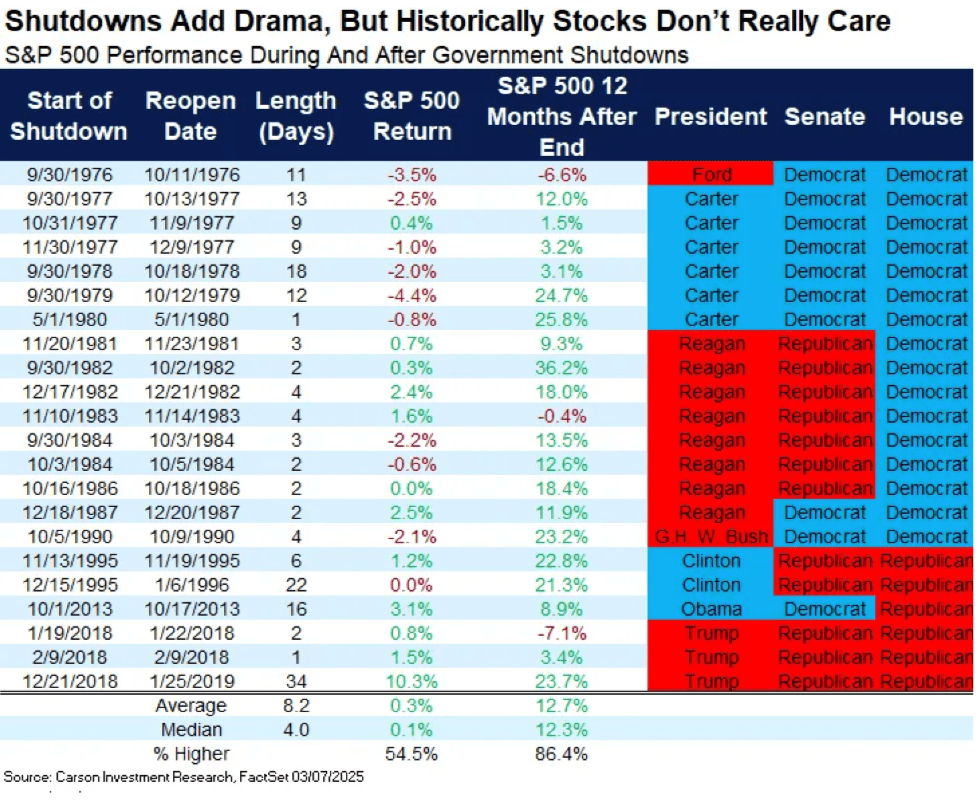
Each win stretches Nvidia’s reach and raises the stakes. Exposure to the company now means exposure to the entire AI economy, as well as the geopolitical risk | | | | 🏛️ Is Trump's shutdown different? | | | | The federal government is on track to break the record for the longest shutdown in America’s history, and the timing couldn’t be worse. What was supposed to be a political show of fiscal toughness now risks becoming a monetary roadblock. 🎯 The “too late” feud Before yesterday’s Fed meeting, Trump took another shot at Jerome “Too Late” Powell. Speaking in South Korea, he warned that the Fed “shouldn’t be worrying about inflation three years from now.” It’s a quarrel that’s effectively defined Powell and Trump’s relationship; Trump demanding cheap money, while Powell insists on patience. For now, Wall Street expects more rate cuts ahead, but that hinges on incoming data. The problem is that’s exactly what’s missing. 📉 The "data desert" With the government shuttered, much of the economic data pipeline the Fed depends on — from jobs and inflation to consumer spending — is offline. Nationwide’s Kathy Bostjancic calls it a “data desert” that could actually make policymakers less likely to ease. “The Fed could conclude there’s so much uncertainty because of the lack of data that it takes it slower with cutting rates than it normally would,” she said. In other words: no data, no confidence... and no cuts. Ironically, the shutdown might score Trump points with fiscal hawks, but it’s undercutting his monetary wish list. Even Fed officials who favor more easing say decisions are “becoming more challenging” without fresh numbers. Powell’s remark yesterday that “a further reduction is not a foregone conclusion” is another reminder of how cautious the committee’s become. 💼 This time... the same or different? Historically, shutdowns haven’t broken markets. Twenty-one have come and gone since 1976, with the S&P 500 falling in nine, rising in eleven, and once shutting down altogether. As such, most Wall Street strategists’ advice: wait it out. On the flip side, this time does feel a little bit different. With Washington gridlocked, the Fed flying blind, and the economy slowing, the shutdown could end up doing what Powell won’t... ...tightening conditions without lifting a finger. | | | | Rate today's newsletter*... | | | * We are just a messenger. To avoid confusion, please rate the quality of reporting, not news | | | | | | | | | | | | InvestorsObserver | | You received this email because you signed up on our website or made a purchase from us. | | | | |