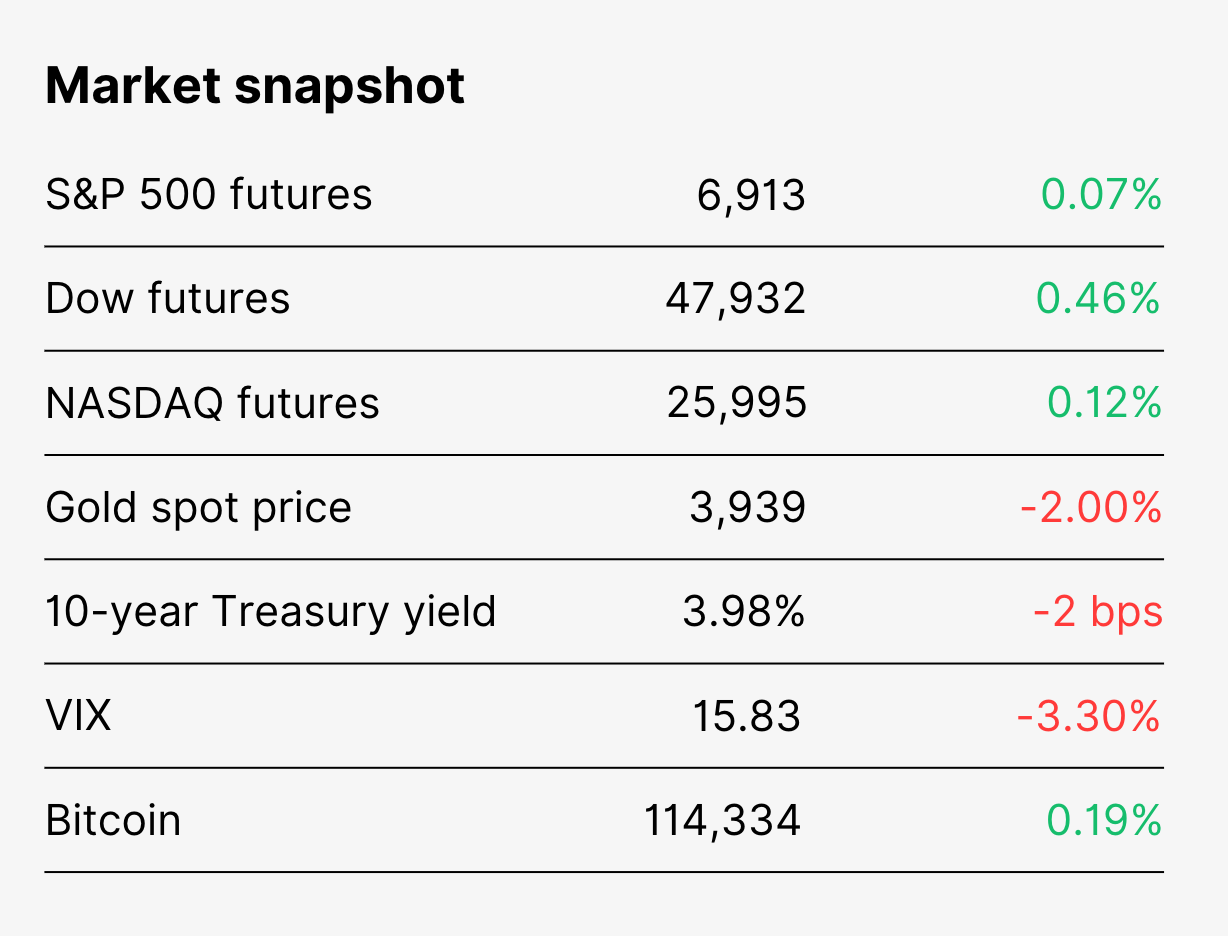
| | Good morning, The earnings season is off to a strong start. Keurig Dr Pepper (KDP) popped about 7% Monday after smashing Q3 revenue expectations with a 10.7% top-line jump and raising its full-year sales outlook. In a health-conscious, booze-free era, any soda company showing that kind of strength deserves a closer look. Qualcomm (QCOM) surged nearly 20% after unveiling new data-center AI chips (AI200/AI250) aimed at challenging Nvidia and AMD. But things aren’t all rosy. Amazon is reportedly planning up to 30,000 corporate job cuts, nearly 10% of its white-collar workforce, as CEO Andy Jassy leans into AI and cost discipline. The news comes after Target, GM, and Ford announced more layoffs, bringing total US job cuts for 2025 close to 1 million, the highest in 36 years. On the policy front, the Fed will almost certainly cut rates this week with no jobs data, which is fine when you’re leaning dovish… until you’re not. So, on one hand, we’ve got robust corporate beats, AI growth promises, and rate cuts. On the other, layoffs, data gaps, and China trade flare-ups. Let’s dig in. P.S. Thanks for giving me plenty of food for thought in yesterday's survey. I’m already elbows-deep in building the new dashboard while keeping the Morning Brief a brief morning read. | | | | | Hang tight, Dan Runkevicius, Chief Editor | |  | | | | | “I think with the scale of tariffs that we’re talking about here, it’s hard to imagine supply chains domestically absorbing that much tariff. Frankly, it’s the retailers who make the final pricing decision when all is said and done.” — Signature Brands CEO Joe Ens | | | | | Five things to know before opening bell | | |
📈 Stocks rally on trade hopes Stocks opened the week on a high note as Washington and Beijing hinted at progress toward a long-awaited trade deal. The Nasdaq jumped 1.9%, the S&P 500 1.2%, and the Dow 0.7%. Big Tech did most of the heavy lifting again. 🥤 Keurig Dr Pepper hits the sweet spot Keurig Dr Pepper (KDP) delivered a "sugar rush" of a quarter. The stock popped 7% after revenue climbed 10.7% to $4.31 billion and management raised its full-year outlook, blowing away all forecasts. Strong demand for soda, coffee, and the Ghost Energy acquisition helped offset years of consumer drift away from sugary drinks. 💼 Amazon trims the fat with AI’s help Amazon is reportedly prepping layoffs of up to 30,000 corporate roles, nearly 10% of its white-collar ranks, as Andy Jassy doubles down on automation and cost control. HR, devices, and operations will take the brunt. It’s a reminder that the “AI productivity boom” often starts with head-count cuts. 🤖 A tale of two AI economies AI is juicing productivity... but only if you’re big enough to afford it. Since ChatGPT’s debut in 2022, S&P 500 firms have boosted real revenue per worker by 5.5%. Meanwhile, small-cap companies in the Russell 2000 have seen that same figure drop 12.3%.“Other sectors show similar splits,” wrote Wells Fargo strategist Ohsung Kwon. 🏛️ Trump teases Powell’s replacement Treasury Secretary Scott Bessent says the shortlist to replace Fed Chair Jerome Powell is down to five: Christopher Waller, Michelle Bowman, Kevin Warsh, Kevin Hassett, and BlackRock’s Rick Rieder. Trump hinted a decision could come before year-end, months ahead of Powell’s May term-end. | | | | ⚙️ Qualcomm set out to become budget-friendly Nvidia
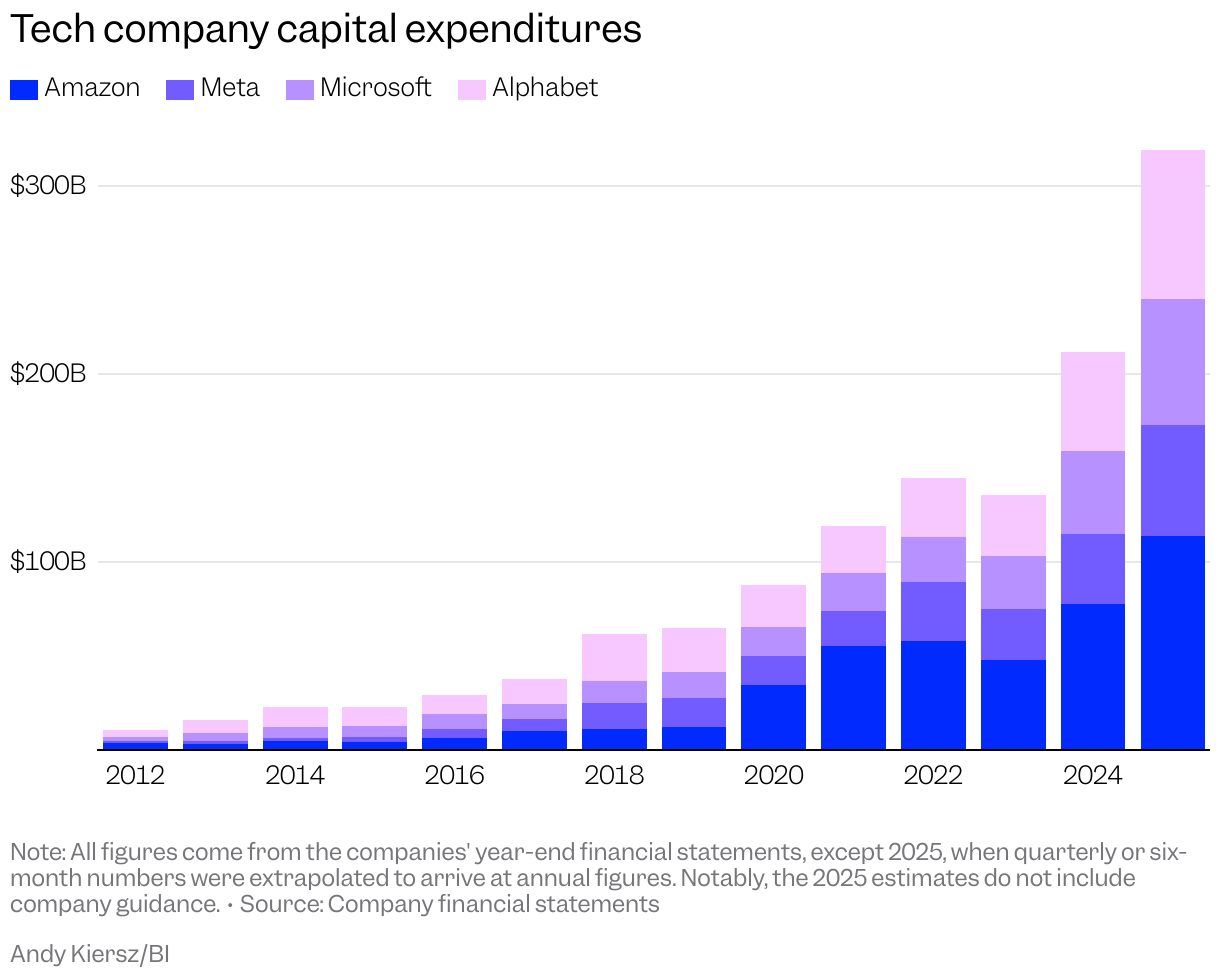
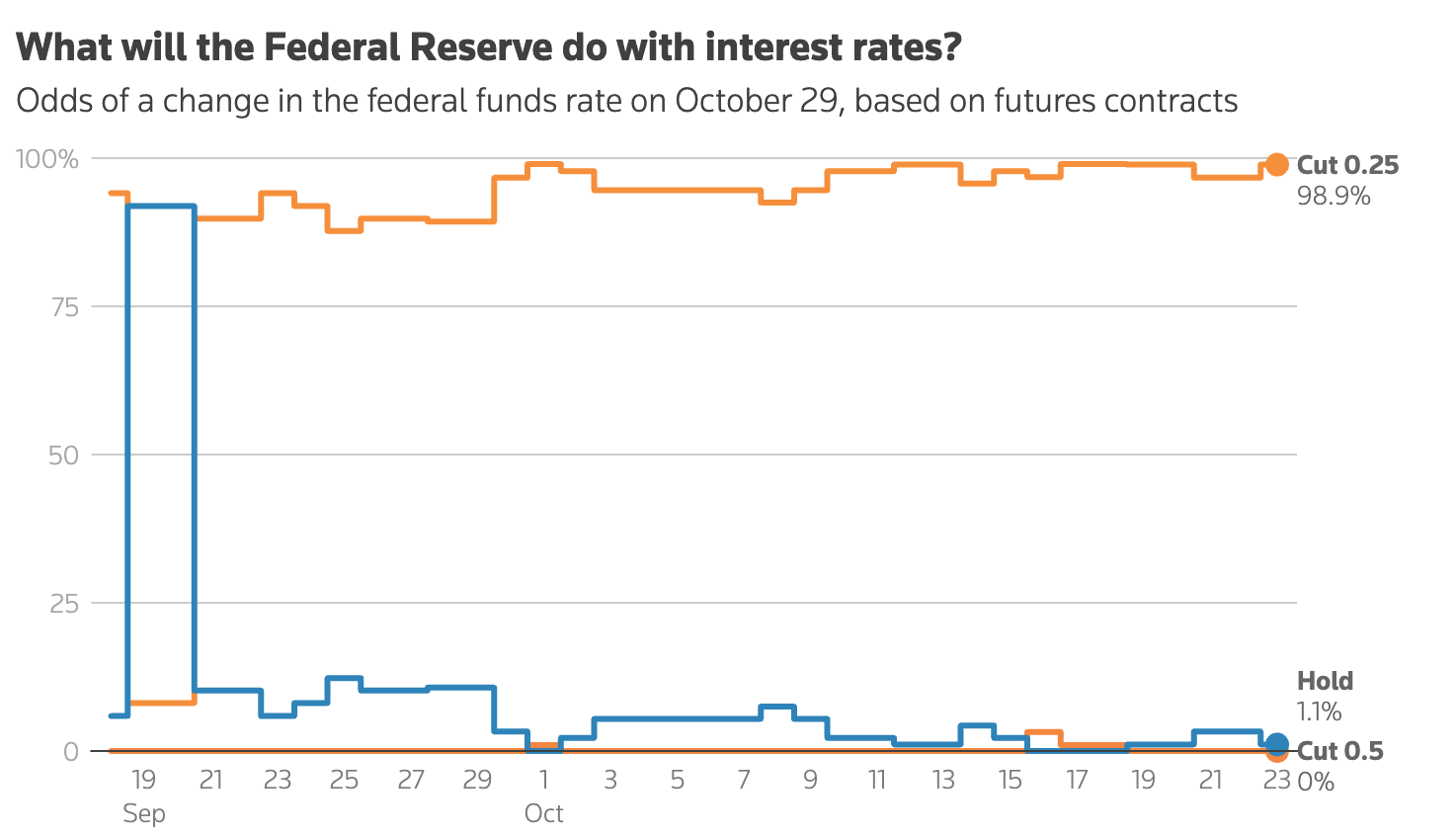
| | | | With AI investors still glued to Nvidia and a handful of megacap chipmakers, Qualcomm just stepped up with a move that could expand the field... and maybe extend the rally. 🏗️ Betting big on data centers Known mostly for smartphone chips, Qualcomm is making a hard pivot toward the AI data center market, and it’s not just dipping a toe in. The company just unveiled two new processors, the AI200 and AI250, built specifically for running pre-trained AI models. They’re due in 2026 and 2027 and come with a promise of 10x memory bandwidth and lower ownership costs than Nvidia or AMD. It’s an unmistakable shot across the bow. Qualcomm also plans to refresh the chips annually, signaling a long-term bid to compete with the sector’s heaviest hitters. Management says the efficiency gains should attract hyperscalers already sweating their soaring energy and hardware bills. Timing couldn’t be better. McKinsey expects global AI capex to approach $6.7 trillion by the end of the decade, leaving plenty of room for another major player… …assuming the AI boom and trillion-dollar spending hold through 2027. 📊 Market reaction Qualcomm stock surged 11% Monday, helping lift the Nasdaq to fresh records on hopes that the next leg of the AI trade might not rest solely on Nvidia’s shoulders. But the elephant in the room isn’t gone. Can even more hardware spending justify the valuations already baked into AI stocks? University of Maryland economist Brent Goldfarb offered a cautious take. “What has happened in the last few months is that we’ve realized there is a jagged frontier, and some of the earliest claims about the effectiveness of AI have been mixed or not as great as initially claimed, " he said. "If we are underestimating this difficulty as a whole, then we will be more likely to have a bubble.” 📌 Bottom line: Until profits catch up with the hype, the AI boom runs on faith, and this week, Qualcomm gave it another shot of adrenaline. | | | | 🏦 The Fed's leap of faith | | | | The odds are locked at nearly 100% that the Fed will trim rates by another 25 basis points tomorrow. But that doesn’t mean Powell & Co. are sleeping easy tonight. With the government shutdown now stretching toward a month, the central bank is about to make a high-stakes decision with barely half the data it normally has on hand. 🧩 No jobs data and “mild stagflation”? The September employment report never arrived, forcing policymakers to rely on patchy private surveys and incomplete models instead. Here’s what they do have: -
The Fed’s own Beige Book shows slowing jobs growth across multiple districts -
ADP data flagged a 32,000 drop in private payrolls -
Averaging ADP with Revelio Labs figures suggests just 13,000 jobs added last month Wilmington Trust economist Luke Tilley says it’s part of a longer slowdown. Since May, private-sector job growth has barely topped 157,000, with healthcare doing all the heavy lifting as other major industries shrink. On the other side of the Fed’s dual mandate, inflation isn’t offering much comfort either. Core CPI rose at a 3% annual pace last month, cooler than August but still miles above target. Patrick Harker“a mild form of stagflation.” 📉 What markets expect Despite the uncertainty, there’s near-universal agreement that another cut is coming. Powell has already acknowledged rising downside risks to jobs, and most policymakers seem comfortable leaning a bit more dovish to keep the expansion alive. Markets are also pricing in another cut by December, but with so much federal data offline, the Fed’s margin for error keeps shrinking.
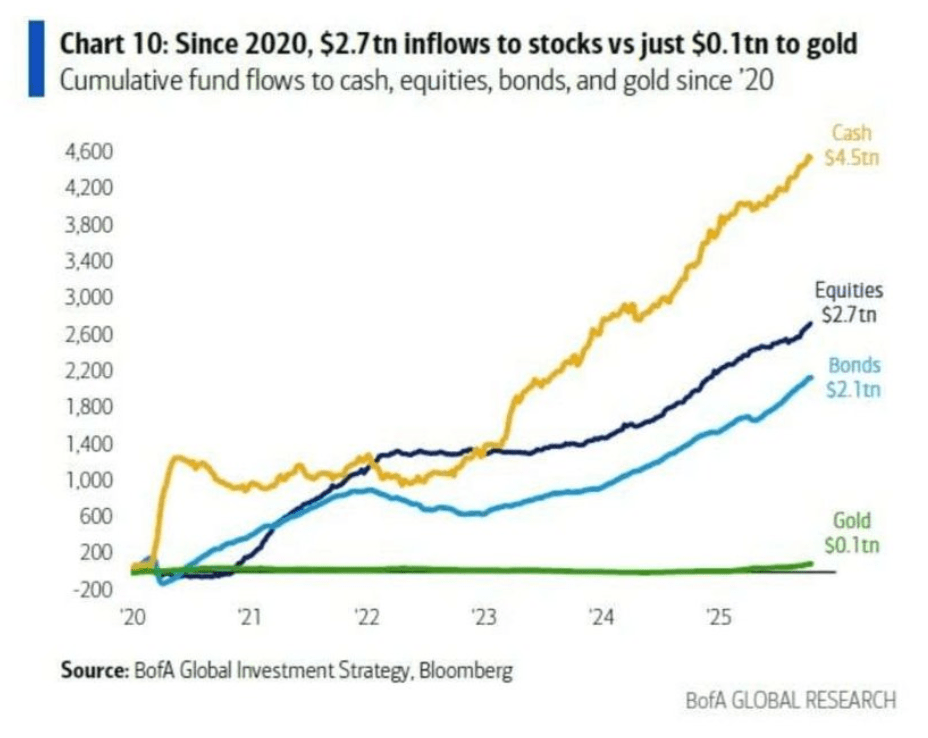
“If the labor market holds and inflation continues to run above target, you have a different decision to make,” said former Kansas City Fed president Esther George. 📌 Bottom line: Tomorrow’s decision won’t just be about rates. It’ll be about how much the Fed is willing to fly blind. | | | | 📉 Buy the dip in gold, says UBS | | | | After a record-breaking run, gold prices fell back to around $4,000 an ounce Monday, the biggest single-day drop in more than a decade. The reversal came right after last week’s all-time high, which had many analysts saying the rally was starting to look… a little too shiny. That pullback didn’t spook most analysts, though. “Since 1975, there have been 16 other similar reversals. Some marked lasting peaks, but others happened within much longer-term uptrends,” said analysts at Bespoke Investment Group. “Gold may have lost some of its luster, but it could just need a little polish.” And the bulls aren’t going anywhere. -
UBS still sees upside to $4,700, citing gold’s diversification appeal -
Goldman Sachs is calling for $4,900 by year-end -
Bank of America remains the most ambitious, targeting $6,000 by mid-2026 UBS even went a step further, suggesting its clients buy the dip and dollar-cost average into what they consider an optimal allocation. “For investors with an affinity for gold, we recommend using setbacks to add holdings if they’re below our optimal mid-single-digit allocation,” said UBS CIO Ulrike Hoffmann-Burchardi. 🌏 What’s next? So the takeaway on Wall Street is that the pullback had little to do with fundamentals. It was more of a temporary pause in marginal buyers as progress in US–China trade talks pushed traders back into risk assets. But that détente may not last. Any hint of renewed tension could send gold’s “peace dividend” rally spinning right back in reverse. 📌 Bottom line: Wall Street’s bet is that gold’s latest stumble looks more like a breather than a breakdown. | | | | Rate today's newsletter... | | | Your feedback matters! Before you go, cast your vote below. | | | | | | | | | | | | InvestorsObserver | | You received this email because you signed up on our website or made a purchase from us. | | | | |