| Did President Donald Trump violate U.S. criminal statutes and international law by ordering the deaths of 64 supposed “narcoterrorists”? This article, like many others, says he did. Then it considers a question that has received less attention. Does the President risk conviction in the International Criminal Court or in U.S. courts for his conduct? |
| Fifteen Known Attacks |
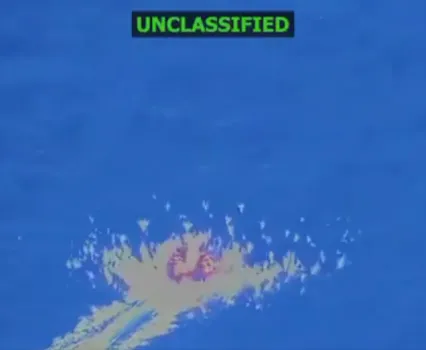
| Trump announced on September 2, 2025, that, pursuant to his orders, the U.S. Navy had killed eleven foreign nationals operating a speedboat on the high seas. He maintained that they were “Tren de Aragua Narcoterrorists” heading to the United States and transporting illegal drugs. The next day, Secretary of State Marco Rubio told reporters: “Instead of interdicting it, on the president’s orders, we blew it up. And it’ll happen again. Maybe it is happening right now.” Secretary of Defense Pete Hegseth declared: “This is a deadly, serious mission for us and it won’t stop with just this strike. Anyone else trafficking in the waters who we know is a designated narco-terrorist will face the same fate.” |
| Since those statements, President Trump and Secretary Hegseth have announced 14 more fatal strikes. They occurred on September 15 and 19; on October 3, 14, 16, 17, 21, 22, 24, 27, and 28; and on November 1. (There were three strikes on October 27.) At the time of this writing, the United States has killed at least 64 suspected drug traffickers. |
| In addition, the U.S. has captured and repatriated two survivors. On October 27, the military spotted another survivor clinging to some wreckage but did not rescue him. Instead, it conveyed his location to Mexican military authorities. According to Secretary Hegseth, Mexico “assumed responsibility for coordinating” the survivor’s rescue, but the Mexican navy abandoned its unsuccessful efforts after four days. So make that 65 killings. |
| Both Vice President J.D. Vance and President Trump have joked that they “wouldn’t go fishing right now in that area of the world.” Fishermen in the Caribbean are in fact afraid and have limited their activities. |
| Unrevealed Intelligence |
| Neither Trump nor anyone else in his administration has revealed what intelligence led to the conclusion that the people he ordered killed were “narcoterrorists.” Did this intelligence match the quality of that allegedly showing that Sadam Hussein had weapons of mass destruction in 2003, or that which led to the deaths of 54 civilians and injured 50 others celebrating a wedding in Afghanistan in 2002, or that which led to a mistaken Hellfire missile strike on a Toyota that killed three adult Afghan civilians and seven children in 2021? A critic of Trump’s actions, Senator Rand Paul (R-KY), doubted that the destination of the speedboats was the United States 2,000 miles away. He also reported that, before the deadly strikes began, the Coast Guard failed to find drugs 25 percent of the time when it stopped and searched vessels thought to carry them. |
| President Gustavo Petro of Colombia disputed the administration’s account of two strikes. On October 8, he wrote on social media that the boat destroyed on October 3 “was Colombian, with Colombian citizens inside.” The White House, which had not previously indicated that the U.S. had targets other than Venezuelan gang members, called Petro’s statement “baseless” and “reprehensible.” Two unnamed U.S. officials, however, told the New York Times that Colombians had been aboard one of the destroyed boats. |
| On October 18, Petro said that one of the victims of the strike on September 15 was Alejandro Carranza, who “had no ties to drug trafficking” and whose “daily activity was fishing.” Petro reported that “the Colombian boat was drifting and had a distress signal on because it had one engine up.” He added that the boat was in Colombian territorial waters. President Trump responded by calling Petro “an illegal drug dealer” with “a fresh mouth toward America.” He also ended aid to Colombia (formerly a close U.S. ally) and said that he would announce new tariffs on Colombian goods. Colombia recalled its ambassador to the United States on October 20, and the U.S. imposed sanctions on Petro, his wife, and his son on October 24. Six recent U.S. strikes have apparently targeted Colombians rather than Venezuelans. Secretary Hegseth announced that the October 17 strike destroyed a vessel associated with a Colombian rebel group, and the October 21 strike, the three October 27 strikes, and the October 28 strike apparently occurred off Colombia’s Pacific coast. |
| Relatives of Chad Joseph, a 26-year-old citizen of Trinidad and Tobago, believe that he and a neighbor were among the six people killed in the October 14 strike. The relatives describe Joseph as a fisherman who was not involved in drug trafficking. They believe he was hitching a ride home after a stay in Venezuela. |
| President Trump’s penchant for exaggeration contributes to skepticism about his claims. He has said repeatedly that “every boat we knock out we save 25,000 American lives.” Did he suppose that not even one user of the destroyed drugs would have consumed a less than fatal dose? Politifactrated Trump’s claim “Pants on Fire.” Sinking 15 vessels could not have saved 375,000 lives, four times the number of Americans who died last year from drug overdoses. Moreover, stopping the boats and destroying the drugs might have saved an equal number of lives—without taking those of the alleged traffickers. |
| It’s Murder |
| A federal statute defines murder as “the unlawful killing of a human being with malice aforethought.” Another statute proscribes conspiring within the United States to commit murder outside the United States. A third grants the federal courts jurisdiction to try U.S. nationals for murder on the high seas. |
| “Malice aforethought,” the mental state required for murder, is a term of art. Law students learn that it requires neither maliciousness nor forethought. Instead, judges instruct jurors: “To kill with malice aforethought means to kill either deliberately and intentionally or recklessly with extreme disregard for human life.” Trump’s killing and his intent to kill are clear. The only remaining element of murder is that his order must have been unlawful. |
| Neither Trump nor anyone else in his administration has supplied a plausible legal justification for his order. The President’s notification to Congress of the initial boat strike simply recited without elaboration the words “self-defense,” “Commander in Chief,” and “Chief Executive.” A later notification declared that the United States is engaged in “a non-international armed conflict” with drug cartels and that the cartels’ drug runners are “enemy combatants.” |
| No knowledgeable authority outside the Administration appears to have accepted the Administration’s asserted justifications or concluded that Trump’s order was lawful—not one. Even the author of some infamous, later-rescinded Justice Department memoranda authorizing the use of waterboarding and other enhanced interrogation techniques questioned the order’s legality. According to Georgetown professor Marty Lederman, this order was “so manifestly unlawful that in any other administration, including Trump’s first, if anyone had even dared propose it, virtually every attorney who got wind of it, across the government—and many non-lawyer officials, too—would have immediately dismissed it as obviously out of bounds. It wouldn’t have been a close call.” Jeffrey Corn, formerly a JAG officer and senior adviser to the Army on law-of-war issues, said of the claim that the President can declare drug traffickers enemy combatants and kill them: “This is not stretching the envelope. This is shredding it.” A group of independent U.N. experts concluded that the strikes were “extrajudicial execution.” The UN’s High Commissioner for Human Rights demanded that the US “halt such attacks and take all measures necessary to prevent the extrajudicial killing of people aboard these boats, whatever the criminal conduct alleged against them.” |
| The killings commanded by President Trump were more clearly unlawful than those previously ordered by U.S. Presidents, some of which might have been unlawful themselves. The people he ordered killed were civilians, not enemy combatants; they did not threaten imminent death or serious bodily injury; they had not engaged in a sudden invasion of the United States; no congressional authorization of the use of military force (like those approving force against Iraq and the 9/11 attackers) applied; and, most importantly, if any legitimate claim of self-defense or other preventive purpose existed, that purpose could have been achieved by seizing the vessels and arresting and prosecuting their occupants. |
| Secretary of State Rubio offered this justification of the administration’s policy: “Interdiction doesn’t work because these drug cartels . . . know they’re going to lose two percent of their cargo. They bake it into their economics. What will stop them is when you blow them up, you get rid of them.” When, however, the seizure of a vessel and the drugs it carries is followed by the prosecution, conviction, and imprisonment of its crew, a cartel is deprived of the same goods and the same personnel that it loses when the United States kills the crew. But killing may be less expensive than imprisonment (despite the high cost of Hellfire missiles and MQ-9 Reaper drones), and imposing the death penalty without trial may have a deterrent effect. |
| One wonders whether the U.S. government would applaud a foreign government’s killing of a U.S. citizen traveling in international waters or airspace if that government had determined that the U.S. citizen was a “narcoterrorist.” For example, Ross Ulbricht, a U.S. citizen using the name Dread Pirate Roberts, operated a multi-million-dollar darknet market called Silk Road that facilitated the anonymous sale and purchase of narcotics worldwide. Sales through Silk Road led to at least six drug overdose deaths—three in the United States and three in Australia—and Ulbricht was alleged to have sought hired killers to dispatch people he considered threats to his business. In 2015, Ulricht was convicted of distributing narcotics and other crimes and sentenced to two life terms in prison plus 40 years without the possibility of parole. But on the first day of Trump’s second term as President, he granted Ulbricht a full and unconditional pardon, calling the people who prosecuted him “scum.” (On some days, Trump is a drug warrior, and on others a libertarian.) While Ulbricht was operating Silk Road, could the government of Australia have put him on a “narcoterrorist” list and killed him? |
| The President announced on October 17: “The two surviving terrorists [of the October 16 strike] are being returned to their Countries of origin, Ecuador and Colombia, for detention and prosecution.” Ecuador and Colombia, however, apparently had not agreed to prosecute. After interviewing the captive repatriated to Ecuador, prosecutors released him, saying that there was no evidence that he had committed any crime in that country. Colombia’s Minister of the Interior announced that the captive repatriated there was hospitalized with brain trauma and was breathing on a ventilator. He would, however, be “processed by the justice system for drug trafficking” once he returned to consciousness. |
| The Ecuadorian captive may be the only supposed prisoner of war in world history ever to be repatriated unconditionally while able-bodied and while the supposed hostilities continued. The United States apparently did not obtain even a pledge that he would not return to “combat.” Holding him as a U.S. prisoner, however, would have enabled him to bring a habeas corpus action challenging the legality of his confinement, and the administration apparently feared that even the Trump-friendly Supreme Court might hold its attacks unlawful. An adverse ruling would have required the administration either to desist or to disregard the Court’s determination. |
| Was the U.S. failure to rescue the October 27 survivor and its call upon Mexico to lead the rescue effort prompted by the dilemma U.S. custody would have posed? How far away was the nearest U.S. helicopter or ship that could have made the rescue? Did the U.S. military personnel who spotted the survivor supply him with a life raft, a life jacket, and/or a signal device? Did the Administration’s effort to evade judicial review of its actions cause his death? |
| Obtaining Legal Advice |
| The website of the Justice Department’s Office of Legal Counsel (OLC) says that it “provides legal advice to the President and all executive branch agencies” and that it usually addresses “legal issues of particular complexity and importance.” After the Trump-ordered killing of Iranian General Qassam Soleimani in 2020, an OLC memorandum explained why it considered this killing lawful. It noted that OLC had “provided advice in anticipation of the potential strike.” This memorandum was released, however, only as the result of a Freedom of Information Act (FOIA) lawsuit. |
| Similarly, President Barack Obama obtained the OLC’s advice before ordering the killing of Shaykh Anwar al-Aulaqi. Al-Aulaqi was a dual citizen of the United States and Yemen and an Al-Qaida leader alleged to be planning attacks against the United States. In 2010, several months before the National Security Council approved killing him, a top-secret OLC memorandum explained why, in its view, the killing would be lawful. After the NSC’s action but more than a year before U.S. forces found and killed al-Aulaqui, the OLC prepared a more thorough memorandum. Following al-Aulaqi’s death in 2011, the Justice Department prepared a “white paper” discussing the legal issues his case presented. (None of these documents were released, however, until 2014. Then they became public as a result of leaks and FOIA lawsuits.) Although Congress had authorized the use of all necessary and appropriate force against the governments, organizations, and individuals responsible for the attacks of 9/11, the Justice Department did not declare this authorization sufficient. It concluded that “a lethal operation directed against a U.S. citizen who is a senior operational leader of Al-Qa’aida” would be lawful only if (1) “an informed, high-level official of the U.S. government determined that the targeted individual pose[d] an imminent threat of violent attack against the United States,” (2) “capture [was] infeasible,” and (3) “the operation [was] conducted in a manner consistent with applicable law of war principles.” |
| When asked on October 7 by a member of the Senate Judiciary Committee about the legal justification for the speedboat strikes, Attorney General Pam Bondi replied: “I’m not going to discuss any legal advice that my department may, or may not, have given or issued at the direction of the president on this matter.” On the same day, however, Trump’s nominee to be general counsel of the Army said at his confirmation hearing that he had seen an OLC opinion on the subject. He did not describe this opinion’s contents, but “multiple” sources told CNN that it “authorize[d] deadly force against a broad range of cartels because they pose an imminent threat to Americans.” |
| A classified October 2 briefing of the Senate Armed Services Committee came, not from the OLC, but from Earl Matthews, General Counsel of the Department of Defense. Matthews refused requests to provide written justification for the strikes, and some senators of both parties called his legal case for the strikes insufficient. The senior Democrat on the committee, Senator Jack Reed, declared: “Every American should be alarmed that the president has decided he can wage secret wars against anyone he calls an enemy.” |
| A request for a legal opinion might have posed an unpleasant choice for T. Elliot Gaiser, the Assistant Attorney General in Charge of the OLC. Gaiser is a 2016 law school graduate who has risen rapidly in MAGA ranks. On the one hand, President Trump would have wanted Gaiser to validate his proposed course of action, and the President has been known to fire and replace Justice Department lawyers who do not give him the answers he wants. On the other hand, delivering the answers Trump desired would have facilitated a serious crime. It would have posed some chance of Gaiser’s prosecution and a greater chance of his disbarment. (Cabinet and subcabinet officers probably are not entitled to any sort of immunity from criminal prosecution, but a President can pardon them before he leaves office.) |
| Gaiser recently told a group of legislators that, although the U.S. military forces are engaged in “a non-international armed conflict,” they are not engaged in “hostilities.” If the fatal strikes were “hostilities,” the War Powers Resolution of 1973 would require the Administration either to obtain congressional approval or bring them to an end. According to the Washington Post, Gaiser maintains that the killings are not hostilities because the targeted smugglers have no way to shoot back and put U.S. military personnel in danger. |
| Some authorities have suggested that the OLC’s prior approval of a presidential action would block the President’s conviction and punishment for this action. Jack Goldsmith, a Harvard professor and former Assistant Attorney General in Charge of the OLC, writes that the OLC’s secret memorandum concerning the drug strikes “confers a 'golden shield’ of immunity from prosecution on anyone who acts in reliance on it.” During last year’s Supreme Court argument about presidential immunity, Justice Samuel Alito asked a lawyer appearing on behalf the Special Counsel’s office: “If the president gets advice from the attorney general that something is lawful, is that an absolute defense?” Counsel replied: “Yes, I think that it is. Under the principle of entrapment by estoppel, . . . if an authorized government representative tells you that what you are about to do is lawful, it would be a root violation of due process to prosecute you for that.” An outstanding New York Times analysis of the attacks by Charlie Savage and Karoun Demirjian includes one questionable sentence: “Even if the Justice Department memo that somehow blesses the killings lacks much actual legal analysis and even if a future administration rescinds it, its existence essentially forecloses any prospect of future prosecutions.” |
| In fact, “entrapment by estoppel” excuses only reasonable reliance on a public official’s opinion. When an OLC opinion supplying the answer a President wants was prepared by a lawyer who might have been fired and who at least would have lost favor if he had given a different answer, and when many knowledgeable lawyers outside the government have forcefully given the opposite answer, the OLC opinion seems close to worthless. If President Trump were ever to be prosecuted and were to invoke entrapment by estoppel, a jury in the District of Columbia would determine whether his reliance on this opinion was reasonable. |
| The administration has not seemed eager for impartial legal advice. Before Pete Hegseth’s appointment as Secretary of Defense, he referred to the top legal officers of the Army, Navy, and Air Force—their Judge Advocate Generals—as “jagoffs,” and, upon taking office, he fired them. He said that he did not want military lawyers who would pose “roadblocks to orders that are given by a commander in chief.” Later, Hegseth said that he favors “maximum lethality, not tepid legality.” After declaring that “killing cartel members who poison our fellow citizens is the highest and best use of our military,” Vice President Vance responded to a commentator who insisted that this action was instead a war crime: “I don’t give a shit what you call it.” |
| Could Trump Ever be Prosecuted? |
| The International Criminal Court (ICC) has issued warrants for the arrest of Russian President Vladimir Putin and Israeli Prime Minister Benjamin Netanyahu. Like the United States, Russia and Israel have not recognized that court’s authority. But the ICC claims jurisdiction under Article 12(2)(a) of the Rome Statute of the International Criminal Court because Putin and Netanyahu are alleged to have committed war crimes in Ukraine and Palestine, territories that have approved the Rome Statute. |
| Former Philippine President Rodrigo Duterte is in ICC custody in the Hague where his lawyer contends that his cognitive decline has left him unfit to stand trial. On September 22, the ICC revealed the charges prosecutors have filed against him. As Mayor of Davao and then President, Duterte and his security forces are alleged to have killed at least 76 people without trial as part of Duterte’s war on drugs. (The specific killings identified by the ICC prosecutors are a tiny portion of the thousands that Human Rights Watch says Duterte authorized.) The ICC claims jurisdiction because the Philippines had approved the Rome Statute at the time of Duterte’s alleged offenses. |
| In 2017, President Trump called Duterte to say: “I just wanted to congratulate you because I am hearing of [your] unbelievable job on the drug problem. . . . [W]hat a great job you are doing.” If Duterte is still able to make calls, he can now return the compliment. |
| The jurisdictional grounds the ICC has asserted for prosecuting Putin, Netanyahu, and Duterte would not justify an ICC prosecution of Trump for crimes on the high seas, and there seems to be no other basis for ICC jurisdiction. (On October 15, however, the President announced that he was considering military strikes inside Venezuela and already had authorized covert CIA action inside that nation. Venezuela has ratified the Rome Statute of the International Criminal Court, and so has Colombia.) |
| In his 2010 memoir Decision Points, former President George W. Bush reported that, when he was asked to approve waterboarding Khalid Sheikh Mohammed (who was alleged to be the principal architect of the 9/11 attacks), he answered: “Damn right.” Bush’s acknowledgment and other evidence led Amnesty International, the Center for Constitutional Rights, and other groups to urge his prosecution under “the principle of universal jurisdiction.” This principle allows any state to prosecute grave international crimes. Although no government filed charges, the threat of criminal proceedings and protests in Switzerland led Bush to cancel a scheduled appearance in Geneva. |
| The supporters of Bush’s prosecution emphasized the United States’ ratification of the Convention Against Torture. That treaty does not expressly proscribe unjustified extrajudicial killings, but it may possibly do so by implication. Trump’s order does appear to violate the general provisions of the Universal Declaration of Human Rights (a non-binding statement of principles) and the International Covenant on Civil and Political Rights (a ratified treaty that does not provide for criminal enforcement). |
| In U.S. courts, the Supreme Court’s 2024 decision in Trump v. United States, which approved broad presidential immunity, may seem to preclude prosecuting Trump. Writing in dissent, Justice Sonia Sotomayor said that the Court had blocked the prosecution of a hypothetical presidential order even more troublesome than Trump’s. She wrote: “When [the President] uses his official powers in any way, . . . he now will be insulated from criminal prosecution. Orders the Navy’s Seal Team 6 to assassinate a political rival? . . . Immune, immune, immune.” |
| The majority, however, accused Justice Sotomayor of “fear mongering on the basis of extreme hypotheticals” and declared: “[T]he dissents . . . strike a tone of chilling doom that is wholly disproportionate to what the Court actually decides today.” The majority appears to have had the better understanding of how its ruling applies to the “Seal Team 6” hypothetical. Justice Sotomayor’s hypothetical president would be subject to prosecution, and so would President Trump if he were charged with murdering “narcoterrorists.” |
| Trump’s action was official, and, without deciding the issue, the Court said that it might eventually hold all official presidential actions immune. For now, however, the Court declared that only exercises of “core” presidential powers are “absolutely” immune. Exercises of noncore powers are merely “presumptively” immune. |
| The Court explained that the term “core powers” refers to “conclusive” and “preclusive” powers whose exercise Congress may not restrict or regulate. Some of the President’s powers as commander-in-chief—for example, his power to direct troop movements—are undoubtedly “core,” but others are not. In particular, the Constitution would not bar congressional regulation of a power to kill “narcoterrorists” even if that power existed and even if a president could exercise that power without affirmative congressional authorization. The Constitution gives Congress, not the President, the power to “declare War,” to “make Rules concerning Captures on Land and Water,” and to “define and punish . . . Felonies committed on the high Seas, and Offenses against the Law of Nations.” |
| So Trump is entitled to “presumptive” rather than “absolute” immunity, and a prosecutor can defeat a claim of presumptive immunity by a showing that proceeding would pose “no dangers of intrusion on the authority and functions of the Executive Branch.” |
| This standard effectively gives presidents a reasonable-mistake-of-law defense as well as other protections. Because prosecuting a former president for an action he reasonably believed to be lawful could lead later presidents to play it safer than they should, the prosecution could pose a danger of intruding on the functions of the executive branch. But prosecuting a president for a clearly unlawful act would not give law-abiding successors any reason for concern. It would pose no danger of intruding on the legitimate functions of the executive branch. |
| Of course, one cannot be confident that the Supreme Court would reject Trump’s claim of immunity. Targeted killings by a president might seem to some justices to be a poster case for barring prosecution. Trump’s counsel in the Supreme Court, D. John Sauer (now the U.S. Solicitor General), began his argument by declaring: “Without presidential immunity from criminal prosecution, there can be no presidency as we know it.” In a parade of potential horribles, he asked: “Could President Obama be charged with murder for killing U.S. citizens abroad by drone strike?” |
| A judge should not second-guess a president’s conduct of a legitimate military campaign. But judges are well qualified to say that using unnecessary deadly force to apprehend drug smugglers breaks the law. They are also well qualified to say that no reasonable president could think otherwise. A “hands off” refusal to consider the legality of presidentially ordered killings would (tautologically) enable a president to kill whomever he likes. Justice Sotomayor’s Seal Team 6 hypothetical would not be the “fear mongering” the Court said it was. |
| Even if the Supreme Court had not approved any sort of presidential immunity, Trump’s prosecution might be unlikely. A U.S. President cannot be charged with a crime until he leaves office, and a successor MAGA administration certainly would not prosecute him. Especially if Trump’s crimes had occurred years earlier, a successor Democratic administration might not file charges either. Attorneys General regularly defend presidential actions. As executive officers and presidential appointees themselves, they tend to favor broad executive power and to resist investigations of executive-branch officials. They realize that members of an opposing political party may do unto them whatever they have done to the members of that party. Attorneys General also know that prosecuting a former president would alienate his followers and be divisive and distracting. |
| The prosecution of personal and political enemies during Trump’s second term may change prosecutorial norms, but even if a prosecutor in a Democratic administration were to charge Trump with murder and even if Trump were to be convicted, America’s over-proceduralized legal system might enable him to delay his punishment for years. The life expectancy of the proceedings might exceed that of the defendant. |
| While campaigning for office in 2015, Trump declared: “The other thing with the terrorists is you have to take out their families, when you get these terrorists, you have to take out their families.” Might an order to kill spouses and children be next? Might even this order escape punishment? What has America become? |

 Have friends who like law? Forward this email.
  Like Verdict for legal discussions on Facebook.
  Follow @verdictjustia for news and updates on Twitter.


