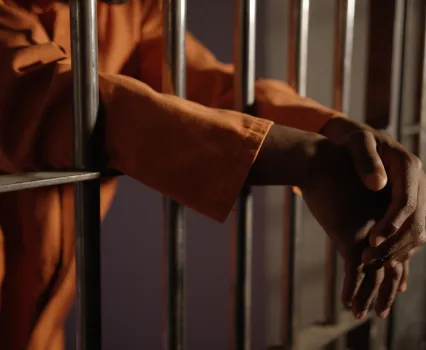
| In my last essay, I wrote about my forthcoming book, Cast Out: A Call for a Forgiving Society in an Age of Incarceration, which will be released in September. The book profiles six people who committed great wrongs, but who—in all the ways that matter—are no different from anyone reading this essay. Any of us could have been any of them, which is just another way of discovering that there is no them, there is only us. Once we recognize and acknowledge this truth, we can embrace the core idea of a forgiving society: if all of us can be monstrous, none of us are monsters, and we should judge a wrongdoer not as an alien “Other,” but as one of us. | | In this essay, I want to contrast my book with a very different one. Champions of Innocence: Inside the Fight Against Wrongful Convictions is a collection of 24 essays by some of the past and present heroes of the wrongful conviction movement, including some of my friends. The book offers a retrospective on the movement and includes contributions by several people who were wrongly convicted and exonerated. It’s an important book about a morally urgent problem, and I commend it to all of you. | | For reasons that are not particularly difficult to grasp, the fate of an innocent person in prison has always captured public attention much more than that of his guilty counterpart. The image of a person who has done no wrong, yet who wastes away in a concrete and steel cell, ignites a sense of outrage that few other fates can match. This feeling will almost always outpace whatever sentiment we might summon for those who committed a grievous wrong. I think it’s fair to say that no one is writing a book entitled, Champions of Guilt. Still, I have always had great misgivings about the wrongful conviction movement. To me, all the most compelling stories involve rightful convictions. As a rule, and with no exceptions that come to mind, I write about guilty people. | | The standard complaint against the innocence movement is that it reinforces the demonization of all who are guilty. By making innocence the sole object of our solicitude, the movement implicitly says that everyone else can (and maybe should) be damned, regardless of any other moral evil that attends their incarceration. Barbaric conditions and interminable punishments make no difference once we decide a person “did it.” Or at the very least, these harms pale in comparison to the uber-sin of an innocent person behind bars. | | There is great power in this critique, and I have leveled it in some of my published writings. In fairness, though, the participants in the movement understand the problem and have taken some steps to correct it. For instance, instead of asking merely whether a person is factually innocent, most movement actors also ask whether the person is legally innocent. That is, regardless of what the person may have done in the eyes of the Lord, if the state cannot lawfully prove their guilt, they are innocent in the eyes of the law. The wrongful conviction movement (as distinct from the innocence movement) is concerned with both legal and factual innocence and considers both equally important. | | Still, most people in prison are neither legally nor factually innocent. Mind you, that sentence has to be read with great care. It doesn’t mean they belong in prison or that their conviction or punishment is morally just. Nor does it mean that society should be indifferent to their treatment behind bars. It simply means that there are not a lot of innocent people inside the walls. I am a prison abolitionist, but not because the criminal legal system convicts a great many people who did no wrong. The great evil of prisons is not that they steal time from an innocent person, but that they deny the humanity of a guilty person. | | We see this denial in the stories we tell. A story about a wrongful conviction is foremost a story about an innocent victim of a broken system. The question that drives the narrative forward asks how a system ostensibly dedicated to the truth can get it so horribly wrong. In most cases, it is a story with familiar villains—the eyewitness who made a mistake; the police officer who lied; the prosecutor who hid exculpatory evidence or presented junk science; the informant who perjured himself. Alone or in combination, these elements account for the vast majority of wrongful convictions. The story pits a blameless individual against a pitiless system. | | But what is the story we tell about a rightful conviction, and particularly about someone who committed a great wrong like murder? The question that drives the narrative should focus on how a person can wrongly take the life of another. But most people do not entertain this question, at least not in any serious way, because they cannot see themselves in the person convicted of homicide. While they can imagine themselves wrongly accused, and can therefore empathize with the wrongly convicted, they cannot imagine themselves rightly accused, and certainly not rightly accused of murder, and therefore do not easily recognize humanity when it appears before them in prison garb. | | But telling the story of a rightful conviction for murder—telling it honestly and completely, without cliché or shortcut—means uncovering the world that existed long before a person leapt into the abyss. Almost always, this means coming to terms with poverty. Not as a word, but as a gnawing resentment and dread that never fully recedes. It means understanding violence. Not as a word, but as a volcanic fury that builds until it erupts in a spasm of screams, fists, and belt buckles. It means grappling with mental illness and its running partner, addiction. Not as a word, but as a shadow that creeps across a mind and throws it into darkness. | | Telling the story of a rightful conviction also means coming to grips with all that has happened since that day. It means understanding remorse. Not as a word, but as waves of guilt that pound at your head and tear at your heart. It means understanding the need to atone. Not as a word, but as a sensation that rests somewhere deep within you, as deep as fear and as powerful as shame. And most of all, it means wrestling with the knowledge that no matter how far a person travels from his sin, his past will always be present in the eyes of those who see him only for who he was and never for who he is. | | In stories about a wrongful conviction, the goal is to demonstrate that the condemned should never have spent a day in prison. The person’s humanity is never in question. But in stories about a rightful conviction, my goal is to demonstrate that the condemned is not, and was never, the monster the world imagines. It is to show that he is me and I am him. Because there is no higher calling, I will always write about guilty people. |
| In the spirit of thoughtful conversation, if you have any reactions to this or any of my essays, feel free to share them with me at [email protected]. |
|


 Have friends who like law? Forward this email.
  Like Verdict for legal discussions on Facebook.
  Follow @verdictjustia for news and updates on Twitter.


