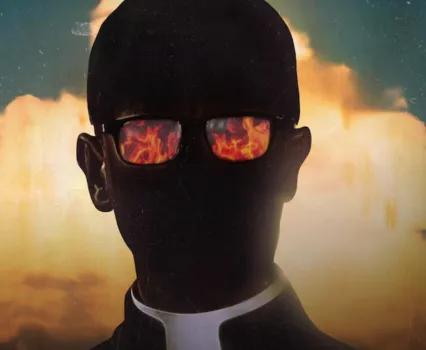
| In the twentieth century, Marcial Maciel was the greatest criminal in Catholic Church history, and equally its greatest fundraiser, says journalist Jason Berry about this abusive priest, the subject of a new documentary. Think of those two things together. Crime and fundraising. The new film about Maciel explains how the Catholic Church tolerated this abuser for fifty years. Even the popes protected him. The investigations show Maciel abused at least sixty minor children, including his own children. Nonetheless, Maciel never faced any legal penalty. No trial, no conviction, no time in jail, no justice. Maciel’s history reminds us how reluctant the church has been to protect children against sexual abuse. |
| Maciel was born in Mexico in 1920 and decided he wanted to be a priest. Not just any priest, however. From his youth he wanted to create his own order of priests, one that would follow his own ideas of the church. In the early days, he got into some trouble in the seminaries he attended. His uncles gave him the connections to move elsewhere, where he could become a priest. With their support he was eventually ordained. |
| Maciel learned early how to raise money. In large amounts. The film says he knew how to approach people and ask for aid. One donor wrote a fake check to encourage others to write real ones. Maciel focused on widows who had received money from their spouses, and convinced them to give him money. The women also liked his company. With that money, he set about establishing the Legion of Christ, his own religious order. |
| There was one distinctive feature about the order. Its members had to take a fourth vow not to say anything critical about their superiors in the community. A good way to protect himself from all unwanted criticism. |
| The Legion was founded in the 1940s. Today, there are 1,309 legionaries around the world: 1,036 priests and 273 seminarians, in 95 communities, in the United States, Europe, Italy, Colombia/Venezuela, Chile/Argentina, Spain, Southern Mexico, Central America, Northern Mexico, and Brazil. Maciel added women as assistants who could keep everything running and help the men do their work. These massive communities are the accomplishment of Marcial Maciel. Their current website does say, however, “we do not consider [Maciel] a role model due to the gravity of his actions.” |
| What were his actions? Two men Maciel abused when they were boys tell their stories in this film. They explain their struggle: wanting to be free of the abuse, and yet devoted to the founder of their religious order. It took them years to understand their situation and finally report their abuse. That brought them terrible oppression from their abuser and his supporters, who repeatedly attacked their stories as untrue. |
| Not much happened after their reports. The documentary shows that Maciel’s abuse was known to the church during the papacy of Pius XII, who reigned from 1939 to 1958. Church authorities ignored it then and kept avoiding the subject. The film emphasizes the close relationship between Pope John Paul II and Maciel, showing them as close friends. John Paul protected him more than anyone else did. John Paul hosted big festivities praising the Legion and its founder, and wrote him letters full of praise for his work. |
| Why? Were they friends? Maciel had tons of money that he raised across the world. Later reports showed he took that money to places that were tax havens, where he could be rich and not pay taxes. Investigators eventually discovered that he invested in telephone companies, technology, weapons, pornography, condoms, and other items usually unacceptable to Catholic morality. |
| Finally Cardinal Ratzinger, who became John Paul’s successor Pope Benedict XVI, decided to put a stop to Maciel’s wrongdoing. He ordered Maciel to live a quiet life of prayer and penitence. Maciel didn’t listen. He used his wealth to keep traveling around the world, flying first class and staying in five-star hotels. He had an expensive home in Florida. He used his money throughout his life to live well. At the end, he was kept in prayer and penance and kept quiet through some papal pressure. But there was never any mention of the victims or any punishment for his crimes. |
| In addition to the numerous children he abused, Maciel had romantic relationships with his own two children. This priest had one child with one of the women, and two sons with the other, and some adopted children. The film shows the local news station letting the brothers explain how they loved their father—he was their papa!—and that he had also abused both of them. The documentary suggests that Pope John Paul knew about these children because there are pictures of him with Maciel, giving the children communion. |
| At the end we learn Maciel’s supporters were with him while he was dying. They wanted him to go to heaven. They knew he needed to confess his sins in order to get there. He never did. The film suggests he could not bring himself to tell his colleagues all the abuse he had inflicted on children, including on his own two children. His supporters had an exorcist available to free him of the sinfulness that he would not confess. |
| The film raises the question. Was Maciel sick? Or evil? Or both? What do you think about that question? |
| Jason Berry, who was the lead investigator of the church’s abuse in New Orleans in the 1980s, was informed of this story. He was the one, of course, who mentioned the greatest criminal and greatest fundraiser issue. He asked, “Why is the Legion of Christ still part of the Catholic Church? Why hasn’t Pope Francis said you’re not part of the church any more?” |
| Maybe Francis had other work to do for the church. The film confirms the church has long protected its priest-abusers and ignored its victims and survivors. They have long fought justice for their victims. We wait to see what the new U.S. citizen Pope Leo IV will do. Will he join the crowd of popes silent about abuse, hiding the abusers and never protecting their victims? |
| I hope for something different from him, but Maciel’s history reminds us the popes have long supported abusers instead of survivors. |


 Have friends who like law? Forward this email.
  Like Verdict for legal discussions on Facebook.
  Follow @verdictjustia for news and updates on Twitter.


