| In recent days, President Donald Trump has amplified his attacks on Federal Reserve Board Chair Jerome Powell, reportedly even showing Republican members of Congress a draft letter firing Powell. Trump is annoyed with Powell—whom Trump himself appointed to his current position—because Powell is doing his job. Trump wants Powell to lower interest rates in order to juice the economy. Instead, Powell, along with the other members of the Fed’s Open Market Committee, has been holding rates steady because of the risk that the high inflation that was generated by supply-chain disruptions and expansionary fiscal policy during the height of the COVID-19 pandemic could return. |
| Is Powell’s caution justified? The short answer is a resounding yes. Trump’s own policies are a source of considerable economic uncertainty. |
| The impact of the “big beautiful bill” that Congress recently passed is unpredictable. Tax cuts often cause inflation because they act as a stimulus to the economy. Yet the tax cuts in the new legislation overwhelmingly benefit people who are already wealthy. They will likely pocket most of the windfall rather than spend it. Cuts to Medicaid and other programs will lead to job losses and thus less economic activity, putting downward pressure on prices. |
| The new law also contains billions in additional funding for immigration enforcement. That could result in fewer undocumented immigrants in the country, which, from the standpoint of inflation, is a double-edge sword. Fewer people means less demand for goods and services, but it also means a tighter labor market. Businesses that formerly employed undocumented immigrants will need to pay higher wages to Americans in the country with legal status, resulting in higher prices for their goods and services. |
| Just as the economic impact of the bill Trump strongarmed through Congress is uncertain, so is the impact of Trump’s mercurial approach to foreign trade. There is uncertainty because Trump has repeatedly threatened, imposed, delayed, and changed his tariffs. |
| Even consistently high tariffs have a complicated and thus somewhat unpredictable economic impact. In the relatively short run, they are almost certain to cause inflation. Tariffs are taxes paid by importers and, in a competitive market economy, passed on to consumers in the form of higher prices. That sparks inflation. But insofar as the tariffs make it difficult for American firms that depend on foreign supplies to operate at a profit, they can lead to business failures, unemployment, and thus a recession, which is in turn deflationary. There is also the possibility that high tariffs will trigger stagflation—high unemployment and high inflation. |
| Faced with all of this economic uncertainty, Powell and the other members of the Open Market Committee are acting prudently by waiting to see how the economy responds to Trump’s policies before cutting (or raising) interest rates. |
| Can Trump Legally Fire Powell? |
| The fact that Powell is acting sensibly as Fed Chair is exactly why he has incurred Trump’s wrath. Although Trump has thus far disclaimed an intent to fire Powell, he frequently changes his mind. Suppose he were to fire Powell. Would that be legal? |
| In an essay on my blog in April, I explained that the answer is not entirely clear. Here is the crucial passage of that explanation: |
By law, the Chair of the Federal Reserve serves for a four-year term and a maximum 14-year term as a member of the Board of Governors. With respect to Board members, the statute specifies that “each member shall hold office for a term of fourteen years from the expiration of the term of his predecessor, unless sooner removed for cause by the President.” There is no parallel express reference to removal for cause in the part of the statute setting out the four-year term of the Chair. One could read the for-cause removal protection as nonetheless extending to the Chair; or one could read the absence of any such reference as enabling the president to demote a Chair to a mere Board member at will (in which case the four-year term would be a maximum, absent reappointment).
|
| Thus, absent “cause”—a term of art meaning some sort of mis- or malfeasance—at most, Trump could demote Powell to ordinary Board-member status and would have to select a new Chair from the current Board’s membership. Because the current Board as a whole has shown sound judgment, it would be difficult for Trump to obtain an accommodating Fed through firings without cause. |
| Suppose nonetheless Trump fires Powell and perhaps other Board members as well. Would that be lawful? The Supreme Court has recently addressed just that question, albeit only in dicta. |
| In May, in Trump v. Wilcox, the Court stayed lower court injunctions and thus allowed President Trump to remove members of the National Labor Relations Board (NLRB) and Merit Systems Protection Board (MSPB) without good cause, even though the statutes creating their respective positions forbid such removal. Because the case was in a preliminary posture, the Court did not issue a final ruling, but it strongly implied that, in a different case, it will hold that statutory good-cause removal protection for the likes of NLRB and MSPB members unconstitutionally infringes executive power. However, even though the Federal Reserve was not at issue in the case, the Court went out of its way to pre-distinguish the Fed, writing that it “is a uniquely structured, quasi-private entity that follows in the distinct historical tradition of the First and Second Banks of the United States.” |
| To my mind, those distinctions are not especially persuasive. The real reason that the Justices want to deny the president the power to fire the Fed Chair and other Fed Board members is not that the Fed fits within some made-up historical exception to the Court’s own made-up limits on statutory good-cause removal restrictions; the real reason is that even the conservative super-majority recognizes that insulating the central bank from direct political control is vital to sound long-term monetary policy. |
| What About Pretextual Cause? |
| But wait. In Wilcox, the Court indicated that statutory protection against removal of Fed members without cause would be upheld. However, that leaves open the possibility that a president could remove Fed Board members, including the Chair, for cause. |
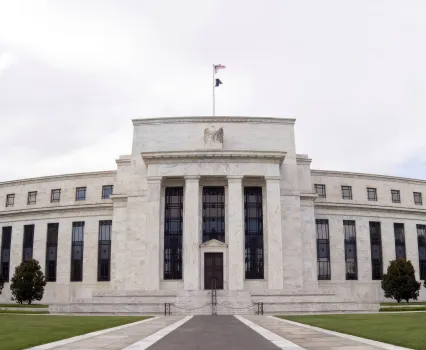
| In recent weeks, Trump has suggested that Powell could be removed for cause based on the fact that a renovation project at the Federal Reserve building is over budget. Many of the accusations of extravagance and mismanagement in the formulation and execution of the renovation plans appear to be characteristically Trumpian exaggerations and lies. There is nonetheless a real possibility that Trump could use the supposed renovations issues as a pretext for firing Powell. What would happen then? |
| The short answer is that nobody really knows. There are a few lower court cases holding that a removal for cause can be challenged on the ground that cause did not exist but, so far as I have been able to ascertain, no such case has ever held that a president who claimed to be removing an official for cause acted unlawfully. To be sure, it makes sense that a court could so hold if it were shown that the cause alleged did not in fact exist. Otherwise, good-cause removal protection would be meaningless. But the absence of precedent leaves open the possibility that the Supreme Court would find some way to duck the issue or even resolve it in Trump’s favor. |
| After all, in Wilcox itself, the Court stated that a principal reason it was staying the preliminary injunctions was a worry about “the disruptive effect of the repeated removal and reinstatement of officers during the pendency of . . . litigation.” That effect would be present regardless of whether someone is removed with or without cause. In a case in which the president pretextually removed the Fed Chair (and perhaps other Fed Board members) over alleged mismanagement of the renovations project, the Court’s Wilcox rationale could mean that no court could intervene until after a full trial—which could take months or even years. |
| The Market to the Rescue? |
| If the courts cannot be counted on to prevent Trump from firing Powell and other Fed Board members, does that mean he has the de facto power to do so? Maybe not. As we saw in April when Trump announced what he inaccurately called reciprocal tariffs, the market can exert some discipline. In April not only did the stock market lose value, but so did the bond market, which was especially jarring. Ordinarily, when stocks lose value, bond prices go up, because investors pulling their money out of stocks put them in safer assets, and heretofore there has been no safer asset than U.S. Treasuries, i.e., bonds. The April bond market volatility reflected a general loss of faith in the U.S. economy. |
| An even steeper decline in bond prices could be expected if Trump were to fire Powell or otherwise act on his inclination to subordinate the Fed to his own political judgment, as investors would lose faith in U.S. monetary policy. The ironic result would be the exact opposite of Trump’s goal. Because bond prices and interest rates are inversely correlated, an effort by Trump to control the Fed would likely increase interest rates throughout the economy, directly contrary to Trump’s goal of lower rates. |
| Will that be enough to prevent Trump from moving against Powell and the Fed? One must hope so, but it is notable that we find ourselves hoping that the market disciplines the president. Surely, we would be better off if we lived in a country in which we could count on the president to comply with the law. |


 Have friends who like law? Forward this email.
  Like Verdict for legal discussions on Facebook.
  Follow @verdictjustia for news and updates on Twitter.


