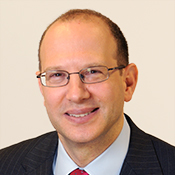
| On a recent episode of the Touro Law Review podcast, I was pleased to host a timely and incisive discussion with Ruth Greenwood, Assistant Clinical Professor and Director of the Election Law Clinic at Harvard Law School. |
| In this episode, Professor Greenwood and I discussed the legal and political landscape of electoral districting. More specifically, our discussion focused on the Supreme Court’s hands-off approach to partisan gerrymandering and the pending constitutional challenge to the Voting Rights Act (VRA). |
| For a comprehensive analysis of these critical issues, I invite you to listen to our full discussion, available here. With the assistance of Artificial Intelligence (AI), I provide a summary below of the key points of our conversation. |
| Gerrymandering Defined |
| Professor Greenwood began our conversation by defining gerrymandering, tracing the concept back to its origins with Massachusetts Governor Elbridge Gerry in 1812. While the term originally described the drawing of bizarrely shaped districts (a “salamander”), its modern meaning is the drawing of electoral lines to seek advantage for a specific group—be it a political party, a racial group, or a set of incumbents. |
| Professor Greenwood provided a thumbnail history of gerrymandering, from malapportionment through the Supreme Court’s “one person, one vote” jurisprudence in the 1960s up to partisan gerrymandering today. As she elaborated: |
- Malapportionment, the original method of gerrymandering, involved creating districts of vastly unequal populations, diluting the power of urban voters.
- In the 1960s, the Supreme Court entered the “political thicket,” applying the Equal Protection Clause to mandate districts of equal population according to the principle of “one person, one vote.”
- With populations equalized, parties seeking an advantage turned to sophisticated methods of “packing” and “cracking” voters based on their known political affiliations. This is the form of (political) gerrymandering pursued today.
|
| Professor Greenwood gave the following example of modern gerrymandering: The 2012 Wisconsin election, in which Democrats won 52 percent of the statewide vote but secured only 37 percent of the state assembly seats—a “wrong winner outcome” that strikes many as fundamentally anti-democratic. |
| The Federal Courts Step Back: Rucho v. Common Cause (2019) |
| Professor Greenwood then discussed the federal judiciary’s current stance on partisan gerrymandering. She detailed the Supreme Court’s 2019 landmark decision in Rucho v. Common Cause. (As Professor Greenwood noted in the podcast, she litigated Rucho from the trial level to the Supreme Court.) In a 5-4 opinion written by Chief Justice John Roberts, the Court held that claims of partisan gerrymandering present a non-justiciable political question. While conceding that “excessive” extreme partisan was “incompatible with democratic principles,” the majority nevertheless held that federal courts lacked a “manageable standard” to determine when lawful political considerations crossed the line into unconstitutional partisanship. The Court concluded that political gerrymandering must be addressed primarily by the legislative branches, not the federal courts. |
| Justice Elena Kagan dissented. She argued that manageable standards do exist and that the Court was abdicating its constitutional duty by holding that political gerrymandering claims were not justiciable in federal court. As Professor Greenwood noted, Kagan’s dissent emphasized that voters should choose their politicians—not the other way around. |
| Now Pending at the Supreme Court: Callais v. Landry |
| In addition to political gerrymandering, Professor Greenwood and I discussed litigation now pending at the Supreme Court involving claims under Section 2 of the VRA. |
| Initially Professor Greenwood provided an overview of the VRA, which evolved from protecting the right to vote (that is, combatting disenfranchisement) to protecting the value of the vote (that is, combatting vote dilution). The 1982 amendments to the VRA established a “results test,” allowing plaintiffs to challenge districting maps that have a disparate impact on minority voters regardless of the map-drawers’ intent. This results test was affirmed by the Supreme Court in 1986 in Thornburg v. Gingles. |
| The “results test” doctrine is now at the center of a case now pending at the Supreme Court, Callais v. Landry. Professor Greenwood, whose clinic is involved in the case, set out the history of the case: Following the 2020 census, plaintiffs brought a Section 2 lawsuit (Robinson v. Landry) arguing that Louisiana, which has a one-third Black population, must draw two, rather than one, majority-Black congressional districts. |
| Subsequently, after the Supreme Court applied Gingles in an Alabama case involving a challenge to the state’s redistricting map, Allen v. Milligan (2023), the Louisiana legislature acted to comply with the VRA by drawing a new map with a second majority-Black district. |
| This prompted a group of white voters, the plaintiffs in Callais, to sue. They argued that this new map was an unconstitutional racial gerrymander under the 14th Amendment. Citing the Supreme Court’s decision in Shaw v. Reno (1993) and other authorities, the plaintiffs asserted that race improperly “predominated” in the Louisiana’s legislature’s decision when creating the second majority-Black district. |
| According to Professor Greenwood, Callais presents the following question: Does complying with Section 2 of the VRA inherently require an unconstitutional racial gerrymander? The Court’s decision could determine the future viability of the VRA. |
| The Path Forward: Advocacy Inside and Outside the Courts |
| Professor Greenwood concluded that in this challenging legal environment, advocates for fair political representation must pursue a multi-pronged strategy. While litigation remains a crucial tool for creating a “record,” Rucho demonstrates the limitations of a court-centric approach. |
| The most durable solution, she argues, is outside the judiciary. In states like Michigan, Professor Greenwood noted, activists successfully used a ballot initiative to create an independent redistricting commission, thereby taking the map-drawing power away from partisan legislators entirely. This combination of legal advocacy and grassroots organizing, Professor Greenwood said, is essential to ensuring that American democracy lives up to its foundational principles. |
| Rodger Citron is the Associate Dean for Research and Scholarship and Professor of Law at Touro University, Jacob D. Fuchsberg Law Center. |
| Ruth Greenwood is an Assistant Clinical Professor and the Director of the Election Law Clinic at Harvard Law School. She engages in litigation and advocacy on a variety of election law cases, while training the next generation of election lawyers. Professor Greenwood litigated two partisan gerrymandering cases from the trial level to the Supreme Court of the United States, Gill v. Whitford (2018) and Rucho v. Common Cause. |

 Have friends who like law? Forward this email.
  Like Verdict for legal discussions on Facebook.
  Follow @verdictjustia for news and updates on Twitter.


