 | | Pat Riley, The Icon Who Didn’t Hope | | He worked. | | by Taylor Geas | | | He came west from New York chasing a basketball dream, but Los Angeles had bigger plans for him. | | | What began as a bid to make a roster became a lifetime bond with a city that turns hope into legend.
And, if you have the audacity, into something immortal.
Los Angeles met Pat Riley at his lowest. In 1970, grief and rejection were keeping him company: his father died during training camp in Portland, and shortly after the funeral he was cut from the Trail Blazers. Newly married, he and his wife Chris thought the basketball chapter was over. Then the phone rang. The Lakers claimed him on waivers.
He arrived early to Loyola, where the Lakers practiced at the time. Riley was too excited to wait, shooting alone before his first practice. When the door opened, Jerry West walked in with a ball under his arm; he was a player on the Lakers during this time. He crossed the floor and shook his hand. “Welcome. You can really help us,” he said. For a kid raised in Schenectady on grainy TV images of Boston versus LA, the moment felt unreal. “I welled up,” Riley said.
This was heartbreak transformed into an arrival, an arrival in every sense of the word. Call it destiny.
What Riley didn’t know yet is how reinvention is a symptom of Los Angeles. The city does not care where you come from; only if you’re ready to become something more.
So he played that season alongside West and Elgin Baylor, Wilt Chamberlain, and under head coach Joe Mullaney. Then the next season, 1971–72, under head coach Bill Sharman, Riley, West, and Chamberlain helped the Lakers win their first NBA championship in Los Angeles and secure a record that still holds today: 33 consecutive wins.
Riley played for the Purple and Gold for three more seasons. After he was done, he didn’t want to be away from the team. He convinced Francis Dayle “Chick” Hearn to let him into the broadcast booth as a color commentator. After two seasons, he left the booth to become the Lakers’ assistant coach. And then after one season he was appointed as interim head coach by team owner Dr. Jerry Buss and his former teammate turned general manager, West, while the two went out searching for a permanent head coach.
“We went 12–2. They stopped looking for a new head coach. And here I am today,” Riley explained. | 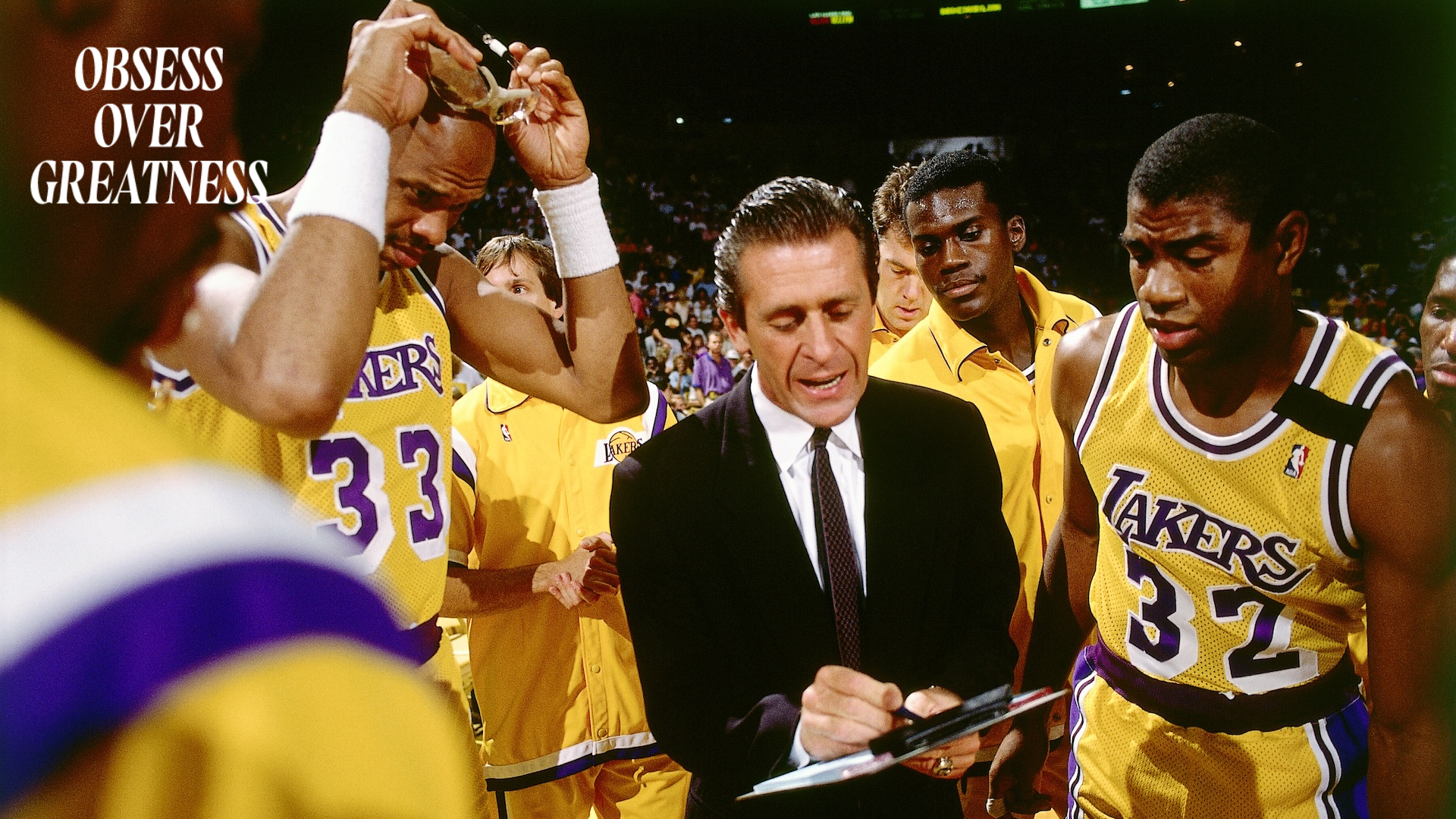 | His nickname at the time was “Riles,” Dr. Buss’s daughter, Jeanie Buss, recounted. At the time, Jeanie was 19 and beginning her career in sports as general manager of Dr. Buss’s Los Angeles Strings of the TeamTennis league. The team would play at the Forum. Jeanie recalled the time she ran into Riley in the hall and said, “Hey Riles.” His reply was, “Call me coach. I’m coach now.”
“He wanted to command respect,” she said. “He was LA for sure.”
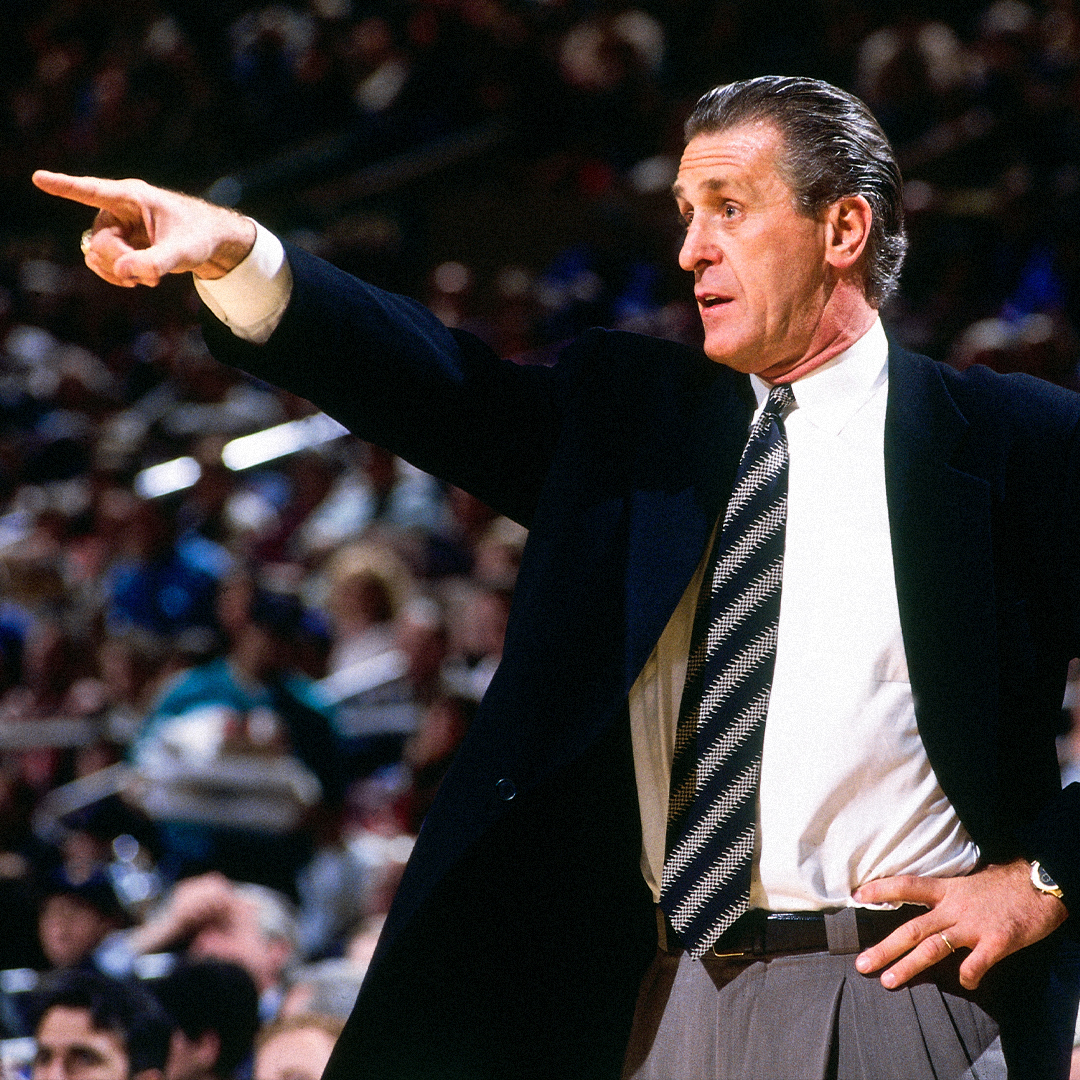
At that point, more than ever before, he became a direct reflection of the city. From his Giorgio Armani suits, to his Michael Douglas slicked-back hair, to his lunches at Jack Nicholson’s house. But most LA of all, he was a winner—and then he won again and again and again. Five times in nine years.
“I’m a GQ coach,” he said jokingly with a laugh. That’s never what he wanted to be known for. Style wasn’t the point; it was a lesson his dad instilled. Pressed pants, shined shoes, self-respect. Riley wanted to be known for the work, for coaching, for building something that lasted.
But the byproduct of his sharp style became a strain of Los Angeles’ DNA: be the best and look better than everyone while you do it.
Riley’s name has been passed down through Los Angeles lore for generations. It’s tethered to a time that made Los Angeles proud, Lakers fans “happy as hell,” and basketball a staple on the West Coast. “I’ve been gone for 30 years,” he explained. “Every time I come back, I was a part of a team that was iconic and legendary.”
But still Riley insists he is not an icon. “It’s embarrassing for me to be called an icon. It actually is in a way. I’m not ashamed of it, I’m flattered by it. … I don’t look at myself as iconic. I look at myself as somebody who was a part of something bigger than himself.”
Whether Riley will admit it or not, a statue on Star Plaza constitutes icon. He was a coach who cared endlessly about his team. A coach who wanted to leave the game better than he found it. Somebody who put work and winning before legacy. Every time.
“When they see me amongst the other great, great players—who are iconic—they’ll say, ‘What’d he have to do with this guy? What’d he have to do with Magic [Johnson]? Or Jerry West?’ I hope they look at it and say to their children, ‘One day you can be like him,’” Riley shared.
And even though he had immeasurable star power all around him, Riley did something here that very few people ever do. It’s what separates fame and remembrance.
One of the most important things Riley learned about leadership is that growth comes from both within and beyond yourself. Effective leaders draw deeply from their own experiences, stories, and past challenges, using what they’ve lived through as a source of insight and authenticity. At the same time, they remain open to learning from others, seeking out new, cutting-edge ideas, perspectives, and approaches that expand their thinking. True leadership is the balance of honoring your internal wisdom while continually evolving through external experiences. | 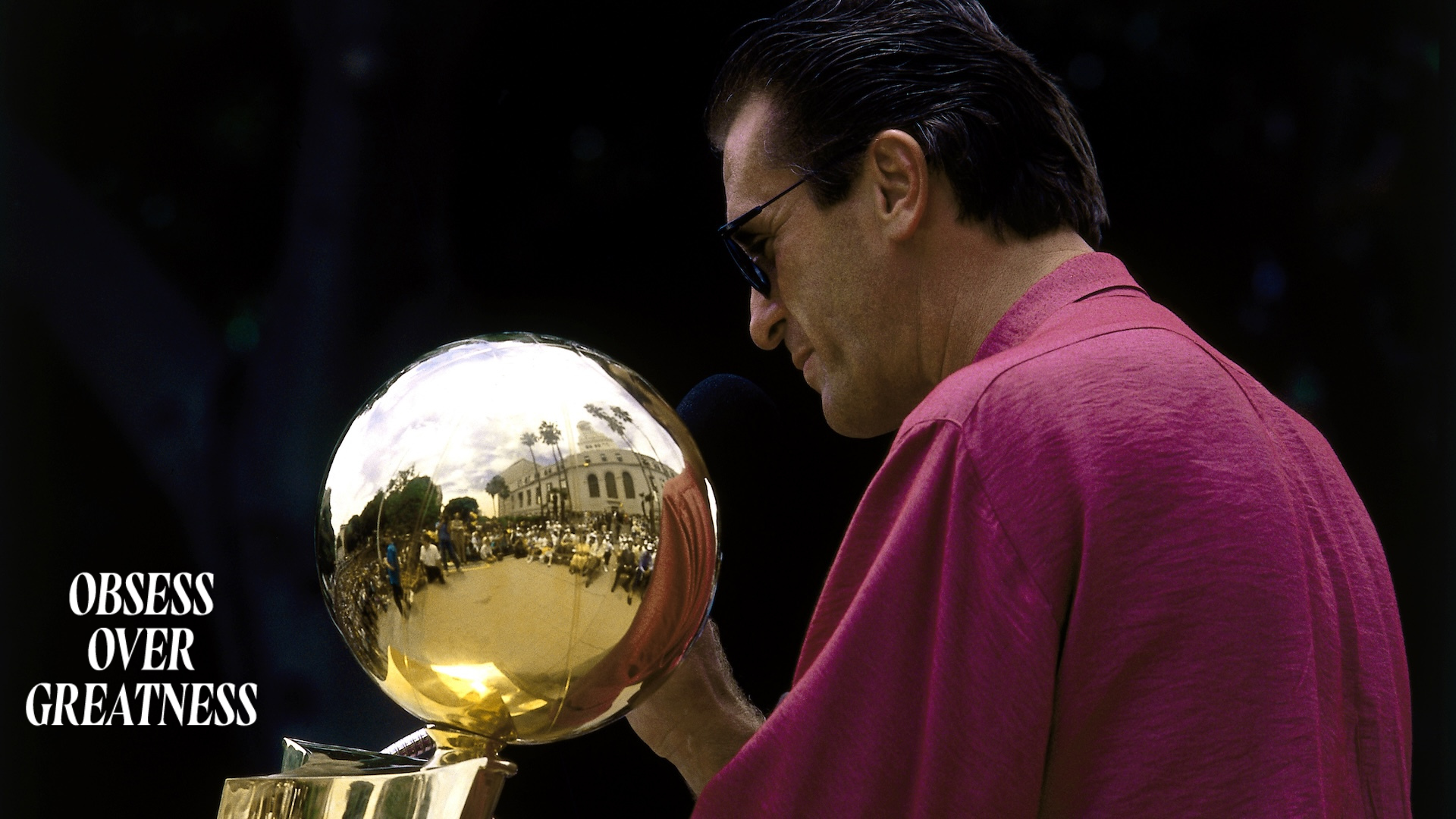 | Riley remembers reading a Rolling Stone article one time about the Grateful Dead. It was a feature piece on Jerry Garcia.
“Not that I was a Grateful Dead fan,” he explained. “I liked their music, but I was a Motown guy. I was a soul music guy. That’s the kind of music I played in the locker room. That’s the kind of music that all the Lakers liked.”
“But I remember he said something,” Riley continued. “He said, ‘You don’t merely want to be considered the best, you want to be considered the only ones that do what you do. There’s nothing wrong with being unique and there’s nothing wrong in separating yourself from the pack. And when you do that, then you have an opportunity to leave footprints in the sand for others to follow.’”
“So, if I have a legacy and if the team has a legacy, it’s because we never really tried to develop one. A legacy follows you. If you’re playing for a legacy, then that isn’t what it’s about. If you have one of the greatest novelists in the world that’s written 30 novels that were bestsellers, at the end they will have a legacy—but that’s not why they write these stories. And that’s not why we played these games. We played these games and we became a team and we won, and we won big because we became a family, a real family. It wasn’t any BS.”
Originality decides who will last in Los Angeles.
So many come in search of their dreams. Full of hope. Ready to work. But few have the courage to step further to the left and leave footprints in the sand. Just as Riley did.
“My legacy with the Lakers,” Riley said, “I was there for 20 years. It was the greatest experience of my life. From 1970–1990. Chris and I got married in 1970, and in 1990 we moved on. And that happens with a lot of people—you move on to other things. Could be bigger and better. But nothing’s ever been bigger and better. Nothing has ever been bigger and better than Showtime.” | |  | | |