The complete collagen system ͏ ͏ ͏ ͏ ͏ ͏ ͏ ͏ ͏ ͏ ͏ ͏ ͏ ͏ ͏ ͏ ͏ ͏ ͏ ͏ ͏ ͏ ͏ ͏ ͏ ͏ ͏ ͏ ͏ ͏ ͏ ͏ ͏ ͏ ͏ ͏ ͏ ͏ ͏ ͏ ͏ ͏ ͏ ͏ ͏ ͏ ͏ ͏ ͏ ͏ ͏ ͏ ͏ ͏ ͏ ͏ ͏ ͏ ͏ ͏ ͏ ͏ ͏ ͏ ͏ ͏ ͏ ͏ ͏ ͏ ͏ ͏ ͏ ͏ ͏ ͏ ͏ ͏ ͏ ͏ ͏ ͏ ͏ ͏ ͏ ͏ ͏ ͏ ͏ ͏ ͏ ͏ ͏ ͏ ͏ ͏ ͏ ͏ ͏ ͏ ͏ ͏ ͏ ͏ ͏ ͏ ͏ ͏ ͏ ͏ ͏ ͏ ͏ ͏ ͏ ͏ ͏ ͏ ͏ ͏ ͏ ͏ ͏ ͏ ͏ ͏ ͏ ͏ ͏ ͏ ͏ ͏ ͏ ͏ ͏ ͏ ͏ ͏ ͏ ͏ ͏ ͏ ͏ ͏ ͏ ͏ ͏ ͏ ͏ ͏

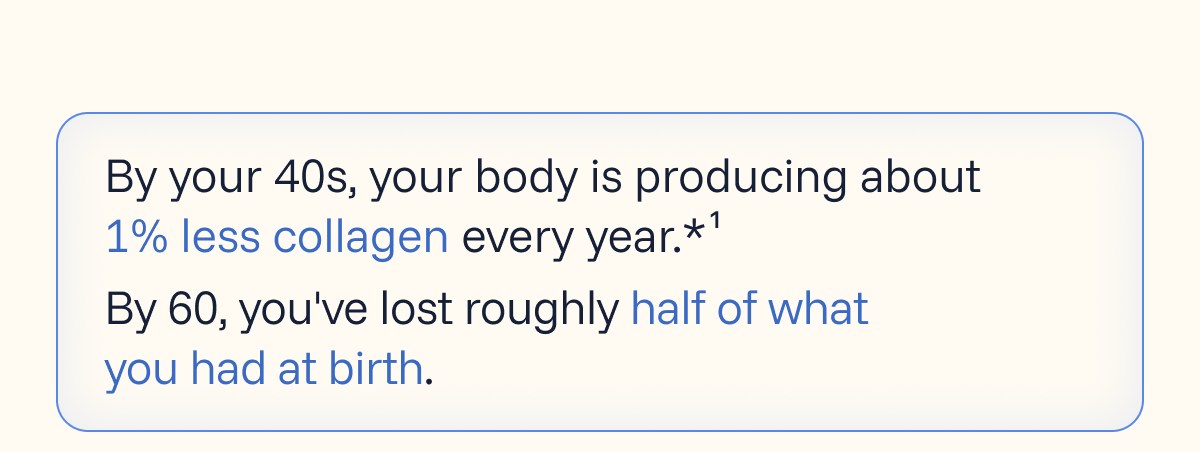
That loss is measurable — and it shows up everywhere:
skin elasticity, joint resilience, even bone strength.
| |
Most people know this. That’s why collagen supplements exist.
| |
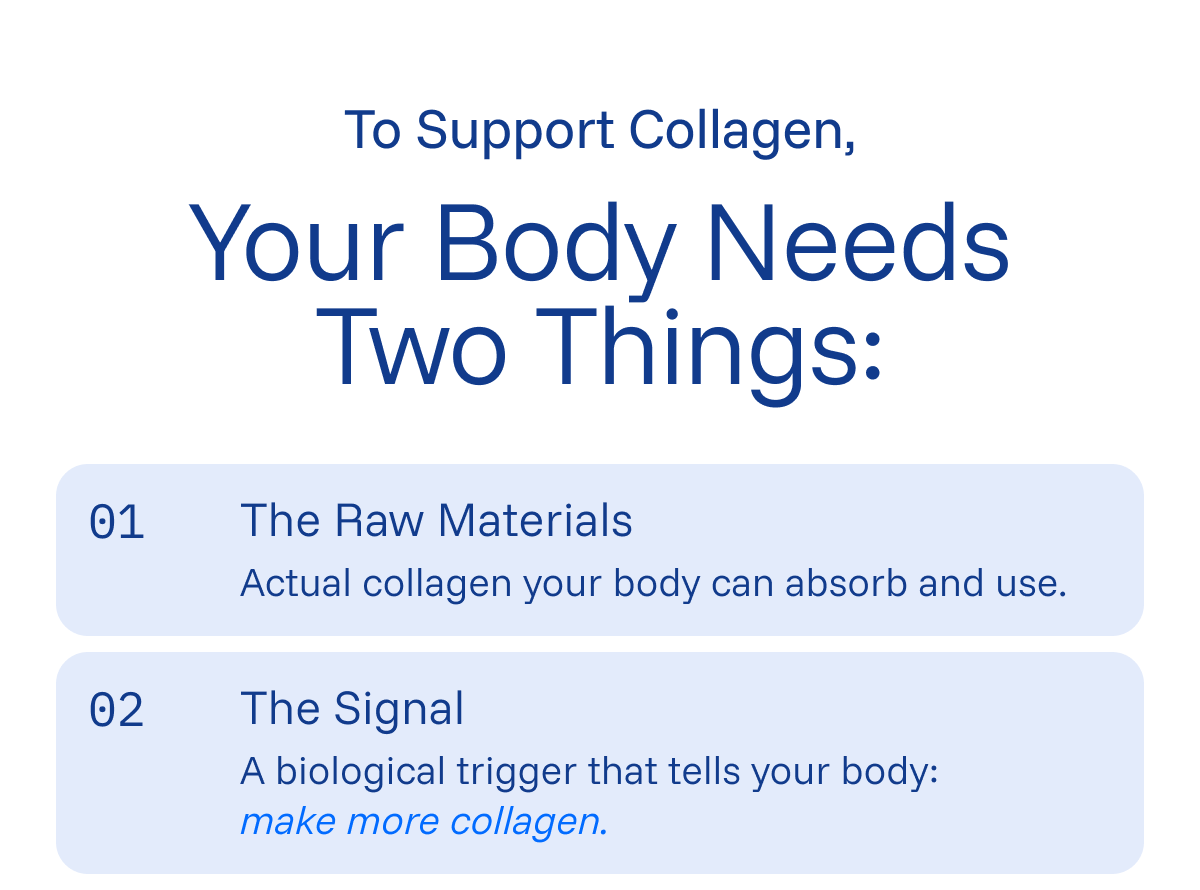
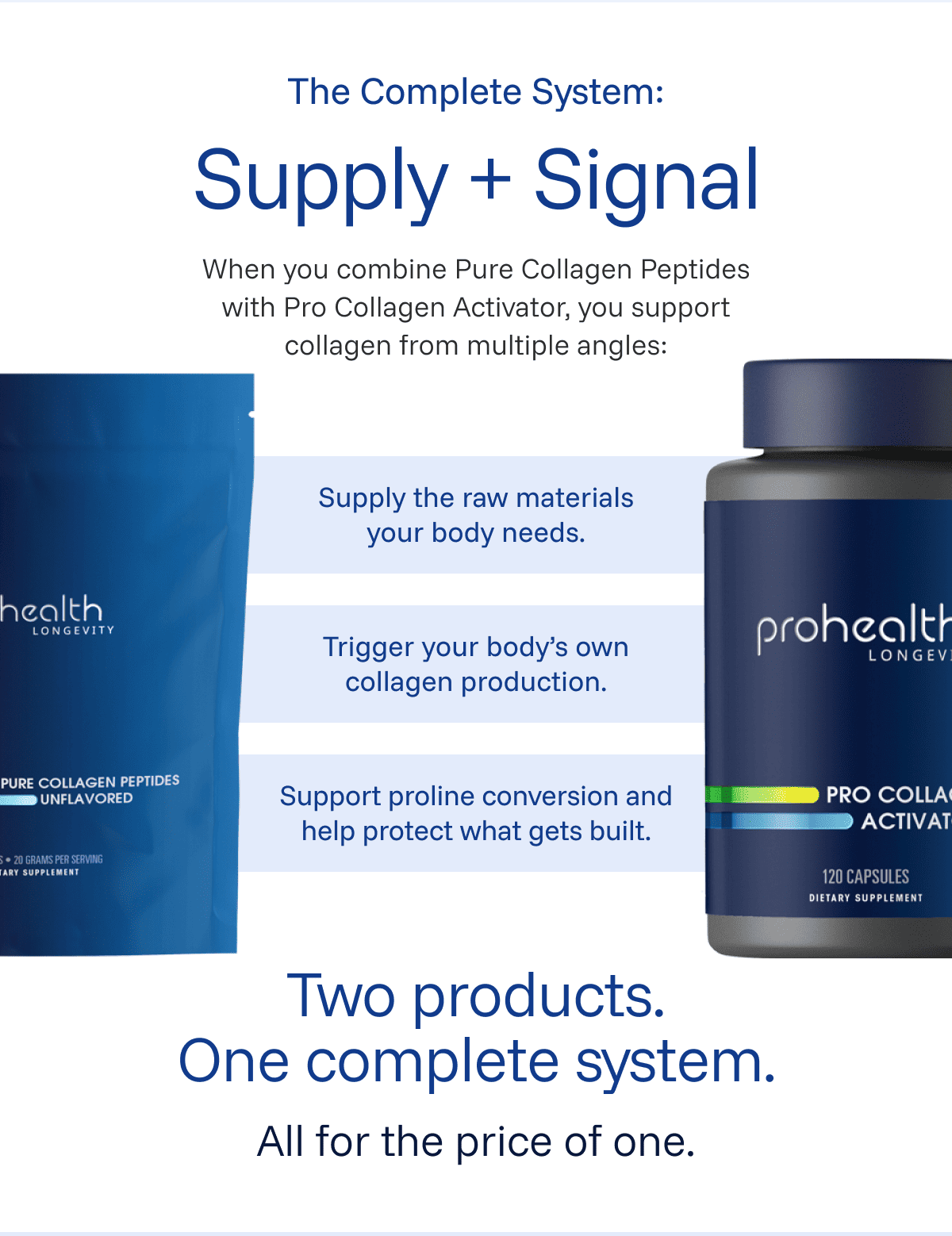
Your body doesn’t just need raw material. It needs the signal to make more collagen.
| |
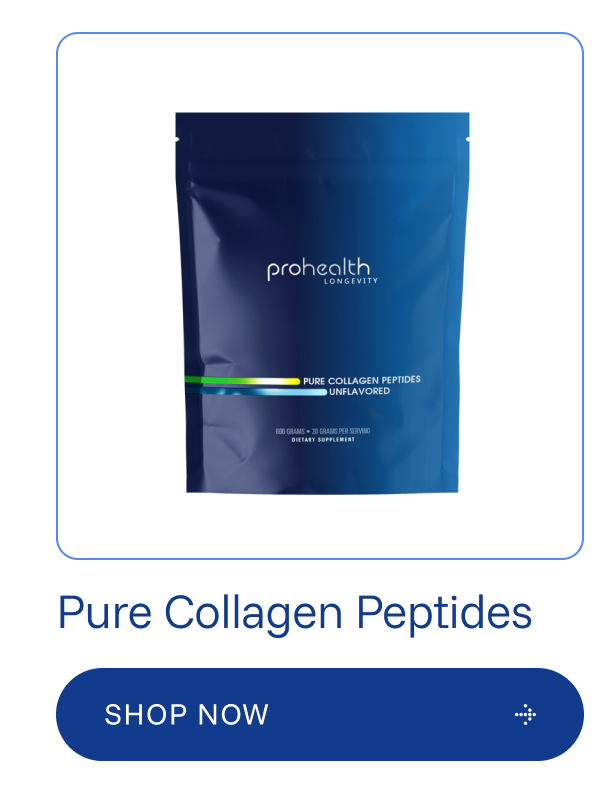
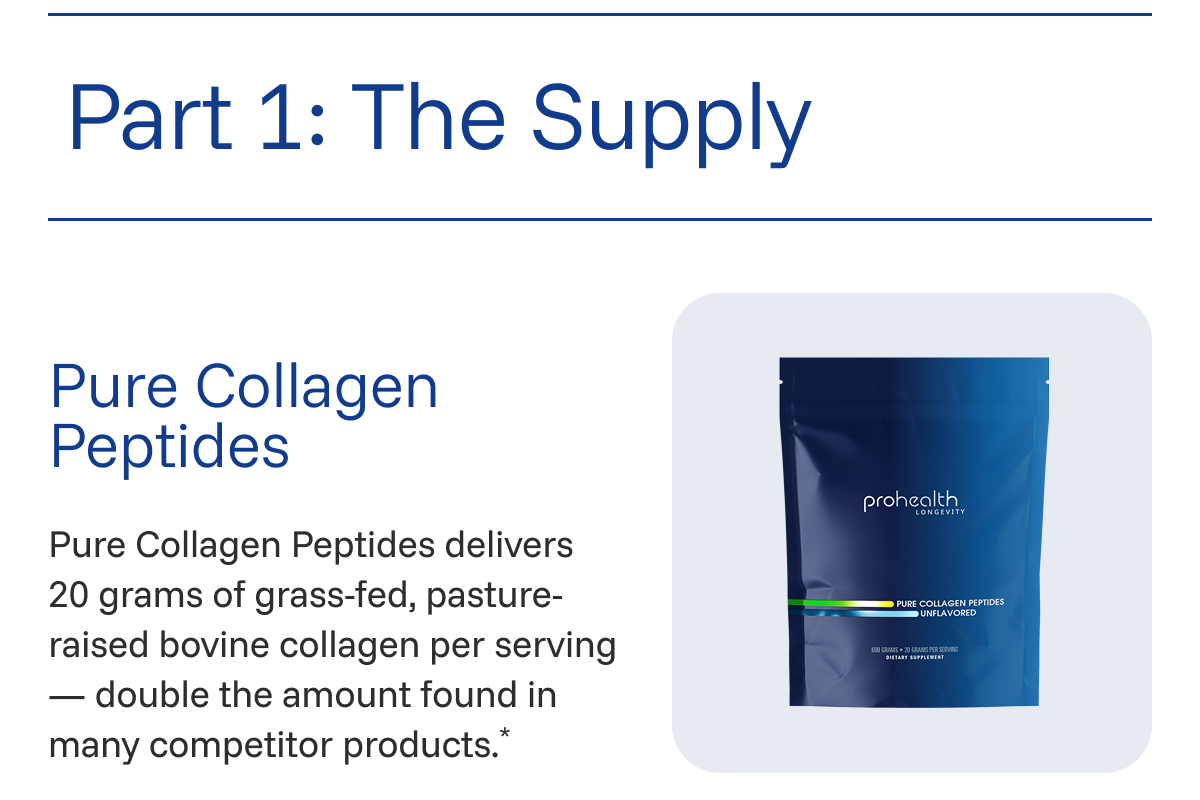
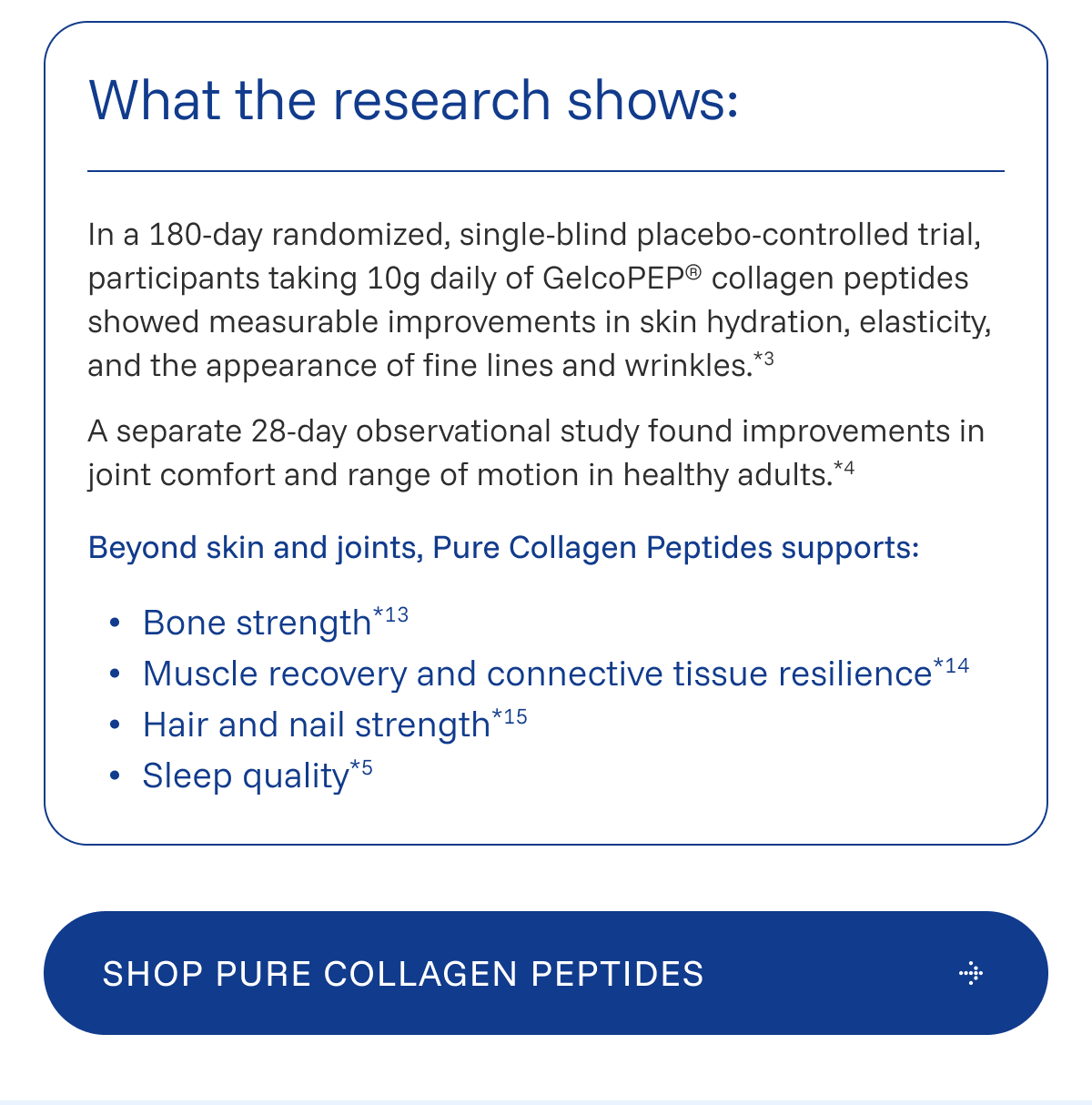
This formula provides Type I and III collagen with the amino acid profile your body uses to build skin, joints, bones, and connective tissue.
| |
Our collagen is hydrolyzed to a molecular weight below 5,000 Daltons, ensuring optimal absorption — delivering bioavailable amino acids your body can actually use.*2
| |
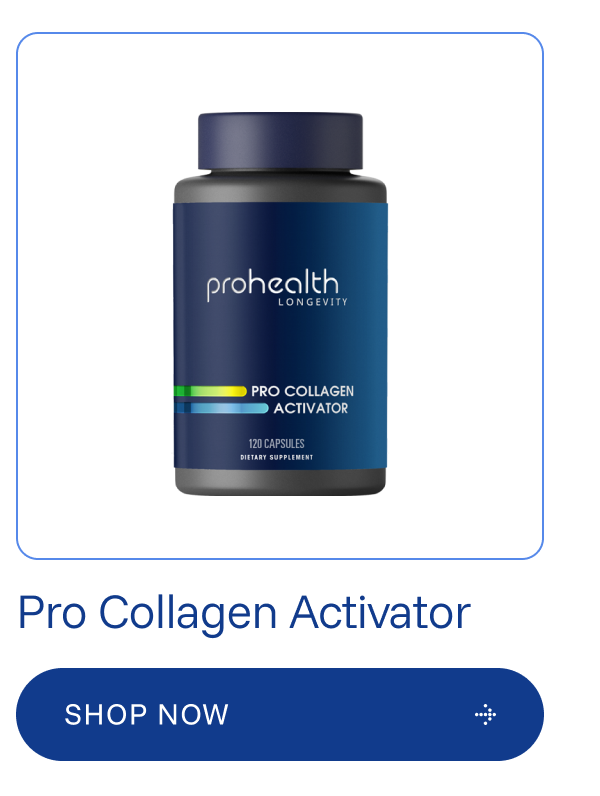
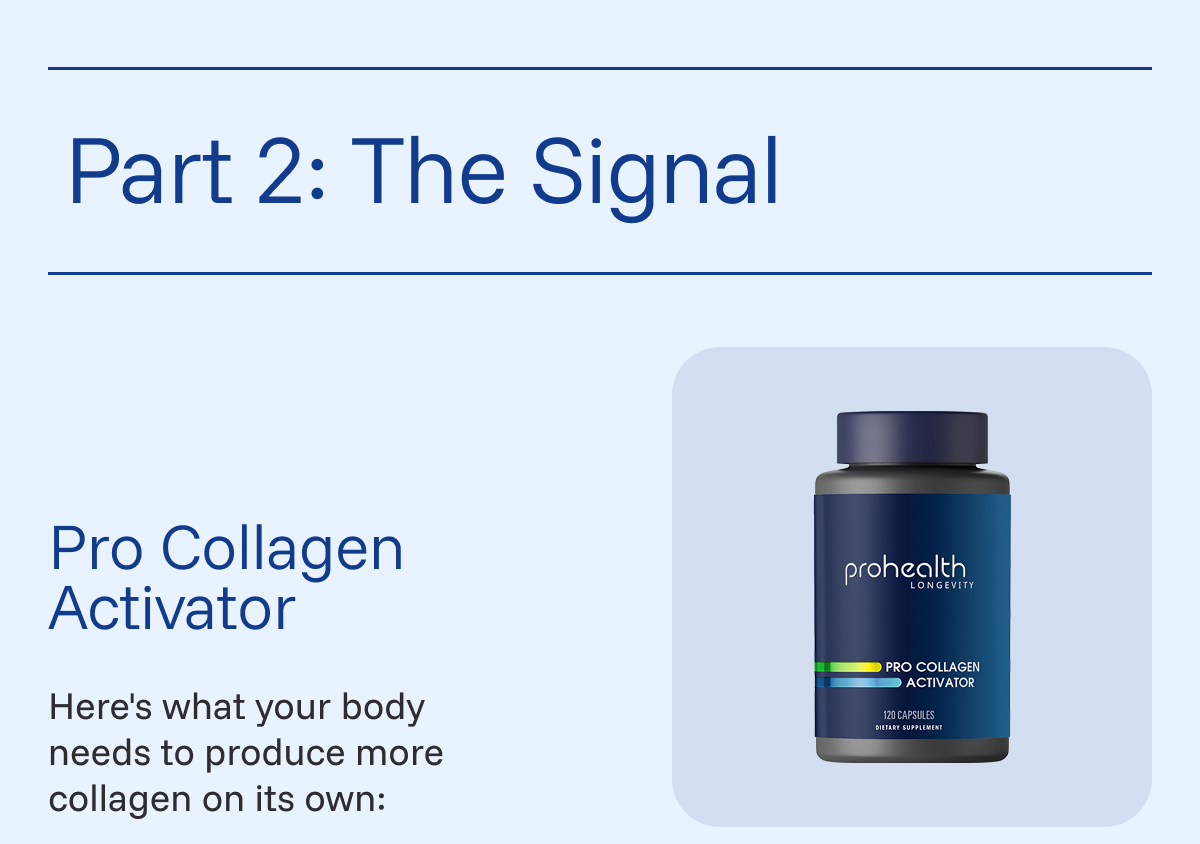
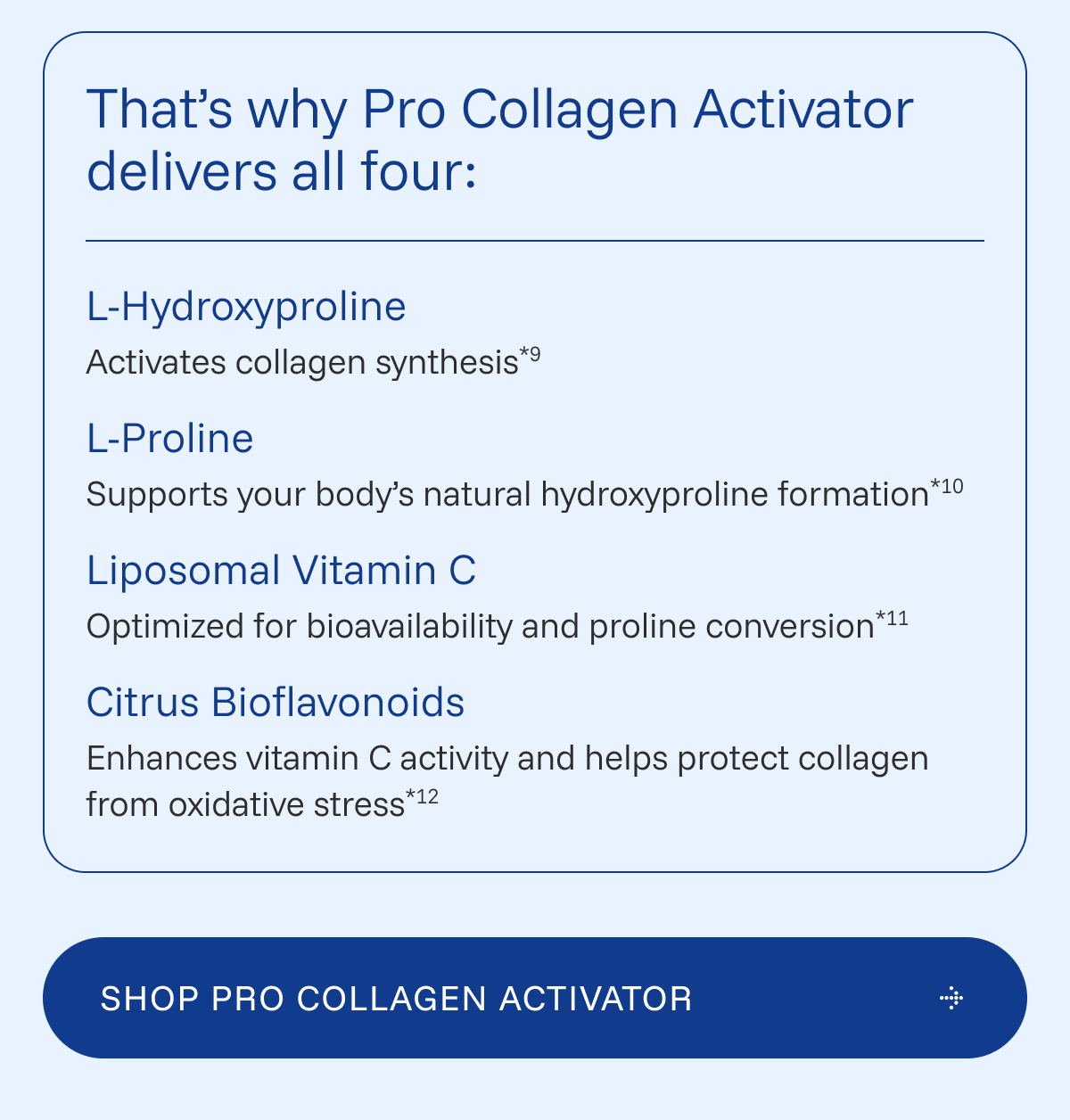
Your body has a built-in collagen “switch,” and it’s activated by a single amino acid: hydroxyproline.
Hydroxyproline is unique to collagen. When collagen breaks down (from age, exercise, or daily wear), it’s released into your bloodstream as a signal that supports collagen synthesis pathways.*6
Your body can also create hydroxyproline by converting proline — a process that requires vitamin C.*8
| | References: - Oikarinen A. Photodermatol Photoimmunol Photomed. 1990;7:3-4.
- Li P. Amino Acids. 2018;50(1):29-38.
- Bagalatela BS, et al. HealthMED. 2024;18(1).
- Lopes AP, et al. HealthMED. 2018;12(3):132.
- Liu H, et al. Photodermatol Photoimmunol Photomed. 2024;40(1):e12931.
- Ohara H, et al. J Dermatol. 2010;37(4):330-338.
- Li P. Amino Acids. 2018;50(1):29-38.
- Chen L, et al. Food Funct. 2023;14(23):10628-10638.
- Li P. Amino Acids. 2018;50(1):29-38.
- Liu H, et al. Photodermatol Photoimmunol Photomed. 2024;40(1):e12931.
- Li P. Amino Acids. 2018;50(1):29-38.
- Chen L, et al. Food Funct. 2023;14(23):10628-10638.
- Karna E, et al. Cell Mol Life Sci. 2020;77(10):1911-1918.
- König D, et al. Nutrients. 2018;10(1):97.
- Zdzieblik D, et al. Br J Nutr. 2015;114(8):1237-1245.
- Schunck M, et al. Skin Pharmacol Physiol. 2017;30(6):313-321.
| | | | |