Restore what they're missing ͏ ͏ ͏ ͏ ͏ ͏ ͏ ͏ ͏ ͏ ͏ ͏ ͏ ͏ ͏ ͏ ͏ ͏ ͏ ͏ ͏ ͏ ͏ ͏ ͏ ͏ ͏ ͏ ͏ ͏ ͏ ͏ ͏ ͏ ͏ ͏ ͏ ͏ ͏ ͏ ͏ ͏ ͏ ͏ ͏ ͏ ͏ ͏ ͏ ͏ ͏ ͏ ͏ ͏ ͏ ͏ ͏ ͏ ͏ ͏ ͏ ͏ ͏ ͏ ͏ ͏ ͏ ͏ ͏ ͏ ͏ ͏ ͏ ͏ ͏ ͏ ͏ ͏ ͏ ͏ ͏ ͏ ͏ ͏ ͏ ͏ ͏ ͏ ͏ ͏ ͏ ͏ ͏ ͏ ͏ ͏ ͏ ͏ ͏ ͏ ͏ ͏ ͏ ͏ ͏ ͏ ͏ ͏ ͏ ͏ ͏ ͏ ͏ ͏ ͏ ͏ ͏ ͏ ͏ ͏ ͏ ͏ ͏ ͏ ͏ ͏ ͏ ͏ ͏ ͏ ͏ ͏ ͏ ͏ ͏ ͏ ͏ ͏ ͏ ͏ ͏ ͏ ͏ ͏ ͏ ͏ ͏ ͏ ͏ ͏

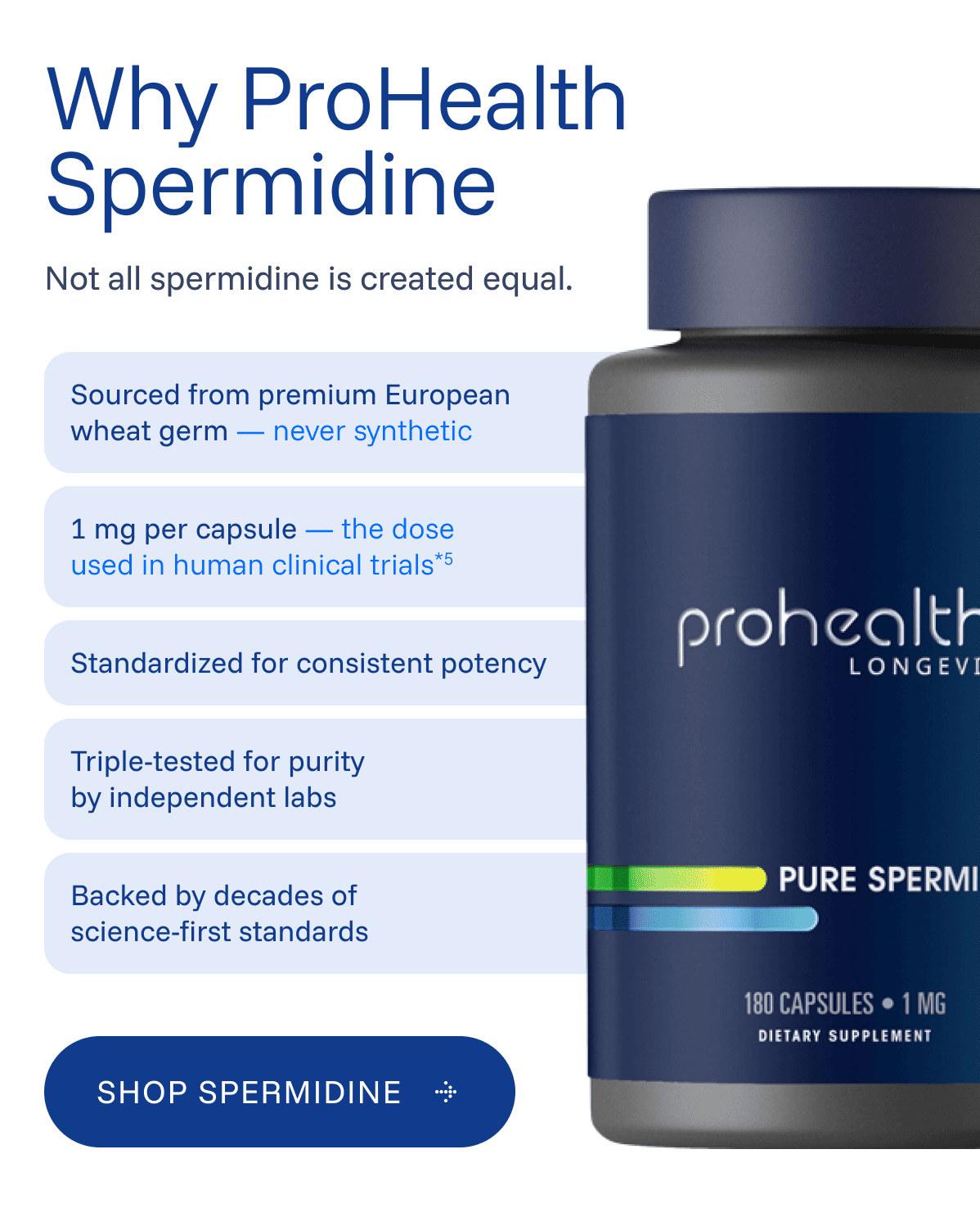
Spermidine is a naturally occurring compound your cells rely on to support autophagy—your body’s internal cellular renewal process.
| |
But levels decline with age.
| |
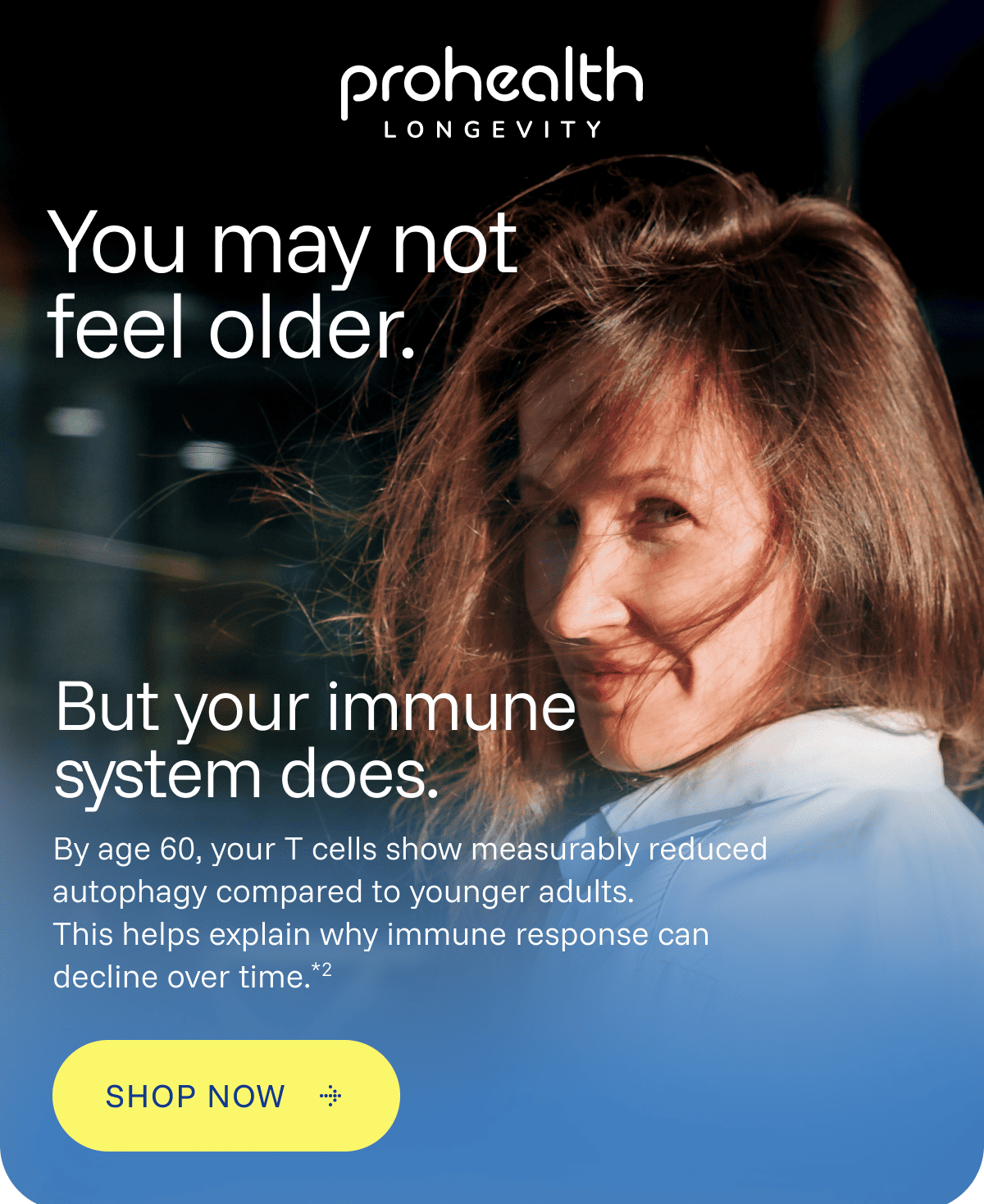
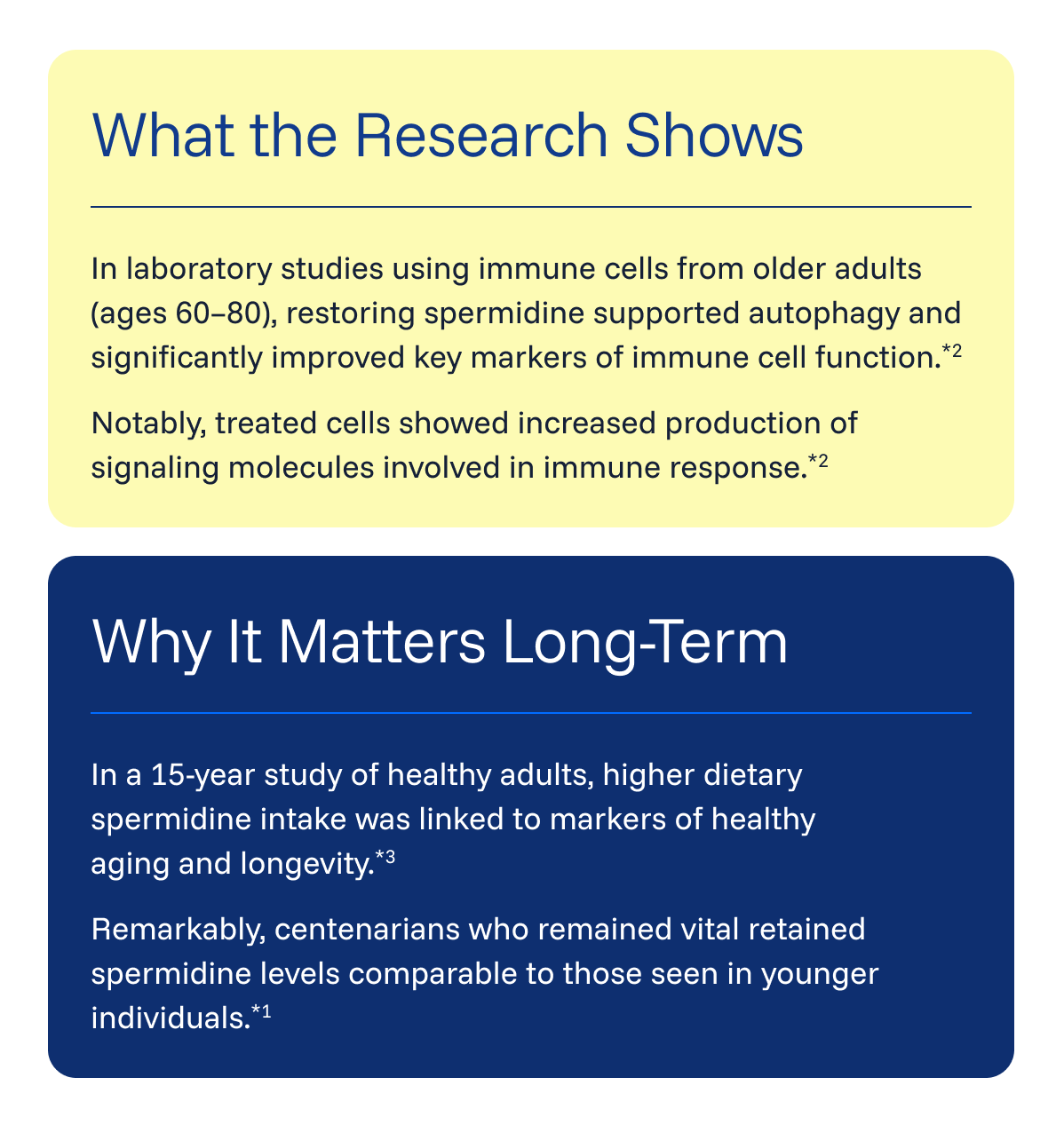
As spermidine declines, autophagy, your cells' self-cleaning mechanism, becomes less active. This is why immune cells in older adults respond more slowly and less effectively to threats. *2
| | References: 1. Madeo F, et al. Autophagy. 2019;15(1):165-168. 2. Puleston DJ, et al. eLife. 2020;9:e57950. 3. Kiechl S, et al. Am J Clin Nutr. 2018;108(2):371-380. 4. Wirth, et al. Geroscience. 2021;43(2):673-690.
5. Hofer SJ, et al. Nat Aging. 2022;2(12):1112-1129.
| | | | |