The rules around how CEOs get paid or get replaced are rarely interesting, but then there’s Tesla CEO Elon Musk. Earlier this week, we learned the only person who can fire Elon Musk from SpaceX is himself, but Friday we found out that his astronomical SpaceX pay package is directly tied to his success in building a human space colony on America’s favorite planet (not including Earth). All three major US stock indexes set new record closing highs on Friday amid hopes for a deal to end the war with Iran. The S&P 500 also notched its fifth weekly gain, its longest weekly winning streak since 2024. 🎥 Here’s some movie trivia for you: |
|
|
|
- Micron’s April gain of more than 50% was its best showing since February 2000, right before the dot-com market’s peak. Western Digital’s 60% run in April was its best performance since right after the dot-com market rolled over in January 2001.
- Dell, a ubiquitous brand of early internet-era PCs and laptops, is up more than 60% this year, including 27% in April.
- A range of lesser-known internet-era darlings — Lam Research, Jabil Circuit, Ciena Corp., and ON Semiconductor — are also clustered near the top of the S&P 500’s list of best performers in 2026.
|
It wasn’t easy for these early internet icons to thrive two decades into the new millennium. |
- Sandisk, which is up nearly 300% in 2026, is now primarily a supplier of large storage systems for data centers, rather than a producer of memory chips consumers can use in digital cameras and music players.
- Intel restructured its struggling manufacturing operations into a contract chipmaking unit in 2021, a decision that produced billions of dollars in losses, but left it with the valuable ability to ramp up some production to meet surging AI-related demand today.
- Dell transformed itself via acquisitions, from a maker of affordable computers for companies and corporations into a data networking, software AI server giant.
|
|
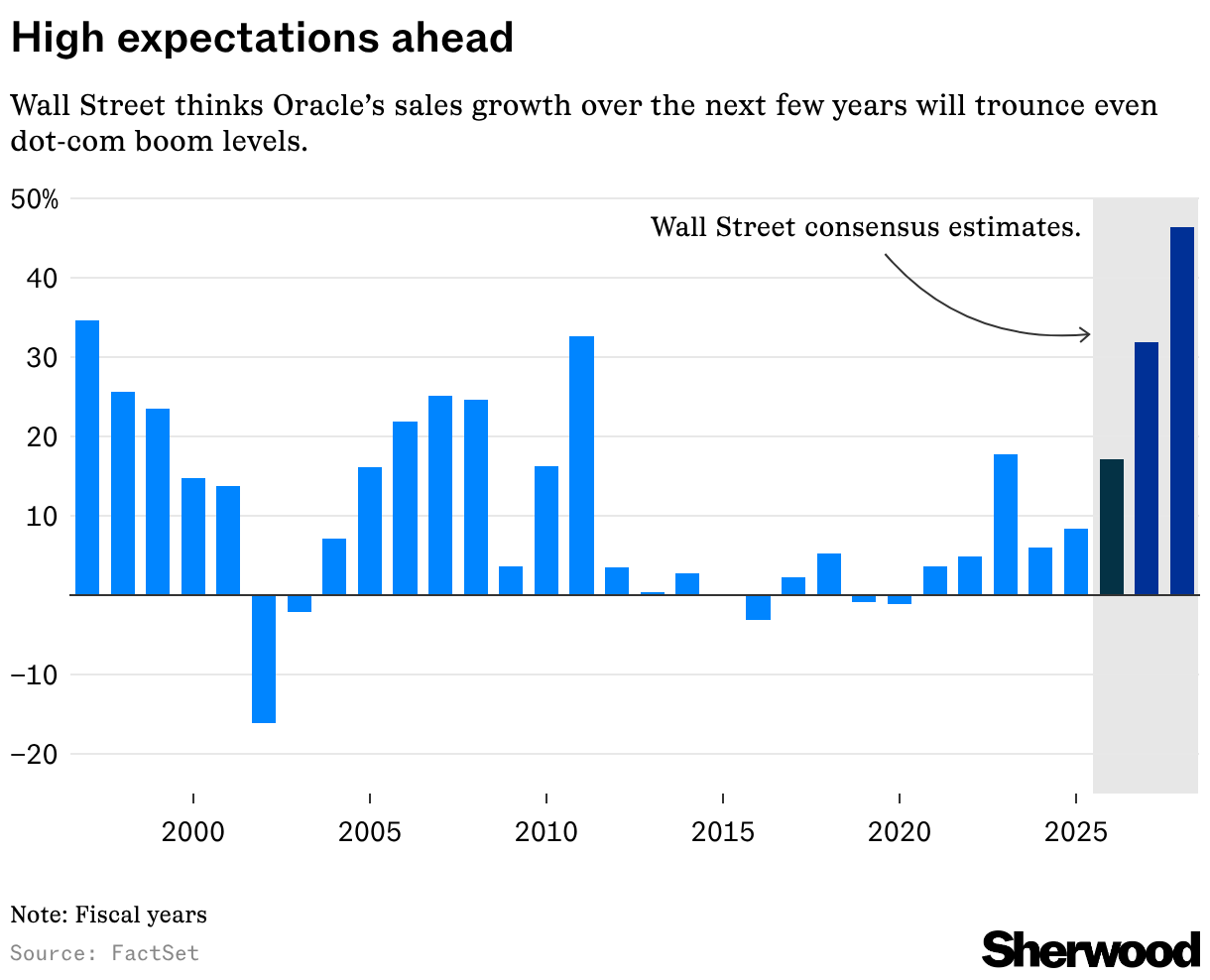
Analysts now expect sales growth for business software giant Oracle — a 1990s beast — to eclipse the 37% and 35% high-water marks of 1996 and 1997, as a result of expectations about its AI data center business. |
|
|
|