Your login is via your account |
|
|
💥 How Agentic AI Could Change Every Industry
This week, we’re diving deeper into the world of agentic AI. We’re zeroing in on the core technologies that make these intelligent agents actually reliably work. Plus, we’ll explore what all this could mean for software, start-ups, and most importantly, the opportunities and risks each industry faces by adopting Agentic AI. 🎧 Would you prefer to listen to these insights? You can find the audio version on our Spotify, Apple Podcasts or our YouTube! (Released each Monday by 5pm AEST). |
|
|
Quote of the week “Calculus, the electrical battery, the telephone, the steam engine, the radio - all these groundbreaking innovations were hit upon by multiple inventors working in parallel with no knowledge of one another.” Steven Johnson
|
|
|
What Happened In The Markets This Week? Here’s a quick summary of what’s been going on: 💰 Big tech beats analyst expectations, some have mixed guidance (Yahoo Finance) Amazon beat on earnings and revenue but saw its stock dip 2% after hours, likely due to cautious operating income guidance, which hinted at margin pressure, possibly from new tariffs. AWS growth was solid but didn’t excite, especially compared to Microsoft and Google’s blowout cloud results. While AWS revenue is still first place at $111bn for the last twelve months, the “AI hype crown” seems to be shifting to those players growing faster. Apple, meanwhile, delivered a clean beat thanks to iPhone, Mac, and Services. Services now make up nearly 30% of revenue, giving it a sticky, high-margin growth engine. Meta and Microsoft added a combined $500B in value after incredibly strong earnings reports. Meta’s ad rebound and lighter Reality Labs loss won investors over, while Microsoft’s AI and cloud surge pushed it past $4T in market cap. This earnings season is rewarding margin-rich, AI-fueled stories. Amazon may need stronger cloud growth or cost clarity to keep up with Big Tech's rally leaders. 🇮🇳 Trump announces 25% tariff on India plus ‘penalty’ for trade with Russia (CNBC) - Trump’s 25% tariff on India kicks in Aug. 1, with an unspecified “penalty” for its ties to Russia. This revives his aggressive trade stance and could derail US-India trade talks.
- If you’re investing in Indian-exposed sectors like IT services, generic pharma, and consumer goods, watch for supply chain disruptions or cost inflation.
- Companies sourcing from India or manufacturing there (like Apple suppliers or US pharma firms) may need to rethink logistics and margins.
- If Trump follows through on secondary sanctions for Russian energy buyers, India’s industrial and energy sectors could be in the crosshairs.
- This uncertainty may weigh on emerging market ETFs with high India exposure and spark volatility in multinational firms with India operations.
- Check out the sector trends in India’s market. They all have strong growth rates, but with this news, some seem like better opportunities than others.
📈 Figma’s 250% IPO pop gives it edge in creative AI software fight (Bloomberg) - Figma’s 250% IPO pop gives it war chest firepower and strong public market credibility—bad news for rivals like Adobe and Canva.
- Its $65B+ valuation more than triples Adobe’s failed buyout offer, showing strong investor faith in Figma’s growth, pricing power, and AI push.
- Expect M&A: with stock as currency and cash in hand, Figma’s likely to scoop up AI design startups or tools that deepen its moat.
- Creative and productivity software firms could face margin and talent pressure as Figma expands beyond designers into broader enterprise teams.
- Figma’s explosive debut turns it into an AI-native design juggernaut with fresh ammo. Watch for consolidation, expansion, and heat on competitors.
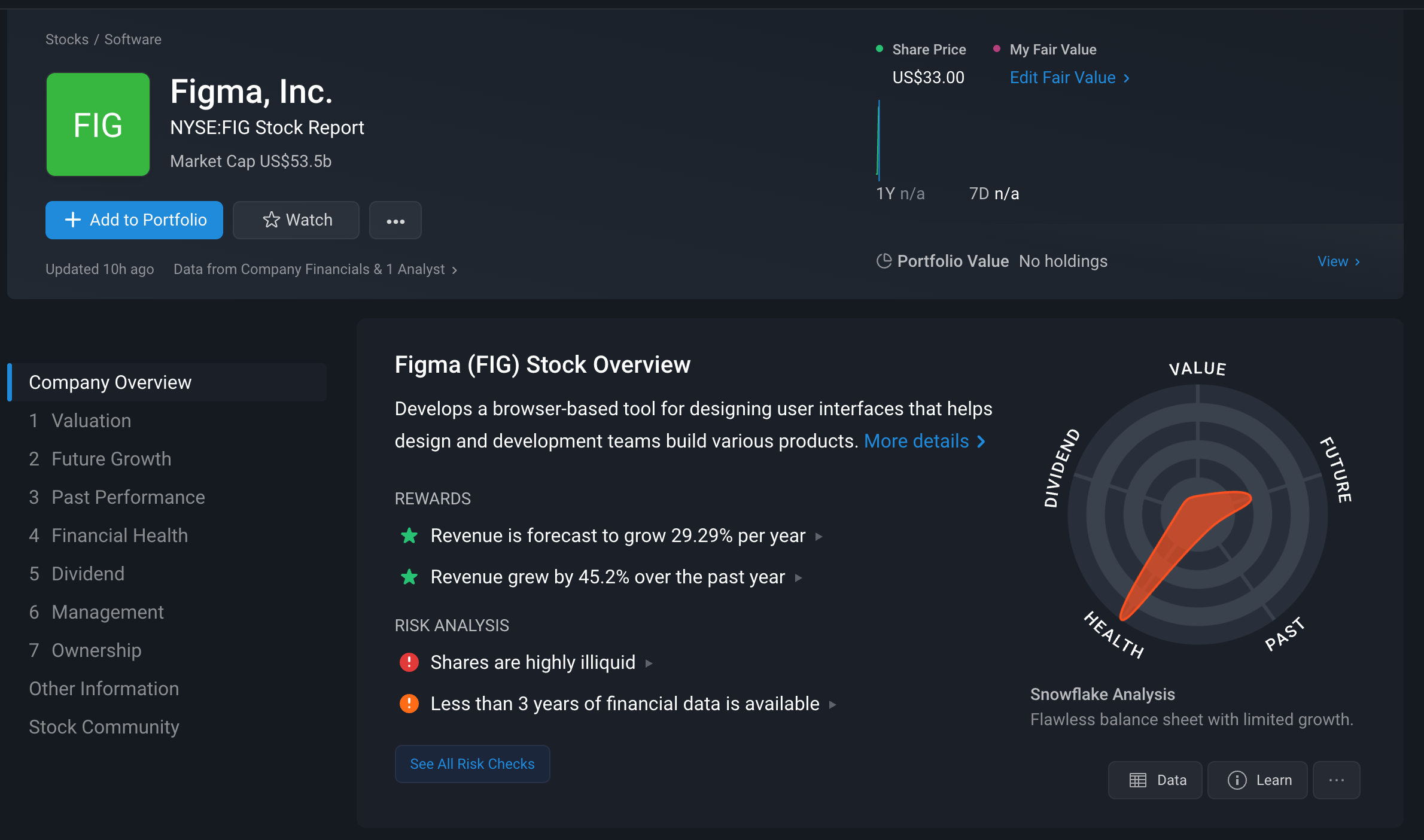
- On a huge IPO like this, make sure you don’t get FOMO and just pile in without first understanding the business's future prospects. Using narratives can help make sure you don’t overpay, so head to the Figma company report and use our templates to create one!
To see our take on these and other market stories, simply check out the full article! Now let’s dive into the main piece! |
🏭 How Agentic AI Could Reshape Entire Industries Agentic AI has massive potential, but the reality is that it’s a work in progress. Salesforce, which is one of the companies leading the charge into an agentic future, recently acknowledged that AI agents have some way to go. In May, the company published a paper pointing out the high failure rate for agents. The paper cited the most common reasons for failure as: - 🤔 Context loss,
- 🐌 Slow responses,
- 😶🌫️ Hallucinated actions, and
- 🔐 Lack of confidentiality safeguards
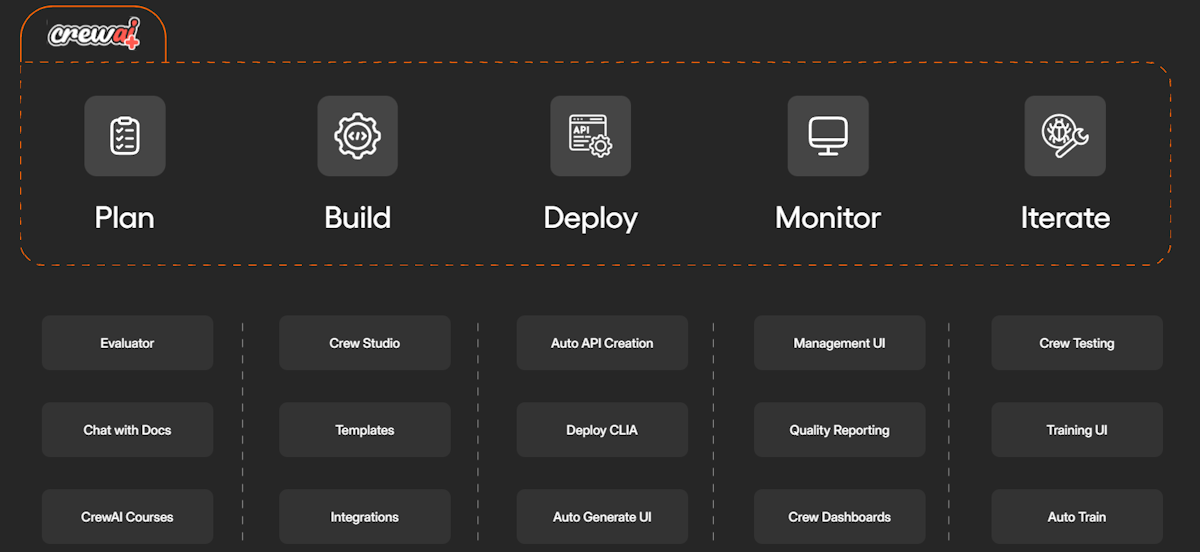
In other words, we’ve got the vision, but the execution still needs work. 🌐 The Agentic AI Ecosystem There’s a big difference between an agentic system that works ‘most of the time’ and one that’s ready to be trusted with important decisions and communicating with customers. This is why the companies supporting the development of agentic systems are important. 🧱 Frameworks and Protocols In the past few years, frameworks like LangChain and CrewAI have stepped into the spotlight, giving developers the tools they need to stitch together full-fledged agentic systems. ✨ The essential role these frameworks play is simplifying the evaluation of agents and the validation of responses. |
CrewAI Agent Framework - CrewAI |
Protocols are also starting to emerge to bring some order to the chaos. They’re trying to standardize how agentic systems talk, both internally and with each other. - 🔌 Anthropic rolled out MCP (Model Context Protocol), which some are calling the “USB for LLMs.”
- Why? Because it creates a universal format that lets language models plug into tools via APIs (Application Programming Interface). That means developers can build tools once and have them work across all LLMs.
- It’s simple, efficient, and scalable.
- 🌐 Not to be outdone, Google has launched A2A, a similar protocol that enables agents and agentic systems to communicate and collaborate seamlessly.
- It's all about creating a common language so these systems can start working together, not just alone.
🗄️ Data Platforms Data is the lifeblood of agentic systems, but managing it is getting trickier by the day. LLMs don’t just consume massive amounts of data; they generate it, too. Some of that data needs to be stored short-term as context so the agent can stay on task. Other times, it needs to be saved as long-term memory so the system can reflect, learn, and actually get better over time. We’re still figuring out the best ways to handle all this. That means there’s a big opportunity for data platforms like MongoDB, Snowflake, and Databricks to step in. And if you’re looking to go deeper into the space, search terms like “AI database” or “artificial intelligence” in our stock screener to uncover more specialized players you may not have heard of. 💵 Where is Silicon Valley Placing Bets? Most of the pure-play AI companies aren’t public yet, but their private valuations offer a peek into where venture capital is putting its chips.
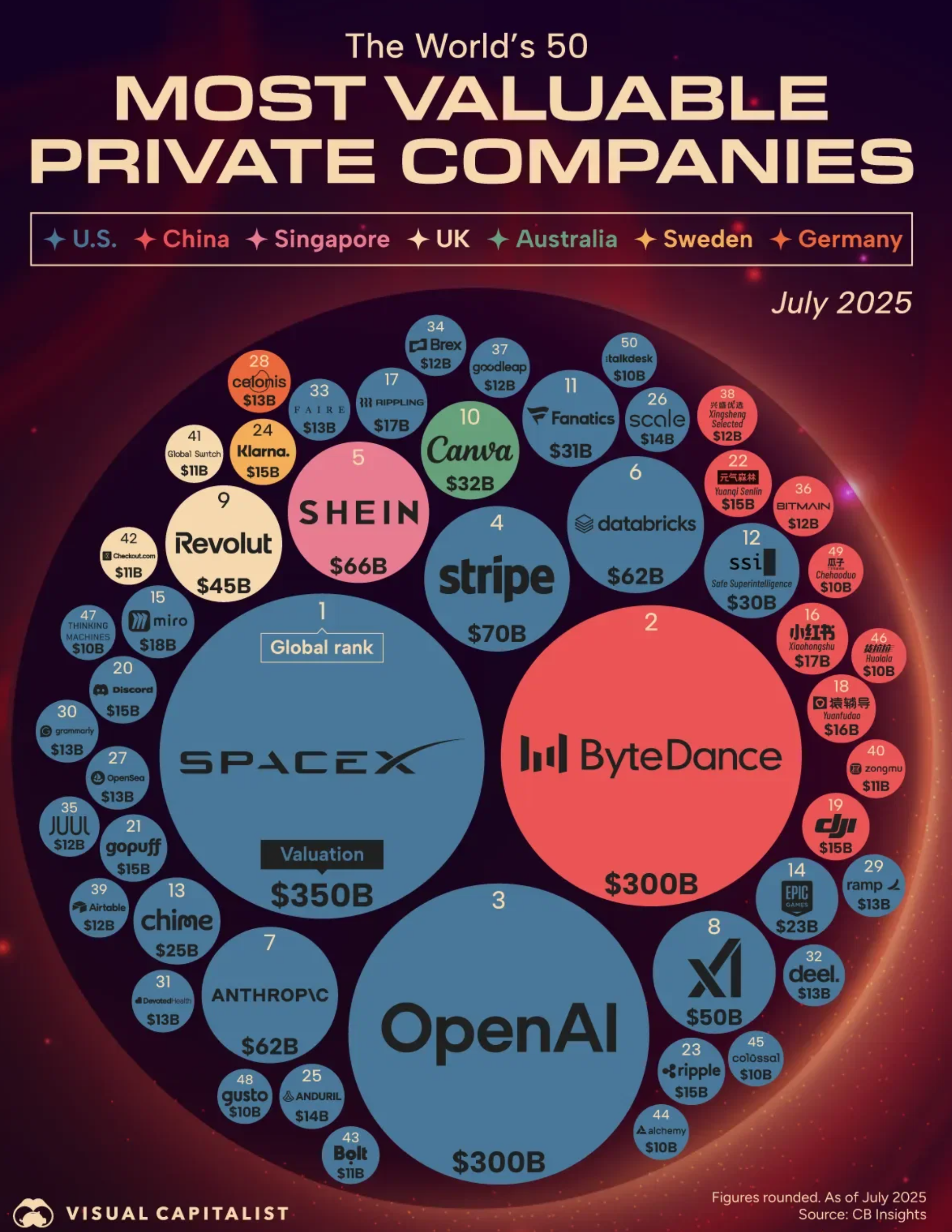
This graphic from Visual Capitalist tells the story well. While AI companies haven’t overtaken giants like SpaceX, Stripe, or ByteDance, they’re holding their own.
And considering how young most of them are, that’s a pretty strong signal of just how much belief, and money, is flowing into the future of AI. |
Looking at the 20 most valuable private companies in AI, it’s clear where the big money is flowing: - 🧠 Model providers:
- OpenAI, Anthropic, xAI, Superintelligence, and Mistral AI, are still topping the valuation charts, ranging anywhere from $6 billion all the way up to a jaw-dropping $300 billion. These are the engine builders of the AI world, and investors are betting big on their continued dominance.
- 🏗️ Data and AI platform:
- Databricks, sitting at a cool $62 billion, stands out as a data and AI platform heavyweight. It’s proof that infrastructure plays are just as critical as the models themselves.
- 🏷️Data Labelling Companies:
- Scale AI and Surge AI are on a rocket ride of their own. Scale recently raised at a $29 billion valuation, and Surge AI isn’t far behind, riding the wave of demand for high-quality training data.
- 🧰 AI platforms:
- These are landing in the $5 to $15 billion range and include no-code tools. Solid bets for more user-friendly, business-focused applications, which Thinking Machines offers.
- 🧪 MLOps and development platforms:
- Hugging Face, clocking in at $4 to $6 billion. Not as flashy, maybe, but still vital to the ecosystem and clearly valued by the market.
💻 AI and the Tech Sector Next week, we’ll dive into Big Tech as more Q2 earnings roll in. But for now, let’s zoom in on what agentic AI could mean for the software world… Bill Gates has likened this shift to what happened in the ‘80s, when we moved from typing out commands to simply tapping icons. ✨ With agentic AI, we’re heading into the next evolution: ditching menus and clicks for natural language. Just speak or type what you want, and let the agent figure it out. Not everyone will adopt this new way of interacting with tech, but for those who do, things get a lot less rigid. Instead of clicking through a list of options, you tell the agent your goal and let it recommend the next steps. And as trust in these systems grows, we’ll hand over even more control, giving agents greater “agency” to act on our behalf. This could shake up how software companies operate in at least two big ways: - 🧬 Apps are easier to clone. If every tool can be copied for cheap, software companies will need to stand out in other ways, think brand, ecosystem, or superior integration.
- 🧩 Interfaces and functions get unbundled. If all you need is a chatbot to get things done, why bother using a different one for every app? Tools like Zapier are already making it possible to stitch together various apps into custom dashboards. The front end and back end no longer have to live in the same place.
What does this mean? Some business models might need a rethink. A company could go all in on building slick, intuitive AI agent interfaces or focus entirely on powering other apps with back-end magic. Monetization could shift too, with things like in-app ads or usage-based models playing a bigger role. ✨ Network effects might become even more valuable. They make switching harder and stickiness stronger. Just look at Figma, the latest and hottest IPO that’s banking on community, collaboration, and deep engagement to stay ahead of the curve. It’s not just about what your product does; it’s about who’s using it with you. |
For more on how Agentic AI will change the tech sector, the full piece covers: 🧑💻 APIs, Microservices, and Solo-preneurs After that, we go beyond the tech sector and cover the opportunities and challenges with Agentic AI within each of these industries. 🏦 Financial Services 🏗️ Industrial, Resources, and Logistics 🛒 Consumer and Retail 🧠 Professional, Health, and Real Estate Services If you own stocks in any of these sectors, you'll want to read it. |
| |
💡 The Insight: Any Company or Individual Could Produce a Killer AI App It’s almost certain that companies in the Technology and Communications sectors will continue to create wildly successful products. But companies and individuals in other industries can also turn their own agents and resources into new revenue sources. The obvious parallel is Amazon’s cloud business, AWS. Amazon turned what was initially a cost center into a $100 billion + business. Agents can turn decades of experience and domain knowledge into automated decision-making tools. If companies can solve their own problems, they may be able to turn those solutions into commercial applications. However, it won’t always make sense to sell business secrets to competitors. - There are often opportunities to create services for adjacent industries. Examples of adjacent industries include insurance and healthcare, or logistics and retail.
- If a business is in danger of being disrupted, it may as well disrupt its own industry.
These opportunities might take a while to emerge, but here’s why they are worth looking out for: expectations are low, unlike the obvious AI stocks, where expectations are currently sky high. Where to look? Boring industries where companies have a healthy, profitable business, but low growth prospects. When companies are small, it’s easier to move the needle, too. Professional and consumer services, and the industrial sector, are a good place to start. |
|
|
💬 Join the discussion by leaving a comment!
Which industries do you think are most likely to benefit or be disrupted by agentic AI? |
|
|
Key Events Next Week Tuesday - 🇨🇳 China Caixin Services PMI (Jul)
- 📈 Forecast: 50.9 (Previous: 51.3)
- ➡️ Why it matters: Indicates the health of China's services sector, impacting economic growth.
Thursday - 🇨🇳 Chinese Exports YoY
- 📈 Forecast: 5.1% (Previous 5.8%)
- ➡️ Why it matters: This will give investors a better idea of the impact of US tariffs on China’s manufacturers.
- 🇮🇳 RBI Interest Rate Decision
- 📈 Forecast: 5.5% (Previous: 5.5%)
- ➡️ Why it matters: Affects borrowing costs, influencing economic growth and inflation.
- 🇬🇧 UK Interest Rate Decision
- 📈 Forecast: 4% (Previous: 4.25%)
- ➡️ Why it matters: UK businesses and consumers are desperate for interest rate relief.
Friday - 🇨🇦 Canadian Unemployment Rate (Jul)
- 📈 Forecast: 6.9% (Previous: 6.9%)
- ➡️ Why it matters: Indicates labor market health, affecting consumer spending and economic growth.
Stocks reporting this week: - Berkshire Hathaway
- Eli Lilly
- Palantir
- AMD
- McDonalds
- Disney
- Caterpillar
- Uber
- Amgen
|
Until next week, invest well. Simply Wall St |
|
|
| | This email is from Simply Wall Street Pty Ltd
Level 5, 3 20 Pitt St Sydney 20 00, NSW, Australia. | | Simply Wall Street Pty Ltd (ACN 600 056 611), is a Corporate Authorised Representative (Authorised Representative Number: 467183) of Sanlam Private Wealth Pty Ltd (AFSL No. 337927). Any advice contained in this email/website is general advice only and has been prepared without considering your objectives, financial situation or needs. You should not rely on any advice and/or information contained in this website and before making any investment decision we recommend that you consider whether it is appropriate for your situation and seek appropriate financial, taxation and legal advice. Please read our Financial Services Guide before deciding whether to obtain financial services from us. | | | Don’t want to receive Market Insights? Unsubscribe
Want to stop receiving emails or check which emails you are subscribed on? Manage email preferences | | |
|
|
|
|