Your login is via your account |
|
|
💸 The Valuation Dilemma: Navigating Lofty Valuations
Stocks keep climbing to fresh highs, and naturally, the whispers about stretched valuations and another looming bubble are back. Here’s the catch, though: for the past decade, “buy the dip” has been a winning move, while selling an “expensive” market has mostly just meant sitting on the sidelines and missing out. That leaves investors stuck in a classic dilemma: ride the wave or bail out before things look too frothy? Howard Marks, the co-founder and co-chairman of Oaktree Capital Management, digs into this exact puzzle in his latest memo. So this week, we’re breaking down his key takeaways and explaining how you can navigate this market with the right mindset and tools. We've made a screener at the end which will help. 🎧 Would you prefer to listen to these insights? You can find the audio version on our Spotify, Apple Podcasts or our YouTube! (Released each Monday by 5pm AEST). |
|
|
Quote of the week
“Investors should bear three things in mind: The enormous likelihood that AI and related developments will change the world… the possibility that it is different for some companies… but also the fact that in most new, new things, investors tend to treat far too many companies (and often the wrong ones) as likely to succeed.” Howard Marks |
|
|
What Happened In The Markets This Week? Here’s a quick summary of what’s been going on: 👨⚖️ Alphabet soars on court ruling that doesn’t force the search giant to sell Chrome (Sherwood) - Alphabet dodged a bullet as the court ruled it broke antitrust laws but stopped short of forcing a Chrome or Android divestiture. Shares jumped, and analysts quickly raised price targets.
- Exclusive search deals, like the $20B/year Apple agreement, can no longer be exclusive, but they are allowed to continue - Google can still pay partners to preload its products. That keeps Apple’s services revenue engine humming.
- Apple also got a lift, since it can still cash Google’s checks without exclusivity clauses. No forced search shakeup means less disruption for both firms.
- The biggest win: Google avoids major structural changes while competitors get limited data-sharing crumbs. Regulators may push harder in the upcoming ad tech case. Add Alphabet to your watchlist to receive all the latest news, narrative updates, and insights from us.
- Google keeps its core intact and its $26B search deal machine running. Investors betting on a breakup can stand down, for now.
⚖️ The market winners and losers if tariff ruling holds (Axios) - A federal appeals court ruled Trump’s global tariffs were illegal, but sectoral tariffs are still on the table, and the decision won’t take effect until October.
- Retail giants like Walmart, Home Depot, and Nike could rally if broad tariffs are lifted. Lower import costs = fatter margins.
- Southeast Asia stands to gain the most, especially in transshipping, with potential margin jumps above 60%.
- Auto makers like Ford and GM won’t catch a break—Section 232 tariffs are untouched, leaving them stuck with billion-dollar tariff bills.
- Other sectors like semiconductors, furniture, and critical minerals may still get hit with targeted levies, keeping pressure on input costs.
- If tariff revenue drops, Trump may double down on sectoral tariffs to shore up fiscal optics. That’s bad news for bond markets banking on that income.
- If the ruling sticks, retailers and Southeast Asia win big. But don’t count on tariff relief across the board, because Trump still has tools, and markets know it.
To see our take on these and other market stories, simply check out the full article! 📉 Warren Buffett says he is ‘disappointed’ in Kraft Heinz split; shares fall 7% (CNBC) 🚘 Google’s Waymo now has 2,000 autonomous cars in service, while Tesla has about 30 (Sherwood) 💸 Alibaba shares jump 19% on cloud unit acceleration, report of new AI chip (CNBC) 📈 Gold price hits record high as investors seek safe haven (The Guardian) Now let’s dive into the main piece! |
🧮 The Calculus of Value Howard Marks of Oaktree Capital has a knack for dropping market wisdom in his memos. We previously highlighted two gems: Sea Change and Easy Money. His latest memo, The Calculus of Value, dropped in August and digs into valuations—specifically, how to navigate today’s market when prices look… a little stretched. It’s worth reading (or listening to the podcast), but here’s a quick breakdown of the big takeaways. ⚖️ Value vs Price “Value is what you get when you make an investment and price is what you pay for it.” Howard Marks - Intrinsic value = the cash an asset can generate today and in the future.
- Price = the market’s consensus guess of what that’s worth right now.
As Ben Graham put it, “In the short run, the market is a voting machine. In the long run, it’s a weighing machine.” Marks says investors only create real alpha if they’ve got an edge in one of three areas: - Spotting mispriced assets: Seeing where the market’s gotten it wrong.
- Forecasting better than others: Predicting future earnings with more accuracy.
- Catching popularity shifts: Recognizing when the market is about to re-rate an asset.
If you don’t have an edge in at least one of these, you’re just riding the wave. And that’s the heart of the question right now: ✨ Have today’s “votes” (aka prices) already run so far ahead that the eventual “weighing” (aka intrinsic value) won’t be able to back them up? |
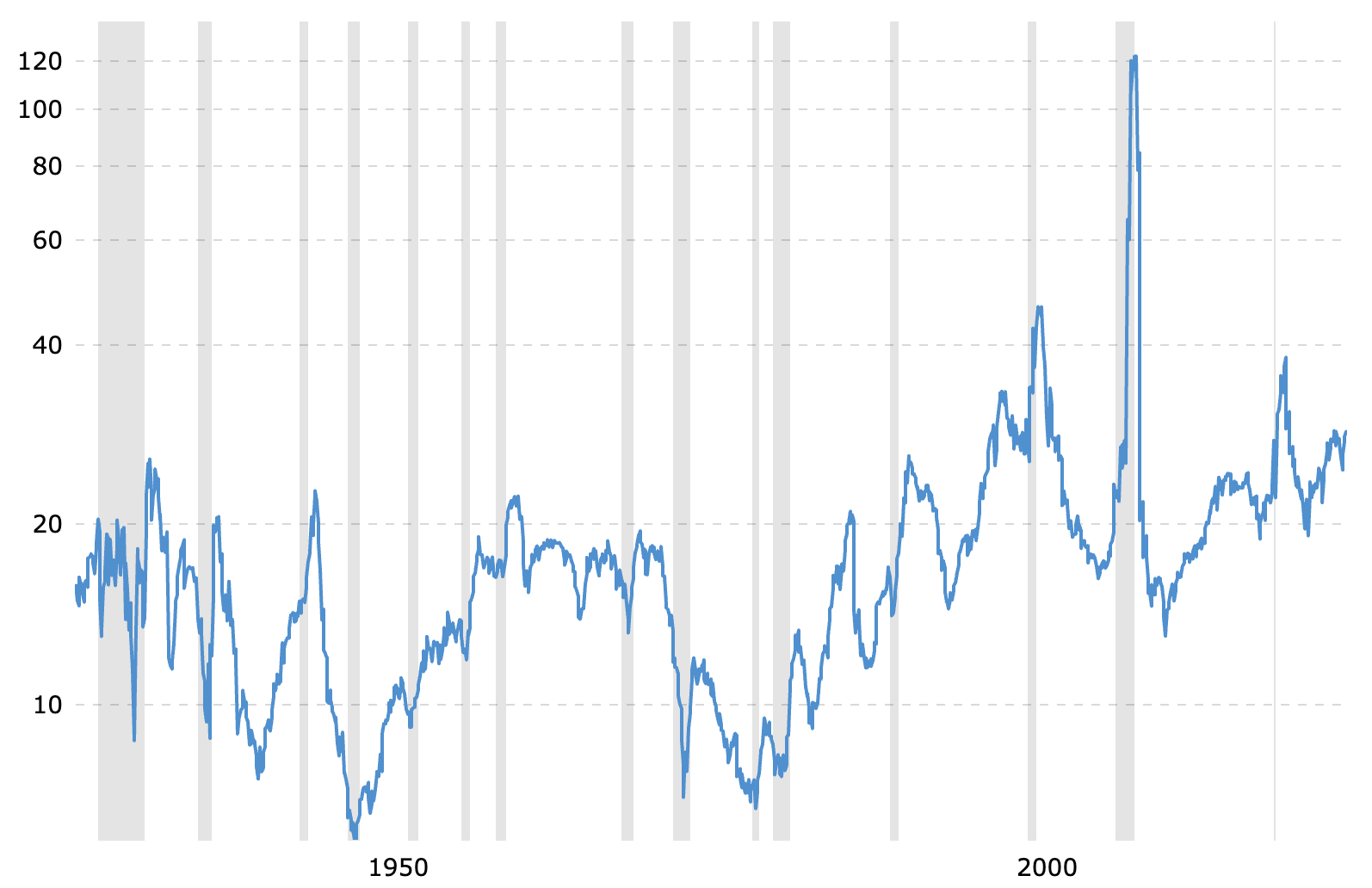
📅 The Current State of Valuations By almost every metric, US stocks look pricey. Here’s why: - S&P 500 forward P/E: ~23x
- Historically (between 1987 and 2014), paying 23x forward earnings has led to 10-year annual returns between -2 to +2%.
- It’s not just the “Magnificent 7” propping up the index. Marks notes that the other 493 stocks are also trading at ~22x.
Other warning lights flashing: - 📈 Buffett Indicator (market cap / GDP) is at all-time highs.
- 💰 Stocks at 3.3x sales—a record.
- 🧨 Credit spreads razor-thin → investors are shrugging off risk.
- 📉 Dividend yield vs 10-year Treasuries looks unattractive.
- 🐒 Meme stocks & SPACs making a comeback.
It all screams “risk appetite is alive and well.” Could it be different this time? Maybe. Today’s dominant companies are different: - 💻 Less capital-intensive (however, data centers are challenging that).
- 🌎 More global.
- 🏰 Stronger competitive moats.
- An economy led by software and services arguably deserves higher multiples than one built on smokestacks and steel.
We mentioned a few other reasons when we took a look at the US Market’s ‘Exceptionalism’ Premium. Marks quotes John Templeton’s famous line: “It’s different this time,” turns out true about 20% of the time. He thinks that percentage might be higher today, but warns against assuming every company deserves that pass. What about the rest of the world? The valuation gap between the US and other markets has narrowed in 2025. In fact, quite a few markets are now trading on valuations that are historically high. - The P/E ratios for China and Germany’s stock markets are at the top end of their 10-year range.
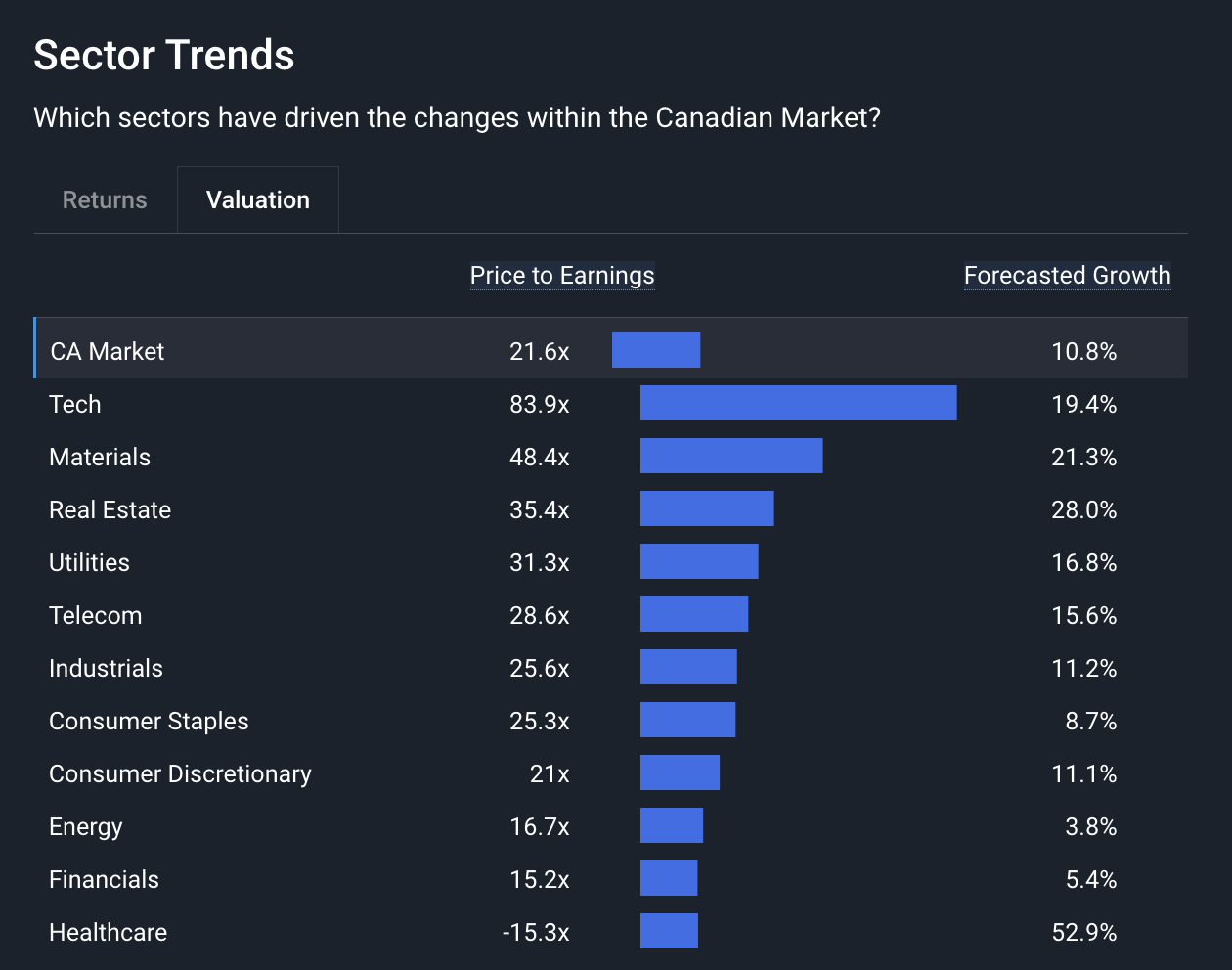
- Meanwhile, the UK, Canada (below), and India are closer to mid-range, but still not screaming bargains.
PEG ratio (P/E ÷ growth), most global markets hover around 2x. Whether that’s fair or expensive depends entirely on whether that growth actually shows up. |
Whether the market is or isn’t overvalued is subjective. But even if we can objectively prove that it is, it doesn’t mean a downturn is imminent. Our full piece covers: - How to view valuation as a tool for risk management,
- How to assess the important intangibles, AND
- Where Howard Marks thinks we are right now on the risk spectrum (he thinks we're at InvestCon 5)
|
|
|
💡 The Insight: The Numbers Can Reflect The Intangibles Companies with both the breadth and depth to grow their earnings often deserve premium valuations (discussed more in the article). With that in mind, metrics like ROE (return on equity), ROA (return on assets), and ROCE (return on capital employed) are great metrics to assess these attributes. These reflect a company’s ability to generate returns on its assets and the capital they are reinvesting in the business. You can think of these metrics in three ways: - Is this return better than low-risk alternatives (like bonds)
- How does it stack up against peers?
- Has it been improving—and is it likely to keep improving?
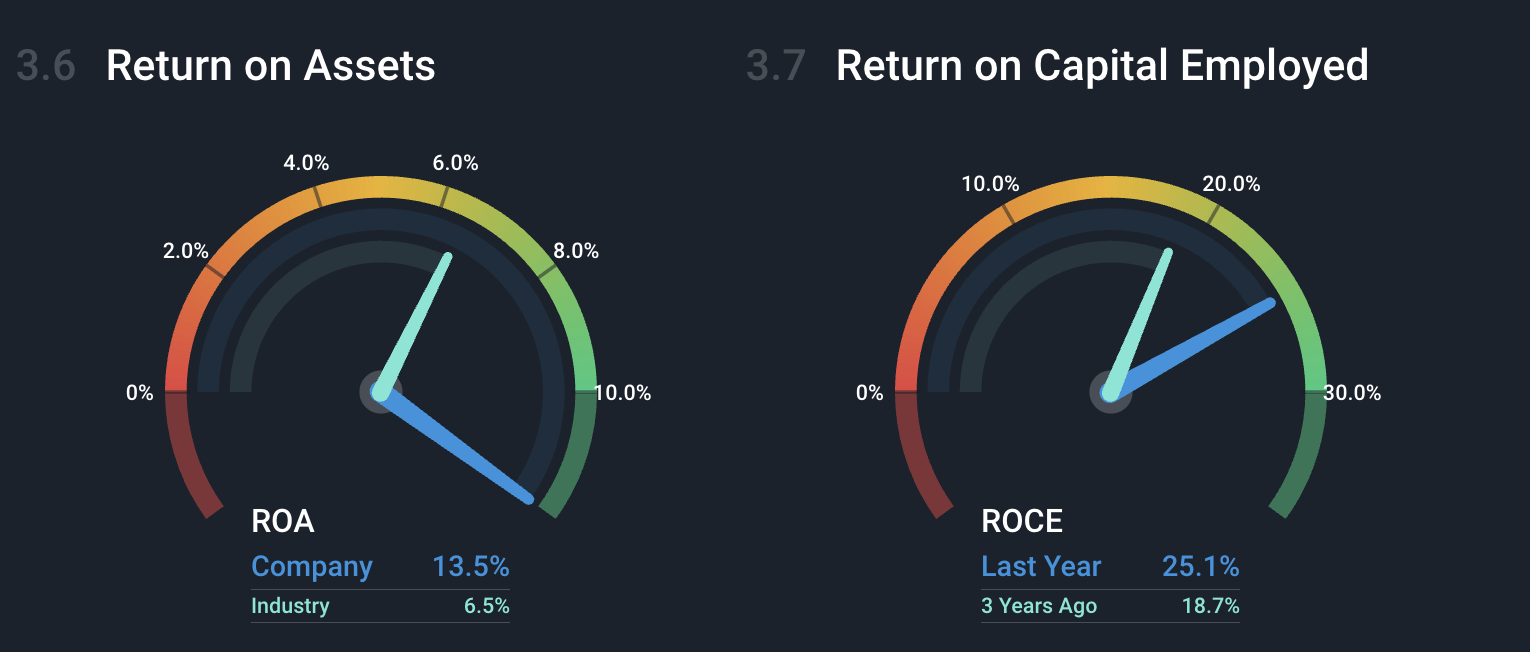
The Simply Wall St company reports compare ROA to the industry average, and ROCE to the level three years ago. You can also see an estimate for ROE in three years time. |
The chart above shows us that PDD Holdings' ROA is high relative to its industry, and ROCE has improved in the last three years. But the big question is—are these trends the result of durable, intangible advantages? Or just temporary tailwinds? That’s the real calculus of value: figuring out which companies are built to compound earnings for the long haul. You can use our powerful stock screener to filter companies by ROE, ROCE, and ROA, and then look at the qualitative attributes. To start your search for companies that Marks would approve of, check out this screener, which filters companies with ROCE above 15% and high value and past performance scores. Save it, then add any additional metrics you’d like to refine your search even further. | |
|
💬 Join the discussion by leaving a comment!
Is your portfolio currently positioned more aggressively or defensively? |
|
|
Key Events During the Next Week Wednesday - 🇺🇸 US PPI MoM
- 📉 Forecast 0.6%, Previous 0.9%
- ➡️ Why it matters: A drop suggests tariffs may be having less impact on inflation than feared.
- 🇪🇺 ECB Interest Rate Decision
- ⏸️ Forecast 2.15%, Previous 2.15%
- ➡️ Why it matters: A surprise cut would signal growing concern over the Eurozone economy.
Thursday - 🇺🇸 US Inflation Rate YoY
- 📈 Forecast 2.8%, Previous 2.7%
- ➡️ Why it matters: A hotter print could reignite tariff-driven inflation fears and delay Fed cuts.
Friday - 🇬🇧 UK GDP MoM
- 📉 Forecast 0.1%, Previous 0.4%
- ➡️ Why it matters: A slowdown adds to recession worries and boosts the case for BoE easing.
- 🇺🇸 US University of Michigan Consumer Sentiment Index
- 📉 Forecast 57.0, Previous 58.2
- ➡️ Why it matters: Weakening sentiment points to cautious consumers and slower spending ahead.
Earning season is winding down, but there are still a few prominent tech companies and retailers due to report: - Adobe
- Oracle
- Synopsys
- Kroger
- Rubrik
- Chewy
|
Until next week, invest well. Simply Wall St |
|
| 📺 New Video Series: Ultimate Guide to using our DCF Valuation In the first video of our new series, founder Al Bentley gives you a complete guide to our DCF Valuation. You'll learn exactly when to use it, how to find new opportunities, and a better way to make decisions on any stock. |
| |
| | This email is from Simply Wall Street Pty Ltd
Level 5, 3 20 Pitt St Sydney 20 00, NSW, Australia. | | Simply Wall St has no position in the company(s) mentioned. Simply Wall Street Pty Ltd (ACN 600 056 611), is a Corporate Authorised Representative (Authorised Representative Number: 467183) of Sanlam Private Wealth Pty Ltd (AFSL No. 337927). Any advice contained in this email/website is general advice only and has been prepared without considering your objectives, financial situation or needs. You should not rely on any advice and/or information contained in this website and before making any investment decision we recommend that you consider whether it is appropriate for your situation and seek appropriate financial, taxation and legal advice. Please read our Financial Services Guide before deciding whether to obtain financial services from us. | | | Don’t want to receive Market Insights? Unsubscribe
Want to stop receiving emails or check which emails you are subscribed on? Manage email preferences | | |
|
|
|
|