Your login is via your account |
|
|
🧬 Next-Gen Health, Next-Gen Wealth
Software, AI, and data science are revolutionizing every industry, but healthcare in particular could see profound changes in the coming decades. Last week, we mentioned robotic surgery and service robots, which have been revolutionising medical procedures and healthcare, respectively The field of genomic medicine is still in its infancy, but it holds the potential to become an even bigger game changer. This field is more obscure than robo-taxis or chatbots, so we’re having a look at some of the fundamental concepts and the different types of companies in the space. |
|
|
Quote of the week "We truly now have the opportunity to reap the full potential of individualized medicine. The road ahead must be focused on expanding our genomic tools and further integrating individualized medicine. We've only just begun to glimpse what is possible." Gianrico Farrugia, M.D., president and CEO of Mayo Clinic |
What Happened In The Markets This Week? Here’s a quick summary of what’s been going on: 📉 US credit rating downgrade could add to pressure on government debt (The Guardian) - Moody’s downgrade of U.S. credit to AA1, the last of the Big Three to do so, highlights growing market unease over rising debt and persistent deficits.
- While some investors brush it off as symbolic, the downgrade could push Treasury yields higher as markets demand more compensation for fiscal risk.
- With $36 trillion in national debt and no credible plan to rein it in, bondholders may start pricing in greater long-term risk, even if default isn’t a real threat (but monetizing the debt is). Treasury Secretary Bessent called it a "lagging indicator," but markets are watching closely.
- Rising yields and mounting debt suggest it’s time to reassess duration risk in your portfolio if you have bond exposure. This downgrade is more than just noise.
📈 Bitcoin touches record high on optimism around US regulations (Bloomberg) - Bitcoin surged to a record $111K as investors cheered bipartisan momentum behind a U.S. stablecoin bill and a friendlier regulatory tone under Trump.
- It appears investors are betting big, with short-term call options eyeing $110K–$300K, and over $3.6B flowing into U.S. Bitcoin ETFs this month alone. The 12 U.S. listed ETFs currently have $133Bn in AUM.
- With tighter rules for stablecoin issuers and a clear framework emerging, institutions are piling back in, boosted by a weaker dollar and ballooning U.S. deficits. MicroStrategy-style treasury strategies are spreading (Metaplanet, Twenty One Capital, etc), and Bitcoin bills like SB 21 in Texas (following New Hampshire and Arizona) are adding fuel to the fire.
- With regulatory clarity improving and institutional demand rising, investors appear to be reviewing and changing their Bitcoin exposure.
To see our take on these and other market stories, simply check out the full article! - 👻 Investors spooked as US bond auction sees weak demand (Barron's)
🎨 Jony Ive to lead OpenAI’s design work following $6.5B acquisition of his company (TechCrunch) ⚠️ Cloudflare CEO warns that zero-click searches are killing the web’s business model (MSN) 🇯🇵 Japan’s exports to the U.S. shrink for the first time this year (CNBC) Now let’s dive into the main piece! |
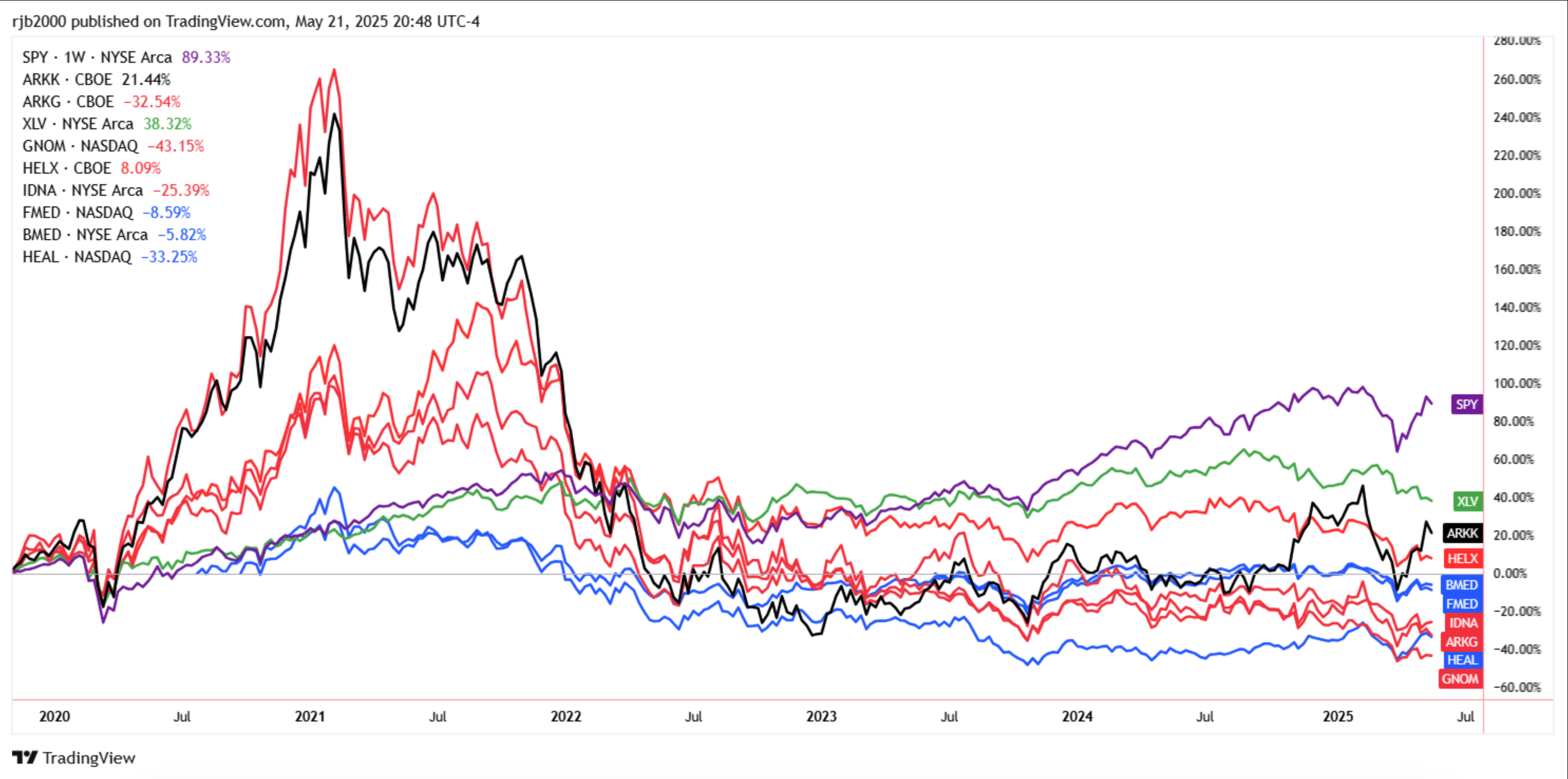
🧬 The Healthcare Disruptors: Genomic Medicine and AI Drug Discovery Amongst all the disruptive technologies currently being developed, health-tech - and more specifically genomic medicine - is most out of favor amongst investors. The chart below compares the performance since 2020 of some of the ETFs in this space with the S&P 500 (purple) and the S&P 500 Healthcare index (green). Most of the genomic medicine ETFs (red) are still well into negative territory, with the more general health-tech funds doing only slightly better. |
Genomic Medicine ETFs vs the S&P 500 Index - TradingView |
There are a couple of reasons for this underperformance: - 😩 The market is still dealing with the hangover from the bubble that formed in this space in 2020 and 2021.
- 🤖 Growth investors are understandably more interested in AI, automation, and other technologies.
- 💊 Even within healthcare, there have been more exciting options: weight-loss drugs.
Clearly, investors are impatient, but it’s important to remember that bargains are usually found in out-of-favor industries. 🎯 The Opportunity Genomic research offers the potential to better understand diseases and develop therapies based on an individual's genetic profile. The implications for healthcare are enormous: - 🔀 Personalized medicine will begin to replace the ‘one size fits all’ approach.
- 🩻 Diseases can be detected earlier. Genomic screening can be used to identify individuals at risk of hereditary diseases, while diagnostic costs will be feasible at scale.
- 👨⚕️ Diseases can be treated earlier, and ongoing treatment may not be necessary.
- 🤖 Genomic research and AI are being used to accelerate and improve the drug discovery process.
✨ To put it into perspective, global healthcare spending accounts for 10% of GDP, or around $10 trillion, and the genomic medicine market is currently worth just $50 billion, or 0.5%. While it’s not going to displace all that spending overnight, the value of detecting diseases earlier and avoiding ongoing treatment costs is considerable. |
|
|
📖 To get a primer on the genomic lexicon, check out the full article, where we cover: 🧱 The Building Blocks 🏭 From DNA to Proteins 🔬🔭 The '-omics' Revolution ✂️🩹 Key Technologies and Therapies We cover specific examples like genomic sequencing, and why the cost of sequencing the human genome is on track to fall from $3Bn in the late 90's, to just $100 in a few years. |
🤖 The AI Catalyst: Supercharging Drug Discovery and Development Discovering and developing new drugs is a slow, expensive process, with a high failure rate. ✨ Typically, getting a new drug to market takes over 10 years, at a cost of over $1 billion! For the pharmaceutical and life sciences industries AI, data science and raw compute power are a paradigm shift. A few examples of the way technology helps the R&D process include: - Unlocking Genomic Data:
- The sheer volume of data generated by Next-Generation Sequencing (NGS) is overwhelming. AI is essential for interpreting this data, finding disease-associated genetic variants, and understanding complex gene interactions.
- Smarter Target Identification:
- AI can sift through genomic, proteomic, and clinical data to identify novel biological targets that are most likely to be effective in treating a disease.
- Accelerated Drug Design:
- Instead of random screening, AI can predict how well potential drug molecules will bind to a target and their likely efficacy or toxicity.
- Optimized Clinical Trials:
- AI can help design more efficient clinical trials by:
- Identifying the right patient populations using biomarker analysis.
- Predicting patient responses and potential adverse events.
- Improving trial monitoring and data analysis.
- Reducing Failure Rates:
- By improving predictions early in the pipeline, AI can help reduce the high attrition rates that plague drug development, saving billions and years of wasted effort.
This means: - 🏃♀️ Faster early-stage discovery
- 📉 Significantly lower R&D costs
- 💸 Increased probability of success.
Technology is essential for genomic research, but it’s also a game changer for the broader pharmaceutical industry. An important benefit of this is that discovering treatments for complex and rare diseases is more feasible. |
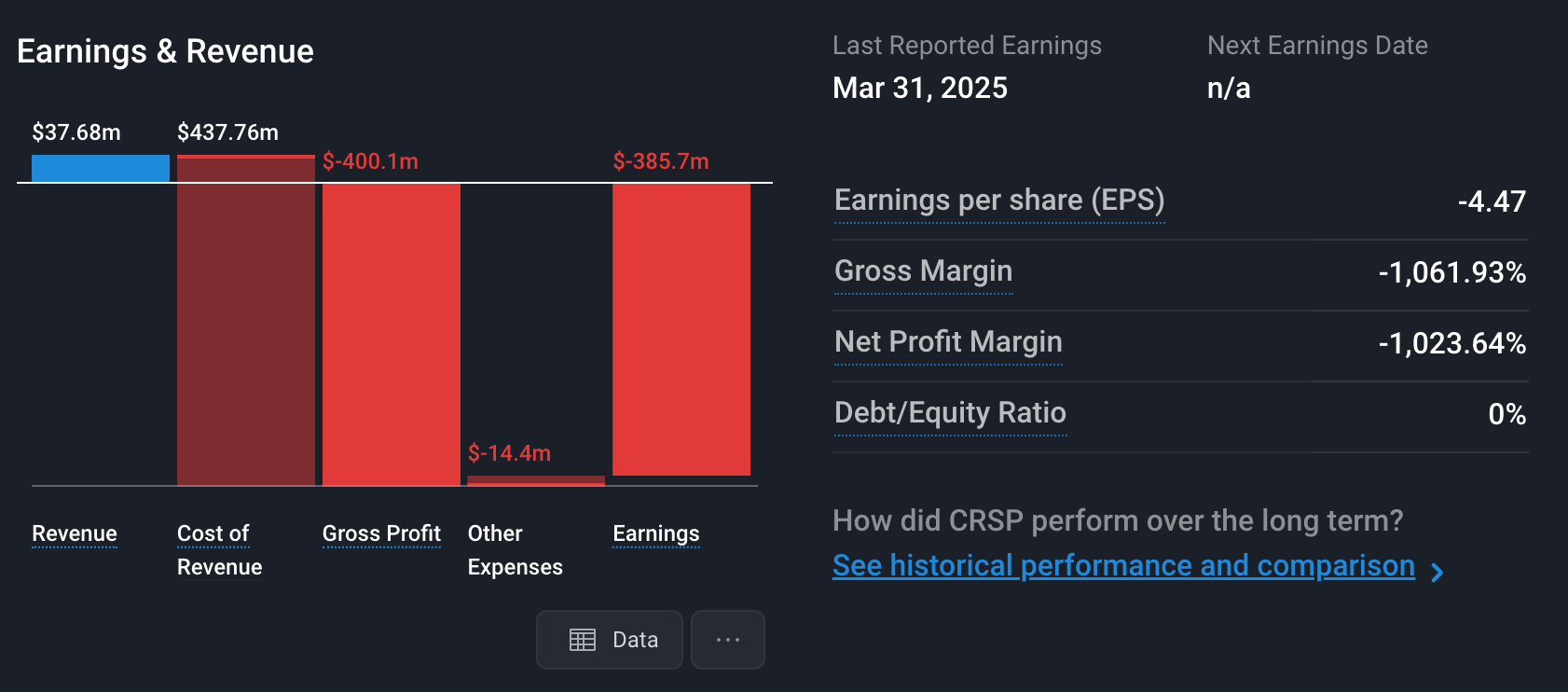
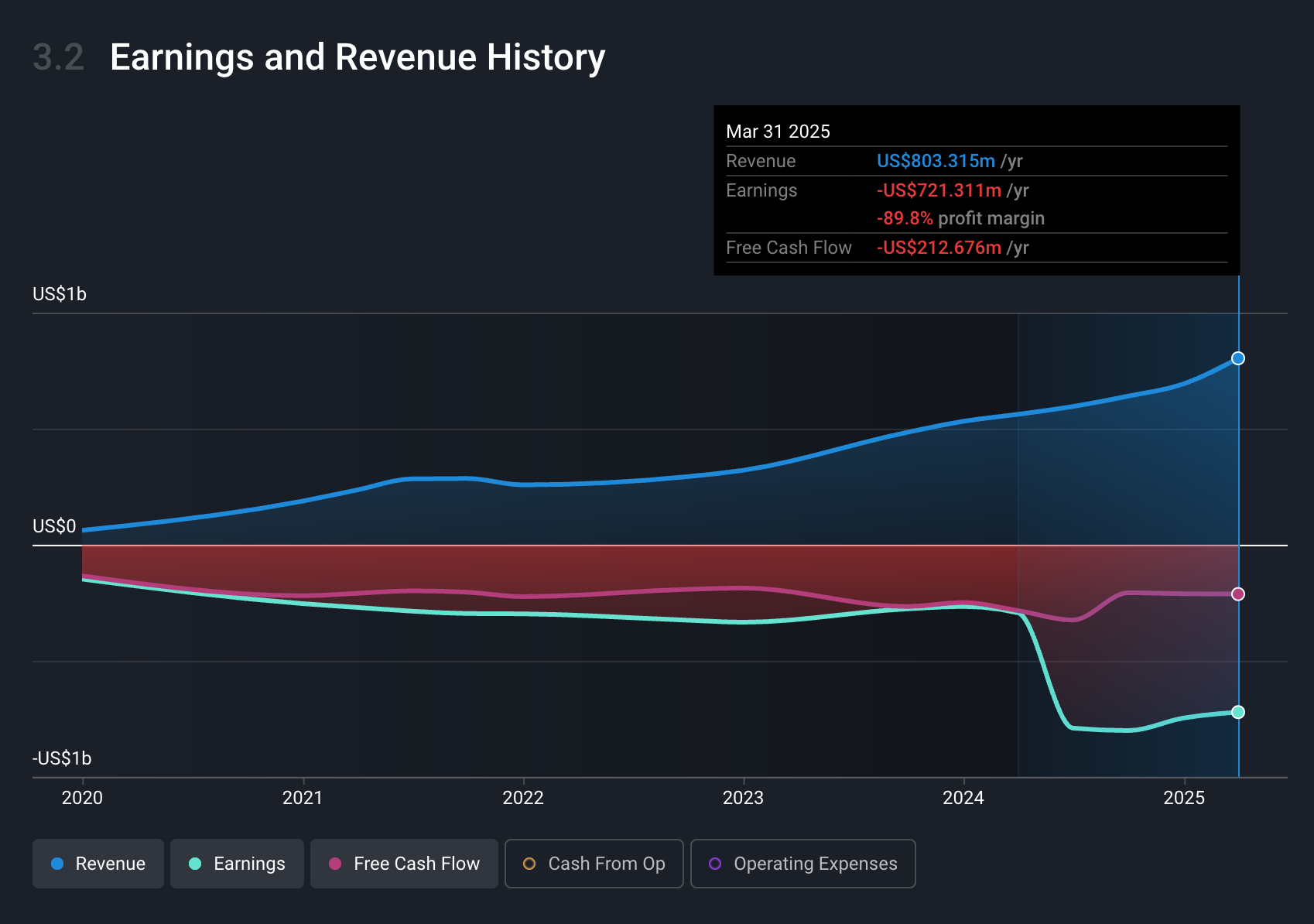
💼 The Genomic and AI Health Ecosystem The convergence of genomics and AI is creating a diverse ecosystem of investment opportunities. 👨🔬 Gene Editing and Therapy Developers Right at the leading edge are the companies focused on creating treatments using technologies like CRISPR or developing gene therapies for specific diseases. Examples include: Companies in this space often have little or no revenue, and big bills. Typically, they are years away from breakeven, which means securing ongoing funding is crucial. | ⛏️ NGS Technology Companies Firms that develop and sell the sequencing machines, reagents, and software that are fundamental to genomic research. These companies can be considered the ‘picks and shovels’ of the industry, but they are doing revolutionary work in their own right. Examples include: These companies are essential to the R&D process, and therefore further along the path to profitability. 🔭 AI-First Drug Discovery Companies A newer breed of company that uses AI as the core of their drug discovery platform, often partnering with larger pharma companies. Beyond the drug developers themselves, consider companies that provide essential tools and services to the entire ecosystem. This includes Contract Research Organizations (CROs) with specialized expertise in genomics or AI-driven trials, software providers for data analysis and management, and manufacturers of specialized lab equipment. 👨💻 Enabling Technologies and Services Possibly the fastest-growing part of the ecosystem includes the companies developing AI and data analysis software, and diagnostic equipment. TempusAI, which sells diagnostic equipment and software, has grown revenue 10-fold to $800 million over the last five years. |
TempusAI Revenue, Earnings and Cash Flow - Simply Wall St |
🔍 Liquid Biopsy & Advanced Diagnostics Firms These companies are developing and commercializing tests for early disease detection and monitoring, and include the likes of: 🏢 Big Pharma and Biotech’s Pivot The more established pharmaceutical and biotech companies are ramping up investments in genomics, too. Some, like Novartis, Regeneron, and Alnylam Pharmaceuticals, are already established gene therapy providers. Regeneron recently announced that it is buying genetics testing company 23andMe out of bankruptcy. ✨ Big pharma is actively seeking partnerships and acquisitions of smaller, innovative biotech and AI firms to access new technologies and drug candidates. |
📊 Genomic Medicine ETFs There’s no shortage of ETFs that focus on the industry. Most are actively managed, which makes sense in such a dynamic space. For such a specialized industry, ETFs do make sense - but there is a risk to keep in mind! If another bubble (like the one in 2020/2021) develops and bursts, ETFs facing redemptions could become forced sellers, driving down the prices of their own holdings. This applies to most thematic ETFs. Some of the popular genomic medicine funds include: - ARK Genomic Revolution ETF (ARKG)
- Franklin Genomic Advancements ETF (HELX)
- iShares Genomics Immunology and Healthcare ETF (IDNA)
Alternatively, there are even more that have a broader scope, investing in the entire health-teach ecosystem: - Global X HealthTech ETF (HEAL)
- ROBO Global Healthcare Technology and Innovation ETF (HTEC)
|
|
|
💡 The Insight: Long-Duration Assets Require Patience and a Plan
Growth stocks are long-duration assets. That means investors are paying for cash flows that won’t occur for 5 to 10 years or even longer. This is particularly true for companies that are years away from breakeven. There are a few things to keep in mind when investing in long-duration assets: - ⚖️ Risk and Return
- If your investment is going to be at risk for a long time, you need to compensate for the additional risk. Longer-dated bonds have higher yields than short-dated bonds for the same reason.
- You can account for this by using a higher discount rate in your valuation.
- 🧑🧑🧒🧒 People
- When you invest in companies attempting to solve very hard problems, you are really investing in a group of people. You’ll want to make sure the leadership team are in it for the long haul, and not chasing the next hot sector attracting investor attention.
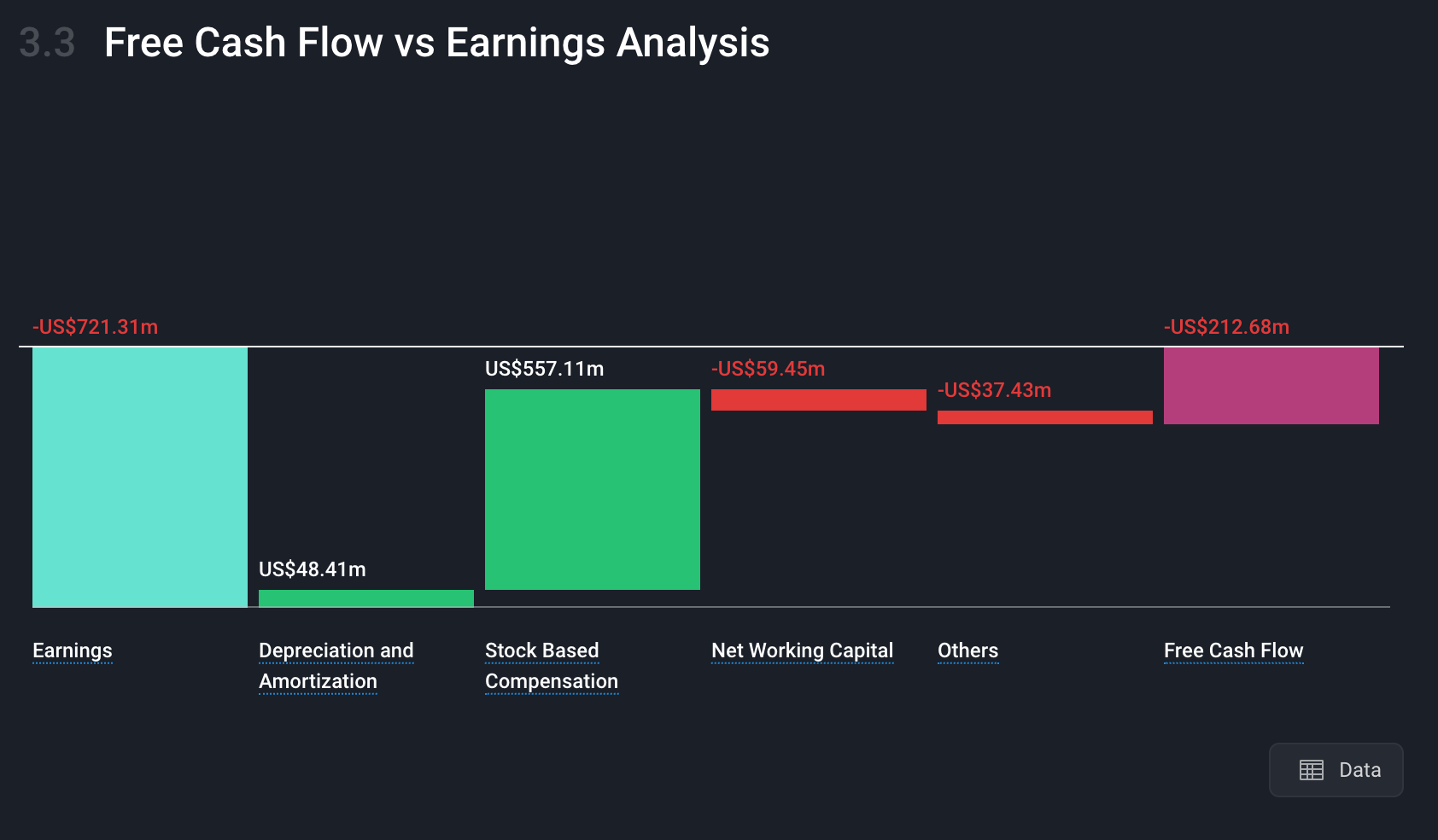
- Employees need to be incentivized to stick around, and stock-based compensation (SBC) is one way to do that. SBC often accounts for the difference between net income (earnings) and free cash flow.
- You can check this by referring to Section 3.3 of the company report: Free Cash Flow vs Earnings Analysis.
Here’s that analysis for TempusAI: |
TempusAI Revenue, Earnings and Cash Flow - Simply Wall St |
You can also find out who the leadership team is, and how much stock they own by checking: - Section 6.3: Leadership Team, and
- Section 7: Ownership
SBC means your ownership will be diluted, so this is something to anticipate. - 💰 Funding
- Early-stage growth companies will usually have to raise fresh capital along the way to reaching profitability.
- This also means your stake will be diluted. But the ability of the company to raise capital when it needs to is a bigger issue.
- Section 4 of the company report will give you an overview of the company’s financial health. Section 4.4: Cash Runway Analysis will show you how long the company can keep operating with its current cash balance.
- The key question then becomes: is the company clearing enough milestones to raise more capital when it needs to?
- ⌛ Patience
- If you are investing for the long haul, you shouldn’t expect returns in a hurry. Even if the company is successful, there are likely to be rallies and declines along the way.
- Typically, whenever there’s a new breakthrough or a regulatory approval, interest spikes, and then when the market runs out of patience, the share price drifts lower until the next positive catalyst.
- The opportunities occur when everyone else loses patience. So develop your narrative around a business, estimate a fair value, wait patiently, and move when the time is right.
|
|
|
💬 Join the discussion by leaving a comment!
Are you investing in the genomic medicine? |
|
|
Key Events Next Week Here’s some data releases to keep an eye on next week: Monday It’s Memorial Day in the US and the Spring Bank Holiday in the UK, so those markets are closed. Tuesday - 🇺🇸 Durable Goods orders
- 📊 Previous: 7.5%. Forecast ↘️ -6.5%
- ➡️ Why it matters: A sharp drop signals weakening business investment and possible economic slowdown.
- 🇺🇸 CB Consumer Confidence
- 📊 Previous: 86. Forecast: ↘️ 84
- ➡️Why it matters: Falling confidence means Americans may reduce spending, dragging on growth.
Thursday - 🇺🇸 FOMC minutes
- ➡️ Why it matters: Investors will be hunting for any commentary that hints at future rate moves.
- 🇯🇵 Consumer Confidence
- 📊Previous: 31.2. Forecast ↗️ 32.8
- ➡️ Why it matters: Rising sentiment could support domestic spending and lift Japan’s sluggish recovery.
Friday - 🇨🇦 GDP growth rate (annualised)
- 📊 Previous: 2.6%. Forecast ↘️ 0.6%
- ➡️ Why it matters: A big slowdown could revive rate cut bets and weaken the Canadian dollar.
- 🇺🇸 Personal Spending MoM
- 📊 Previous: 0.7%. Forecast ↘️ 0.1%
- ➡️ Why it matters: Flatlining spending would dent hopes for a resilient US consumer.
Stocks reporting this week: - Nvidia
- Costco
- Salesforce
- PDD
- Synopsys
- Dell
- Marvell Technology
- Lululemon
- ZScaler
- Veeva Systems
- Agilent Technologies
|
Until next week, invest well. Simply Wall St |
|
|
| | This email is from Simply Wall Street Pty Ltd
Level 5, 3 20 Pitt St Sydney 20 00, NSW, Australia. | | Simply Wall Street Pty Ltd (ACN 600 056 611), is a Corporate Authorised Representative (Authorised Representative Number: 467183) of Sanlam Private Wealth Pty Ltd (AFSL No. 337927). Any advice contained in this email/website is general advice only and has been prepared without considering your objectives, financial situation or needs. You should not rely on any advice and/or information contained in this website and before making any investment decision we recommend that you consider whether it is appropriate for your situation and seek appropriate financial, taxation and legal advice. Please read our Financial Services Guide before deciding whether to obtain financial services from us. | | | Don’t want to receive Market Insights? Unsubscribe
Want to stop receiving emails or check which emails you are subscribed on? Manage email preferences | | |
|
|
|
|