Your login is via your account |
|
|
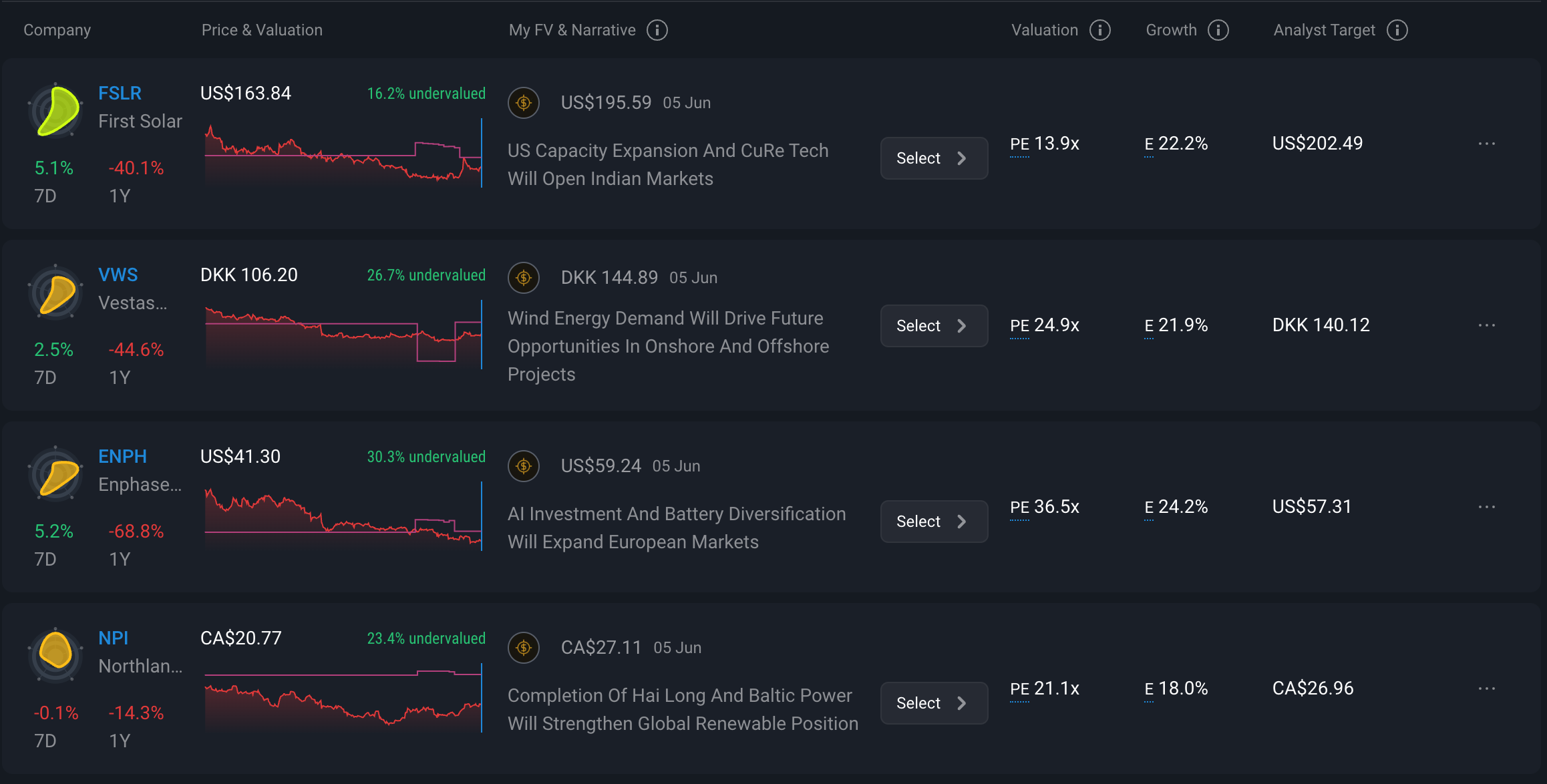
🎢 The Turbulent Transition to Greener Energy The bear market in renewable energy stocks is now in its fifth year. It started with sky-high valuations, but the fundamentals have since deteriorated. Stock prices peak when expectations are at their highest, and they usually make lows when expectations are at their lowest. It’s time for an update on renewable energy stocks, as well as nuclear stocks, which have continued to gain momentum. Specifically, we are having a look at the state of the clean energy transition and what it means for the sector. |
|
|
Quote of the week “The history of energy use is a sequence of transitions to sources that are cheaper, cleaner, and more flexible.” Vaclav Smil |
What Happened In The Markets This Week? Here’s a quick summary of what’s been going on: 💥Trump threatens Musk's government deals as feud explodes over tax-cut bill (Reuters) - Trump and Musk’s feud over a tax-and-spending bill escalated into open warfare, with Trump threatening to cut off billions in federal contracts to Musk’s companies.
- Tesla shares sank 14.3% as investors reacted to the political blowback and Musk's pledge to decommission SpaceX’s Dragon spacecraft.
- Political risk just became a real threat for Musk-backed stocks. Investors in Tesla, SpaceX-related suppliers, and Starlink partners should brace for volatility as Musk’s Washington ties unravel and get repriced accordingly.
- If you're exposed to Musk-led ventures, now’s the time to reassess those political risks.
🪨 China's rare earth export curbs hit the auto industry worldwide (Reuters) - China’s rare earth export curbs are disrupting Europe’s auto supply chains, with parts shortages already halting production at some plants.
- BMW and Mercedes are exploring stockpiles and alternatives, but approvals for export licenses remain slow, with only 25% granted so far.
- European automakers face rising costs and supply chain risk. Watch for margin pressure, delayed EV rollouts, and a push toward rare-earth-free tech. Suppliers with diversified sourcing or magnet-free motor tech could outperform.
- Since China just tightened the screws on Europe’s EV engine room, investors should brace for supply shocks and a fast-track hunt for alternatives.
🤝 Meta signs nuclear power deal with Constellation Energy (CNBC) - Meta signed a 20-year deal to buy 1.1 GW of nuclear power from Constellation’s Clinton plant, securing clean energy for its AI-driven data center growth.
- The agreement will keep the plant from shutting down and potentially expand its output, marking Meta’s first formal nuclear power purchase.
- This deal signals growing institutional confidence in nuclear as a scalable, low-carbon energy solution for AI infrastructure.
- Meta’s nuclear deal shows where AI energy demand is heading. Expect increased investor interest in nuclear utilities like Constellation and SMR developers that are aligned with Big Tech’s power demand.
To see our take on these and other market stories, simply check out the full article! 🇺🇸 Wise to move primary listing to the U.S. in blow to London stock exchange (CNBC) 🚀 Musk says SpaceX revenue will near $16 billion in 2025 (WSJ) 🚘 Toyota to buy out key supplier in $26bn take-private deal (CNBC) Now let’s dive into the main piece! |
⚡️ The Green Energy Transition: Crisis, Crossroads, or Catalyst? 🌍 A year ago, Vaclav Smil published an essay titled Halfway Between Kyoto and 2050: Zero Carbon Is a Highly Unlikely Outcome. The paper presents a gloomy view of the green energy transition and the odds of reaching net zero in the next 25 years. Vaclav Smil is one of the foremost authorities on the global energy big picture, as well as other important topics. So it’s worth paying attention to what he has to say - and reading his books. Since he wrote that essay, the renewable energy industry has faced more bad news: - 🇺🇸 Donald Trump won the US presidential election.
- That means no more incentives for renewables AND tariffs on imports of solar panels from China.
- ☢️ Some European nations have begun to hedge their bets.
- 💰 Interest rates have remained higher than expected
- That makes funding renewable projects more expensive.
Yet, the outlook for some renewable stocks doesn’t look too bad. Some are performing very well financially, while others are trading at their lowest valuations in years despite reasonable growth outlooks. |
Global investment in renewable energy, infrastructure, nuclear, and ‘clean’ transport is still expected to reach a record $2.2 trillion in 2025. Last year, it was around $2.1 trillion, so the increase is more modest than the previous 5 years. But it’s worth noting that the amount is double the expected investments in fossil fuel energy. So, does this mean there are still opportunities in renewables for investors? Let’s take a look at the bullish and bearish catalysts. We’ll start with the bearish take… |
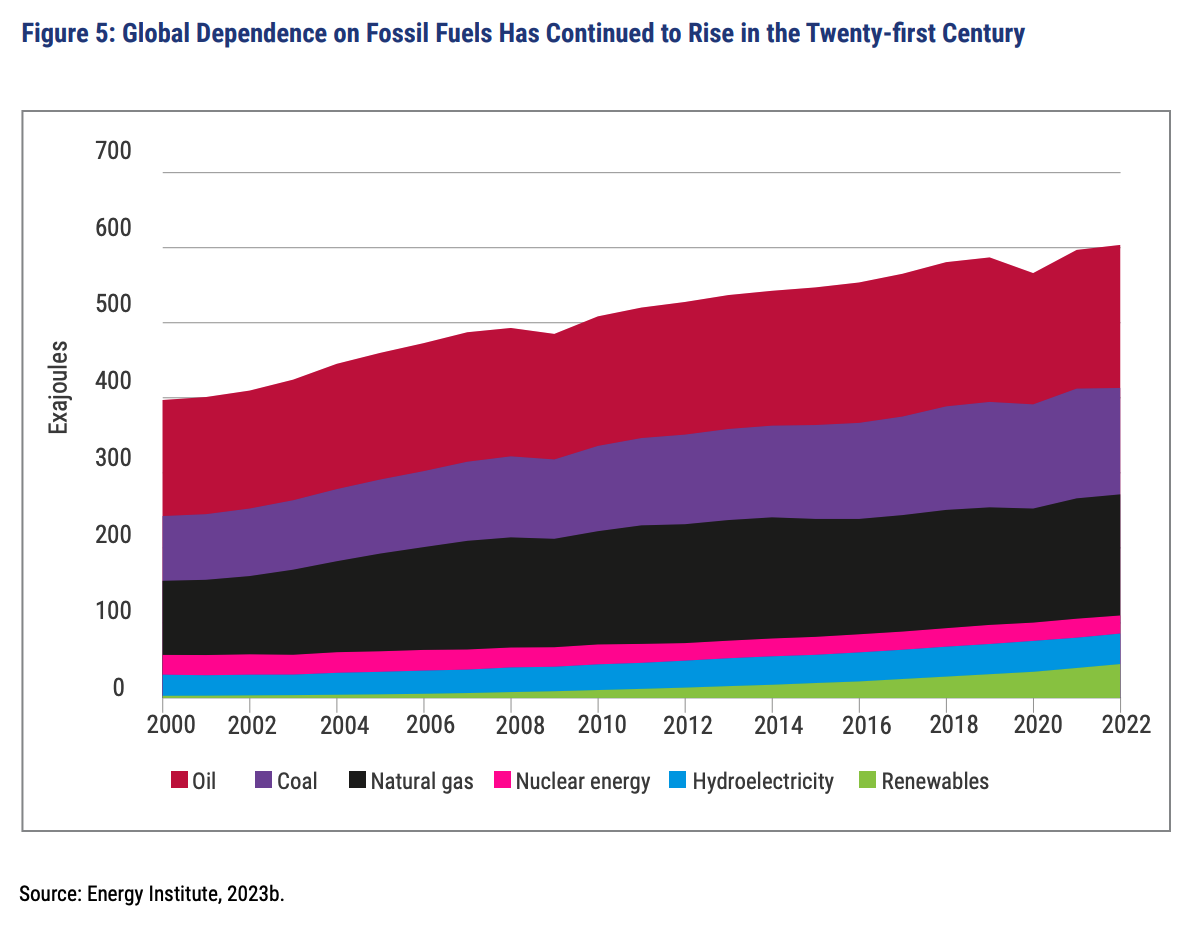
🐻 The Bearish Angle: Why Pessimism Lingers for Renewables Vaclav Smil’s essay takes a look at the big picture goal of reducing carbon emissions to ‘net zero’ by 2050. The Kyoto Protocol for decarbonization was agreed to in 1997, so we are looking at a 53-year period, and we’re roughly halfway there. ✨ Smil points out that global CO2 emissions increased by 54% between 1997 and 2022. While it's difficult to measure how much the increase would have been without implementing green energy, it's clear that our reliance on oil, coal and gas has continued to rise. |
|
|
Smil’s dose of reality is based on the magnitude of the task. Decarbonization will require the global energy infrastructure to be replaced in the next 25 years. This will require immense investments and resources. Here are just a few of the examples he cites: - 🚗 EVs require about five times as much copper as gas vehicles.
- That means replacing the world’s light vehicle fleet would consume 150 million tons of additional copper.
- That’s seven times the total amount currently extracted each year.
- ⚡ Electricity grids will need 80 million kilometers of additions or refurbishments.
- 🌎 Affluent countries would need to spend around 20% of their annual GDP to make the transition happen.
In addition, there are other minerals like cobalt, lithium, and rare earth minerals to find and extract, with considerable environmental impact. As mentioned in the news section, China’s curbs on these exports are already hitting the auto industry. Smil also pointed out that energy transitions are slow. The first, from wood to coal and then oil, began over 200 years ago, and there are many communities still dependent on wood for fuel. ✨ His conclusion isn’t that the transition won’t happen - it just won’t happen by 2050. There are other challenges in the medium term: - 💰 Funding
- Renewable energy is generated from resources that cost nothing.
- But two-thirds of the lifetime cost is incurred up front. Coal and gas plants incur ongoing fuel costs, but less is incurred upfront.
- So, renewable projects are more sensitive to interest rates.
- 🌐 Global unity
- The fracturing of global alliances makes policy co-ordination next to impossible.
- Transitions to greener energy sources can help smaller communities from a local pollution point of view. However, some countries might view spending billions on renewable energy tech simply to contribute towards the global net-zero goal less appealing if other countries actions are negating their efforts.
- 📋 Priorities
- Europe and China have led the way with renewable investments.
- Both now face economic challenges, a trade war, and in Europe, defense has now become a priority.
- Most countries are also having to come to terms with rising deficits.
Besides these challenges, oil and gas production has exceeded expectations, largely due to shale production in the US. The idea of ‘peak oil’ used to refer to peak supply. It’s now a question of when demand will peak! |
The full piece provides plenty more insights on: 📈 The Bullish Perspective: Pockets of Strength 🎰 Hedging Your Bets ☢️ Why Nuclear Energy is Making a Comeback 🔍 Where to Look for Potential Opportunities Check out the full article and join the discussion in the comments! |
|
|
💡 The Insight: Due Diligence is as Crucial as Ever The challenges that the clean energy transition is facing don’t mean it’s over. Fossil fuels will probably be around for a while, but renewables and nuclear will also be a part of the energy mix. For investors, returns will need to come from companies actually making a profit, rather than positive sentiment ‘lifting all boats’ like it did a few years ago. Here are a few things to consider when assessing potential investments: - 🔋 Financial Endurance
- Prioritize companies with strong balance sheets and operational efficiency.
- 🏗️ Critical Backbone & New Demand
- Look for opportunities in essential infrastructure, like grid modernization, energy storage, and sustainable resource management
- Check out the full article for tips on how to find these opportunities!
- Look for companies that can win regardless of the overall energy mix.
- 💎 Value Matters
- Most companies in the renewables space are unlikely to grow at the rates usually seen in the tech sector.
- Valuations need to be based on realistic growth rates and profit margins.
- 📜 Policy can Work Both Ways
- Energy policy is country-specific, and it can act as a headwind or a tailwind.
- Investors need to stay up to date on relevant energy policies.
- ✨ Be conservative when it comes to unproven technologies
- Innovation can solve big problems for the world’s energy needs. But a lot of experiments don’t work out.
- Making wildly optimistic claims is a great way for companies to raise capital from investors with a dose of FOMO.
|
|
|
💬 Join the discussion by leaving a comment!
What do you look for in companies that are involved in the green energy transition? |
|
|
Key Events Next Week Here are some of the important figures coming out next week that have the biggest forecasted differences from prior reported figures: Monday, June 9th - 🇨🇳 China Inflation Rate YoY (May)
- 📉 Forecast: -0.2%, Previous: -0.1%
- ➡️ Why it matters: Persistently low inflation or deflation could signal weak domestic demand, potentially leading to further economic stimulus measures.
- 🇨🇳 China Balance of Trade (May)
- 📉 Forecast: $70.0B, Previous: $96.18B
- ➡️ Why it matters: A smaller trade surplus might suggest weakening export strength or a rise in imports, impacting currency and global trade sentiment.
- 🇨🇳 China Exports YoY (May)
- 📉 Forecast: -4.0%, Previous: 8.1%
- ➡️ Why it matters: A significant drop in export growth would be a strong indicator of cooling global demand.
- 🇨🇳 China Imports YoY (May)
- 📉 Forecast: -3.0%, Previous: -0.2%
- ➡️ Why it matters: Declining imports suggest sluggish domestic demand, which can impact companies reliant on Chinese consumer and business spending.
Wednesday, June 11th - 🇺🇸 US Federal Budget Statement (May)
- 📊 Forecast: -$312bn, Previous: +$258bn
- ➡️ Why it matters: Reflects the government's fiscal health; significant deficits can have long-term implications for borrowing costs and currency.
Thursday, June 12th - 🇮🇳 India Inflation Rate CPI YoY (May)
- 📉 Forecast: 3.16%, Previous: 3.72%
- ➡️ Why it matters: Inflation is a key focus for the Reserve Bank of India; a significant deviation could impact rate expectations.
Friday, June 13th - 🇪🇺 Eurozone Industrial Production MoM (April)
- 📈 Forecast: 2.6%, Previous: -0.2%
- ➡️ Why it matters: Indicates the health of the manufacturing sector across the Eurozone, impacting growth forecasts and business sentiment.
Stocks reporting this week - Oracle
- Adobe
- Kroger
- Chewy
- Casey’s General Stores
- GameStop
- GitLab
|
Until next week, invest well. Simply Wall St |
|
|
| | This email is from Simply Wall Street Pty Ltd
Level 5, 3 20 Pitt St Sydney 20 00, NSW, Australia. | | Simply Wall Street Pty Ltd (ACN 600 056 611), is a Corporate Authorised Representative (Authorised Representative Number: 467183) of Sanlam Private Wealth Pty Ltd (AFSL No. 337927). Any advice contained in this email/website is general advice only and has been prepared without considering your objectives, financial situation or needs. You should not rely on any advice and/or information contained in this website and before making any investment decision we recommend that you consider whether it is appropriate for your situation and seek appropriate financial, taxation and legal advice. Please read our Financial Services Guide before deciding whether to obtain financial services from us. | | | Don’t want to receive Market Insights? Unsubscribe
Want to stop receiving emails or check which emails you are subscribed on? Manage email preferences | | |
|
|
|
|