Your login is via your account |
|
|
🤖 The Bull and Bear Thesis on AI’s Decade of Disruption
Over the last two weeks, we’ve taken a closer look at agentic AI and how it could affect companies and entire industries. But this trend doesn’t stop at the corporate level. Agentic AI will shake up the macro landscape, with some expecting it to bring the biggest wave of creative destruction in history. This week, we are weighing up the potential productivity gains vs job losses and economic disruption that the global economy could face over the next decade and beyond. Intimidating? Yes. But it’s a story you need to know about, and at the end we’ll show you how you can position your portfolio for no matter what comes. 🎧 Would you prefer to listen to these insights? You can find the audio version on our Spotify, Apple Podcasts or our YouTube! (Released each Monday by 5pm AEST). |
|
|
Quote of the week
"You look at today, us using all of our smartphones and other devices, and we effortlessly adapt to these new technologies. And this is gonna be another one of those changes like that." Demis Hassabis, Co-Founder and CEO of Google DeepMind |
|
|
What Happened In The Markets This Week? Here’s a quick summary of what’s been going on: 🇨🇳 China limits supply of critical minerals to Western defense companies (WSJ) 🚂 US railroad customers ask regulators to block Union Pacific-Norfolk deal (Financial Times) - A UP-NS rail mega-merger could mean higher shipping costs and fewer options for US businesses, with shippers loudly warning of weakened competition and service headaches.
Industry analysts expect a possible merger between BSNF and CSX could be on the cards with this news, which could create a railroad duopoly and even less choice for cargo owners. That’s potential bad news if you rely on affordable, reliable freight. - While intermodal shippers may benefit from streamlined coast-to-coast service, bulk and industrial clients fear they’ll get squeezed on both price and service quality.
- Regulatory hurdles are high, and a drawn-out approval process is likely, keeping rail sector volatility and activist investor moves in play.
If this deal would impact any stocks in your portfolio, it’s worth adding Union Pacific or Norfollk Sourther to your watchlist to be notified of the latest developments. 🇮🇳 Trump imposes extra 25% tariff on Indian goods, ties hit new low (Reuters) To see our take on these and other market stories, simply check out the full article! Now let’s dive into the main piece! |
🤖 Agentic AI’s Global Economic Impact: Boom or Bust?
What does artificial intelligence mean for the global economy over the next decade?
Opinions couldn’t be more divided: - 📈 Some believe we’re going to see a productivity supercycle that unleashes historic economic growth.
- 📉 On the other side of the argument, many fear a "jobs apocalypse" that automates millions of white-collar jobs, triggering a recession.
- Even many of those who are optimistic about the long-term outlook acknowledge it’ll take a period of pain to get there.
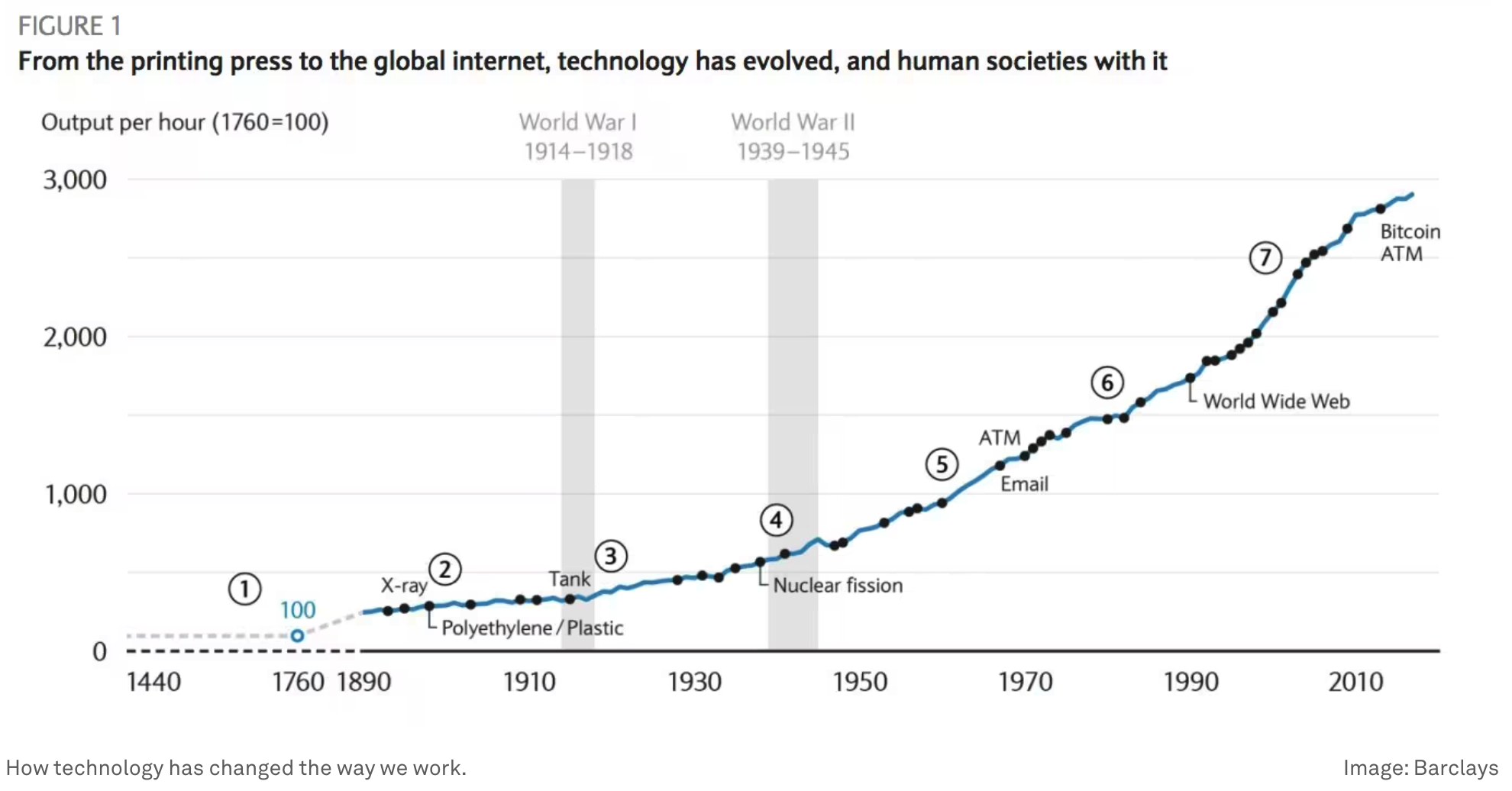
Rather than taking sides, we’re going to take a look at both sides of the argument and some of the catalysts that could tip the scales either way. 📈 The Bull Case: A Productivity Supercycle is Coming The optimistic view is that agentic AI will be the biggest productivity booster in history. By automating complex cognitive work (not just repetitive tasks), it could unlock massive efficiency gains across every industry. For example, giving every scientist, engineer, and strategist a team of expert AI assistants working 24/7 could significantly increase their productivity. And productivity gains it necessarily just about doing old jobs faster; it's about making entirely new discoveries in areas like drug development and materials science. ✨ Human history is the journey of us innovating technological advancements into existence to increase our productivity and improve our living standards.
Bulls argue that artificial intelligence is the next leg on this journey.
|
Innovation vs Hourly Output. - WeForum |
The Industrial Revolution, electricity, and the internet all sparked fears of mass unemployment. Yet each time, "creative destruction" kicked in: - 🏭 Old industries were replaced by new, more innovative ones.
- 👷♂️ More jobs were created than were lost.
- 📈 Living standards rose dramatically for many.
The current wave of innovation isn’t only about AI, but the convergence of AI and other technologies, including automation, genomic health, and IoT (internet of things). So here’s what the bullish scenario looks like: - ⚡ Faster and cheaper development: Products can be prototyped in hours instead of weeks or months. The cost of developing software and creating content is dramatically reduced.
- Put simply, companies and entrepreneurs can do more with less. This brings more companies and products to market, and more jobs can be created. There will always be problems to solve.
- 🤖 Workflow automation: Both basic and complex tasks can be automated, and human capital can be deployed more efficiently.
- More people are freed up from doing basic and monotonous tasks, and instead devote their time to more creative and productive work. This leads to increased productivity, lower costs, or better yet, both!
- 🧩 The hard problems get solved: With the help of AI, we can solve the hard problems in medicine, materials science, and energy.
- This leads to better healthcare outcomes, with lower costs, and to more abundant energy.
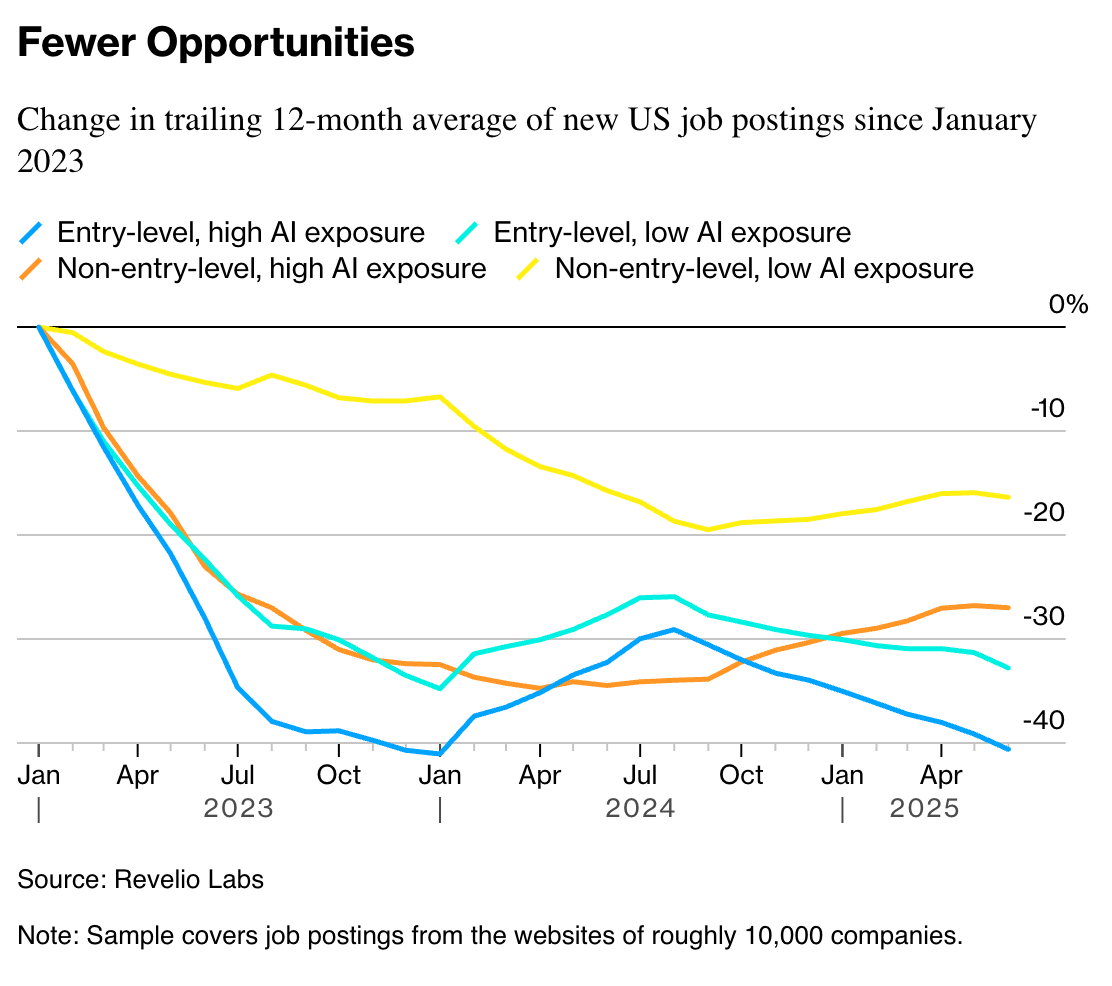
That all sounds well and good. But not everyone thinks that way. 📉 The Bear Case: "This Time It's Different" The pessimistic argument is that this revolution is unlike previous waves of automation. ✨ Previous technologies replaced muscle power. AI is replacing brain power. In particular, AI is already beginning to replace entry level office and customer service jobs. It’s also learning to do jobs that require more analysis, creativity, problem-solving - ie. higher paying white collar jobs. |
What does this mean? - 💥Collapsing Demand: At the macro level, losing high-paying jobs would mean consumer spending dives. Consumer spending is the biggest component of GDP in developed economies, so it’s a big deal.
- 📉 Deflationary Spiral: Falling demand leads to falling prices, which further dampens economic activity.
- 💸 Wealth Chasm: The gains from AI could flow to a tiny group of tech owners, creating extreme inequality and social instability.
Estimating the number of jobs that could be lost is really a guessing game, but for what it’s worth, here are a few estimates from different players: ✨ As you can see, their estimates mostly agree, but they looking at different metrics. And, more importantly, these stats don’t include jobs that could be created. The WEF’s 2025 Future of Jobs report estimates a net gain of 78 million jobs by 2030, despite 92 million roles being displaced.
|
There's a little more nuance to these cases, the full piece covers: ⚖️ How The Transition Could Actually Be Smooth and ❓ There Are Unknown Unknowns |
|
|
💡 The Insight: Hedge Your Bets and Keep an Open Mind. With so many dynamics at play, it’s a good idea to be prepared for a range of outcomes. There are a few ways to do that. Play offense and defense. - ⚔️ To play offense, invest in the companies doing the disrupting.
- That’s the AI leaders ranging from semiconductor companies to the hyperscalers, and the software companies building an edge around AI.
- 🛡️ To play defense, diversify and invest in the companies that are less likely to be disrupted or impacted by AI.
- These include utilities, energy, and resource companies. These also have the advantage of exposure to real assets.
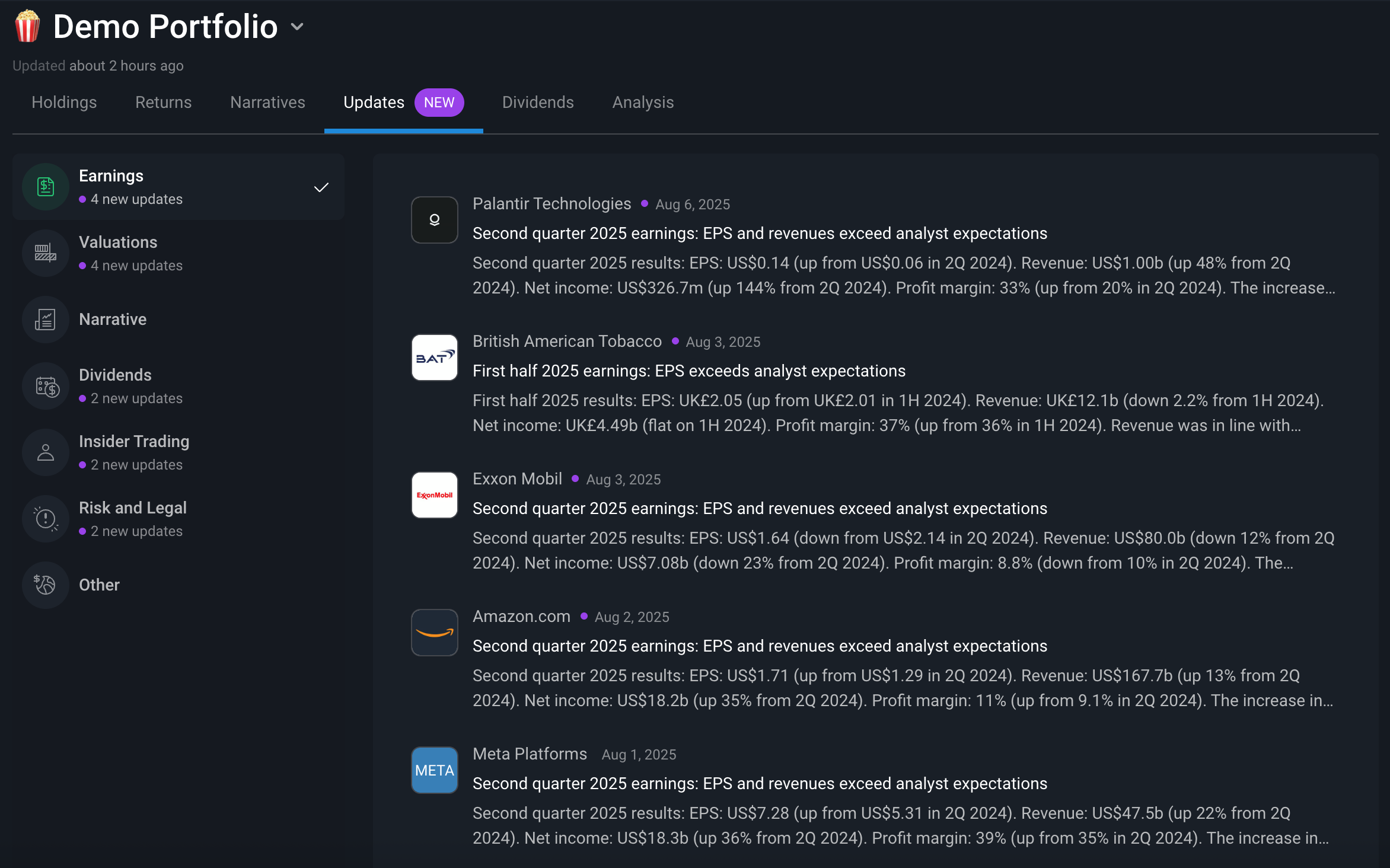
The Simply Wall St Portfolio Tool can help you here. Use it to check how your investments are diversified across offense and defense plays, and then stay informed on all the latest developments for those stocks with “Updates”. |
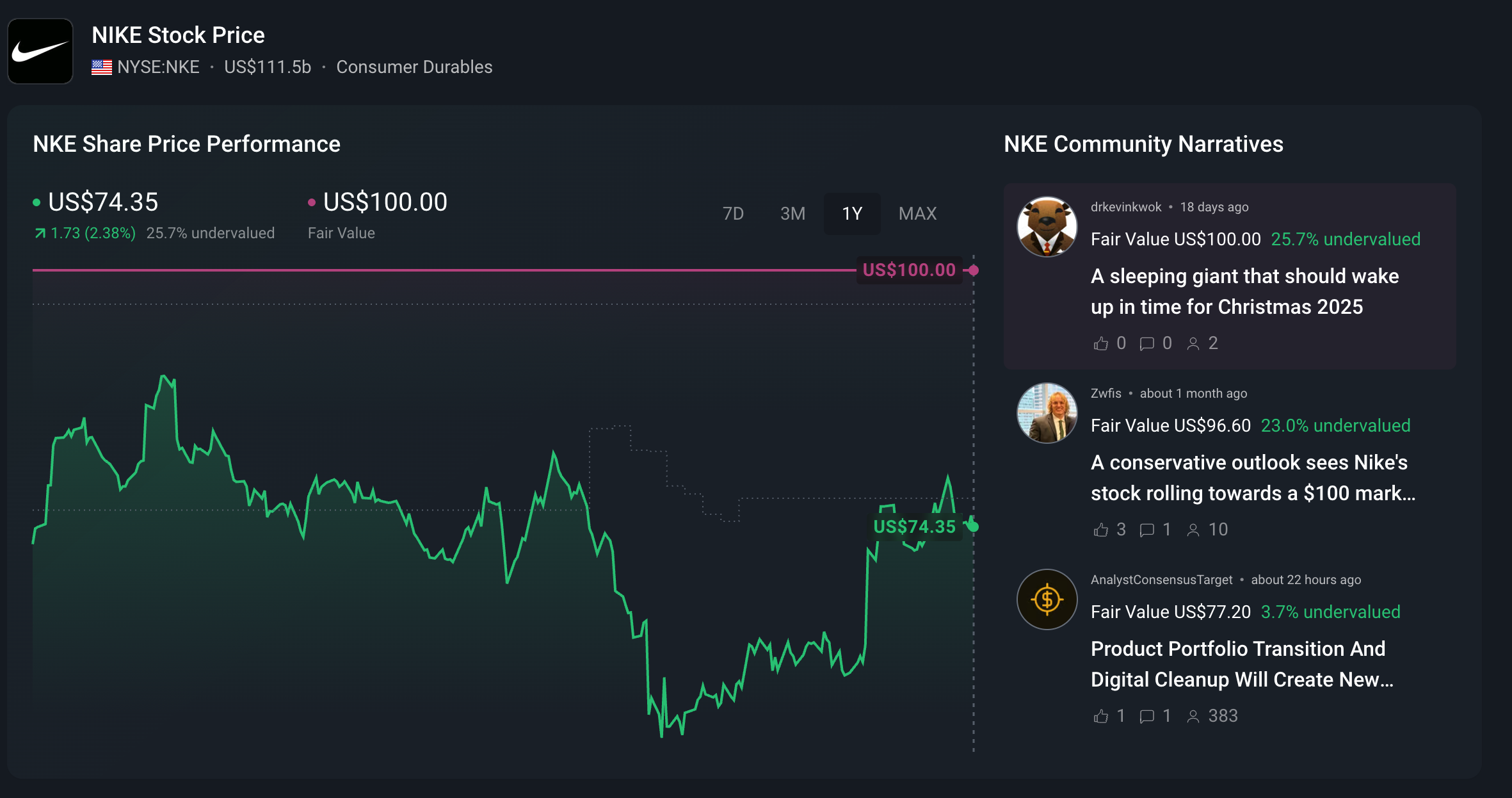
Also, keep second-order AI risks in mind. If the worst-case scenario plays out, our consumer-facing companies will struggle - some more than others. It’s important to know who a company’s customers are and what AI might mean for their spending power. ✨ This doesn’t mean you need to dump your consumer stocks, but it’s good to know what to keep an eye on. Like many companies, Nike is leveraging AI across its business, from personalized recommendations to product design. But it could also be exposed to an AI-induced slowdown in consumer spending at some point. Check out all the narratives on Nike from the community! |
|
|
💬 Join the discussion by leaving a comment!
Do you agree more with the bullish or bearish thesis of AI's impact on the macro landscape? |
|
|
Key Events During the Next Week Tuesday - 🇦🇺Reserve Bank of Australia Interest Rate Decision
- 📉 Forecast: 3.6% (Previous: 3.85%)
- ➡️ Why it matters: A potential rate cut would mark a shift toward easing, aiming to support growth as economic momentum fades.
- 🇬🇧 UK Unemployment Rate
- 📉 Forecast: 4.6% (Previous: 4.7%)
- ➡️Why it matters: A slight drop suggests the labor market remains tight, possibly keeping the BoE cautious on cuts.
- 🇺🇸 US Core Inflation (YoY)
- 📈 Forecast: 3% (Previous: 2.9%)
- ➡️Why it matters: A rise in sticky core prices could delay Fed easing and weigh on rate-sensitive assets.
Thursday - 🇬🇧 UK GDP Growth Rate QoQ Prel
- 📉 Forecast: 0.3% (Previous: 0.7%)
- ➡️ Why it matters: A sharp slowdown raises recession risks and strengthens the case for BoE rate cuts.
- 🇺🇸 US PPI (YoY)
- 📈 Forecast: 2.5% (Previous: 2.3%)
- ➡️ Why it matters: Upward pressure on producer prices may bleed into CPI and keep inflation sticky.
Friday - 🇯🇵 Japan GDP Growth Rate QoQ Prel
- 📈 Forecast: 0.3% (Previous: 0%)
- ➡️ Why it matters: A modest rebound may ease pressure on the BoJ, but won’t erase concerns about fragile growth.
- 🇬🇧 UK Manufacturing Production YoY
- 📈 Forecast: 1.5% (Previous: 0.3%)
- ➡️ Why it matters: Contrary to UK GDP estimates above, a big jump points to a rebound in UK industry, potentially softening the case for rate cuts.
Earnings season continues with some prominent tech companies, including some leading Chinese names. - Alibaba
- Cisco
- Applied Materials
- Deere and Co
- Sea Ltd
- NetEase
- CoreWeave
- JD.com
- Barrick Mining
- Circle Internet Group
- Tencent Holdings
|
Until next week, invest well. Simply Wall St |
|
|
| | This email is from Simply Wall Street Pty Ltd
Level 5, 3 20 Pitt St Sydney 20 00, NSW, Australia. | | Simply Wall Street Pty Ltd (ACN 600 056 611), is a Corporate Authorised Representative (Authorised Representative Number: 467183) of Sanlam Private Wealth Pty Ltd (AFSL No. 337927). Any advice contained in this email/website is general advice only and has been prepared without considering your objectives, financial situation or needs. You should not rely on any advice and/or information contained in this website and before making any investment decision we recommend that you consider whether it is appropriate for your situation and seek appropriate financial, taxation and legal advice. Please read our Financial Services Guide before deciding whether to obtain financial services from us. | | | Don’t want to receive Market Insights? Unsubscribe
Want to stop receiving emails or check which emails you are subscribed on? Manage email preferences | | |
| |
|
|