What's happening now in the Strait of Hormuz? |
| |
|
This week’s insights include: |
- Beyond oil: the industries feeling the second-order impact: The Strait of Hormuz disruption is now flowing through to fertilisers, food, and supply chains. What started as an energy shock is quickly becoming a broader economic one.
- Winners and losers are starting to emerge: Early earnings data shows energy and fertiliser players benefiting, while downstream industries like food, retail, and hospitality begin to face rising cost pressures.
- How consumers are starting to adapt: Rising fuel and food costs are already shifting behaviour, from increased EV adoption to changes in spending patterns across essentials and discretionary goods.
- The real insight: From electrification to supply chain shifts, the biggest opportunities may lie not in reacting to the shock, but in identifying the structural changes it’s speeding up. Crises like this don’t create new trends, they accelerate ones already in motion. Investors who focus on where capital, policy, and demand are being pulled forward may be better positioned than those chasing short-term moves.
|
This week's Market Insights article is a 5 minute read! |
|
|
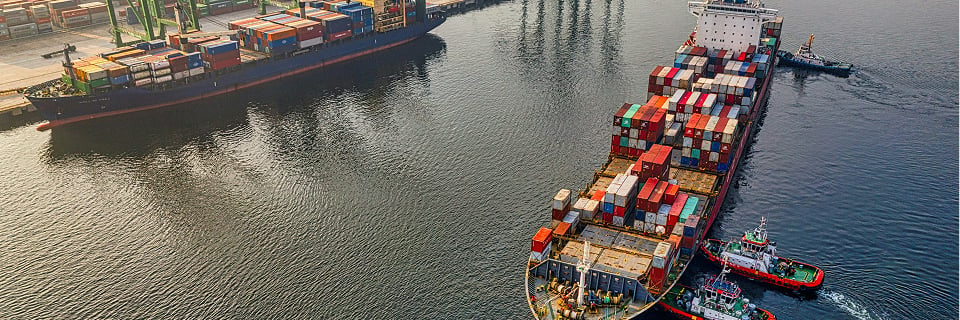
The Strait of Hormuz… the second most mentioned name on the internet these days (the first one is, of course, President Trump). Since Iran blocked the shipping channel, oil prices have surged to around $120 a barrel, their highest level since 2022. Petrol and diesel prices followed almost immediately, reminding markets just how sensitive the global economy still is to energy shocks. But nine weeks into the conflict, it’s becoming clear this isn’t just about oil. We’re starting to see the actual financial impact of the strait’s closure. Today, we’ll look into these numbers plus look at other trade routes that you need to keep an eye on. |
|
| | "For the only way in which durable peace can be created is by world-wide restoration of economic activity and international trade." |
| |
Here’s a quick summary of what’s been going on: |
- Google Cloud growth reshapes AI race as Big Tech spending tops $700 billion.
- Atlassian jumps 25% after-hours after earnings beats expectations.
- Yum Brands beats estimates as value deals drive fast-food growth.
- Paramount is closer to acquiring Warner Bros. Discovery after shareholder approval.
- TSMC exits Arm investment with $231m share sale.
- Huawei forecasts 60% surge in AI chip revenue.
|
|
|
|
The latest impact of the Strait of Hormuz’s closure |
The most immediate and visible impact of the strait’s closure was fuel prices. But nine weeks into the war, government leaders like those in the UK are fighting even harder to get the strait reopened because the longer term impact of the closure is starting to expand into other industries. 👉 Last month, we covered the key industries and countries immediately impacted by the war, so we’ll focus on adding insights that weren’t there. |
- Crops come under pressure: Fertilizer shortages are already pushing up input costs for farmers. If supply remains constrained, we’re likely to see lower crop yields in upcoming harvest cycles, particularly in regions heavily reliant on imports.
- Food production gets squeezed: Higher input costs don’t stop at the farm. They flow through to food processing, packaging, and distribution. That means tighter margins for producers and higher prices for consumers, with availability and variety also at risk.
- The most vulnerable economies feel it first: Countries with high dependence on fertiliser imports and agriculture are likely to see the biggest impact. Rising food costs and weaker agricultural output could put pressure on already fragile economies, amplifying inflation and slowing growth.
|
We also walk through the industries that have supercharged growth since the war began. We grow through a full list in the article. |
|
|
|
Join the discussion by leaving a comment! |
What other industries do you think will be impacted over time? |
| |
|
|
Tuesday 🇦🇺 RBA Interest Rate Decision Forecast: 4.35%, Previous: 4.10%
Why it matters: A potential hike would signal the RBA is still concerned about inflation with implications for housing, consumer spending, and the AUD. |
Thursday 🇦🇺 Balance of Trade (Mar) Forecast: A$5B, Previous: A$5.69B
Why it matters: Trade strength supports the Australian dollar. A narrowing surplus could reflect weaker global demand or softer commodity prices. |
Friday 🇩🇪 Balance of Trade (Mar) Forecast: €14B, Previous: €19.8B
Why it matters: Germany’s export engine is key for Europe. A weaker surplus could signal slowing global trade.
🇨🇦 Unemployment Rate (Apr) Forecast: 6.7%, Previous: 6.7%
Why it matters: Stability in unemployment suggests a balanced labour market, but any uptick could pressure the BoC to ease. 🇺🇸 Unemployment Rate (Apr) Forecast: 4.3%, Previous: 4.3%
Why it matters: A stable unemployment rate keeps the Fed in wait-and-see mode, but any surprise could shift rate expectations. |
|
|
|
Trusted by 7M+ Investors | Download the app |
This email is from Simply Wall Street Pty Ltd
Level 5, 320 Pitt St Sydney 2000, NSW, Australia. |
Simply Wall St has no position in the company(s) mentioned. Simply Wall Street Pty Ltd (ACN 600 056 611), is a Corporate Authorised Representative (Authorised Representative Number: 467183) of Sanlam Private Wealth Pty Ltd (AFSL No. 337927). Any advice contained in this email/website is general advice only and has been prepared without considering your objectives, financial situation or needs. You should not rely on any advice and/or information contained in this website and before making any investment decision we recommend that you consider whether it is appropriate for your situation and seek appropriate financial, taxation and legal advice. Please read our Financial Services Guide before deciding whether to obtain financial services from us. |
|
|
|
|
|
|
|