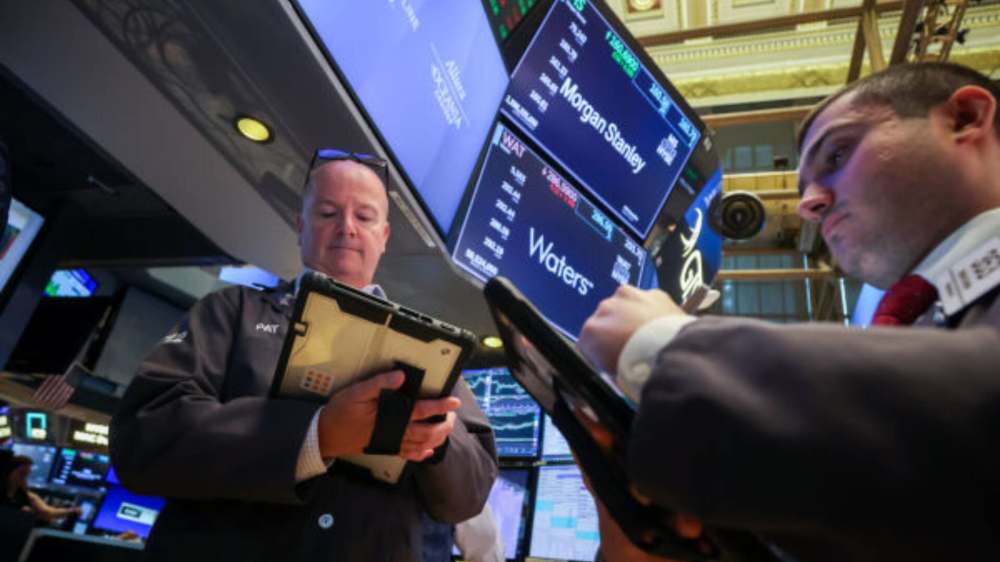
It's the last day of the third quarter, but it might also be the last day that the U.S. government will operate as usual for awhile. At 12:01 a.m. EDT Wednesday the government is slated to run out of funding, marking the start of its 21st shutdown since fiscal 1977, per Bank of America.
It'll be the first shutdown since 2019. And at this stage, with congressional Republicans leaving D.C., there's no telling how long it could last. (The average government shutdown has lasted eight days.) And generally, shutdowns aren't much of a big deal for the markets.
Except this time it is. A Federal Reserve that's been clinging to economic data will be lost in the dark during the shutdown, as the Bureau of Labor Statistics says it will delay releasing key information. What's more, thousands of employees could be furloughed or dismissed during the shutdown, pushing the central bank toward a dovish position.
Tuesday Reading:.
Perhaps a consolation: We'll still get non-BLS reports (and we might even get to see the start of a completely new earnings season if this drags on long enough). But still much will be left up to estimation, especially at a trying time for the economy.
Reflecting this uncertainty, the Russell 2000 (-0.6%) and Dow (-0.22%) are seeing marked declines, while the S&P 500 (-0.03%) and Nasdaq (+0.06%) are closer to flat on the day. Long-dated Treasurys have risen in value; so, too, has gold.
It's all going down before we exit an unseasonably strong September and start the seasonally strongest quarter of the year for stocks, the fourth quarter. A strange time? That's one way to put it.
TurboTax Via TheStreet:
-- Noah Weidner, Markets Reporter