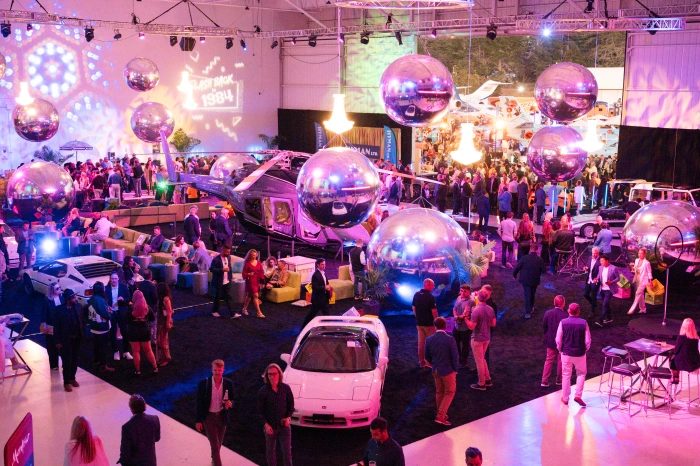
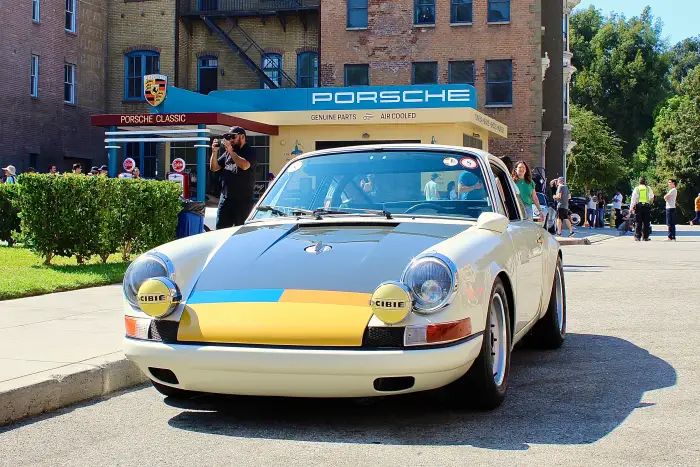
With that in mind, and the fact that Earny and I are more than a little obsessed with cars, I thought it would be instructive to talk about supply and demand from the point of view of car enthusiasts.
This one isn’t just for the car people, though. If you’re wondering about why some things are valued more highly than others — and that analysis includes stocks — read on.
Earny asks: Why is an old Porsche worth, well, anything?
Answer
Well, just look at it, Earny. It's gorgeous.
Seriously, though, the question makes sense. A car is technology and new cars should be technically better than old cars. I get a new iPhone every four years because the new one just works better. Even nontechnology items, like a chair or a bicycle, get tossed when they’re no longer good or the owner simply wants an upgrade. Most cars, too, lose value every year until they’re eventually sent to the scrap heap.
Just not Porsches — or any collectible car, be it a Buick GNX or a Ferrari 250 SWB.
Why? What drives the demand for these old things when the new ones are so much better?
Let’s ignore nostalgia. That’s certainly one reason and maybe the most critical one.
After all, collectors talk of the 30-year price bump, where people who hit middle age can afford and buy the poster cars of their younger years.
3 Key Factors That Drive the Collector-Car Market
1. Events
To which events does a particular car give you access? My daily driver might not garner a single glance at the local cars-and-coffee event, but a less expensive 1980s VW might draw a crowd. Similarly, events like the Colorado Grand enable people to drive historic race cars for 1,000 miles on public roads, provided the car was built no later than 1959. Want to live out your dream of being Fangio — the legendary Formula One driver — in a 1950s Maserati? The Colorado Grand is the event for you. Provided you can afford a 1950s Maserati. If not, you can buy a cheaper, and slower, car and pretend to be one of Fangio’s competitors!
2. Community
Events like a local cars-and-coffee or the Colorado Grand rally lead us into the community aspect of collector-car ownership. You see, once you have that car, you’re part of a community that creates even greater bonds to that car and cars of a similar period. And it’s not just about the time period. Brands matter, too. Earny asked about Porsches, and there’s no greater group of enthusiasts than Porsche nuts. I should know!
What makes the Porsche community so tightly knit? I liken it to community creativity. Porsche cars, despite 75 years of looking relatively similar, are a blank canvas. The factory offers myriad options for customization, while owners take it upon themselves to modify their cars to suit their dreams. As I wrote in this article for Autoblog, “humans crave creative expression, and when we can find a community to share it with, everybody wins.”
The other thing about Porsches is that they’re reliable. I’ve driven my 35-year-old 911 from Colorado to California, up the coast to Canada, and then back: 4,500 miles and the car didn’t miss a beat.