Where NC Meets the Sea: Practicing Coastal Stewardship This Summer |
|
|
|
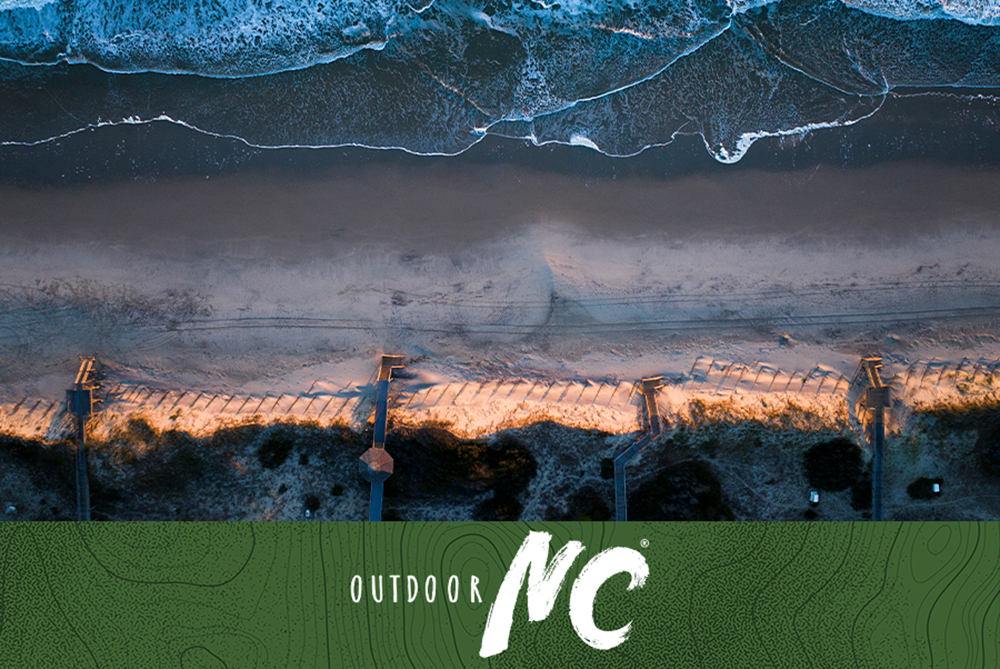
North Carolina’s coastline is more than a place to cool off in summer — it’s a living, breathing system connecting land, water and wildlife.
Here, sand dunes rise and shift like breathing creatures. Oyster reefs and eelgrass beds filter water while stabilizing the sea floor, creating habitats for juvenile red drum and blue crabs. And as night falls and tides change, you might just see ghost crabs scurry down the shore in pursuit of a late-night snack.
Knowing who we share sun and surf with reminds us this isn’t just a backdrop for summer fun — it’s an ecosystem alive with seasonal rhythms, hidden habitats, and blink-and-you’ll-miss-them species. Whether we’re trying our hand at surf fishing, taking a surfboard or kayak out on a hot day, or simply stretching out on NC’s sandy beaches, how we move through these spaces matters for the health of our coast. That’s true of inland summer adventures, too.
From the rolling green hills of the Piedmont to mountainous Western NC, upland lakes and rivers feed the estuaries that anchor coastal life, and forests help reduce the kind of runoff and erosion that spurs sediment buildup, algae blooms and habitat loss on the coast. By sticking to trails when hiking along Pisgah streams and trashing all trash when fishing freshwater systems, we help not only the immediate ecosystems around us, but those downstream, too.
Our wild, natural world is wonderfully interconnected. And that can be even easier to see when experiencing NC’s delicate, vibrant coastal ecosystems up-close. When we practice oceanside stewardship, we do more than keep beaches visibly clean. We help these health-giving natural spaces stay healthy, ensuring NC’s coast can be a place of rest and adventure for generations to come.
|
|
| Shore Up Your Impact: Outdoor NC Leave No Trace Tips for Coastal Adventures |
| 1. Plan Ahead & Prepare Shifting tides, changing shorelines and seasonal migrations mean NC’s coast is always in motion — and that’s part of what makes it so special. Whether we’re casting a line into the Pamlico Sound, paddling the rivers of Goose Creek State Park or walking the shell-strewn beaches of Cape Lookout, planning ahead helps us be mindful guests of these spaces.
Before heading out, we can check tide charts, water conditions, fishing limits and seasonal advisories. Local guidance — like catch-and-release rules near Topsail Island or trail access updates at Hammocks Beach State Park — helps us safely interact with these dynamic ecosystems, so they can thrive long after we’ve packed up for the day. |
|
|
|
| 2. Leave It As You Find It Shells, driftwood and beach pebbles might seem like natural souvenirs, but they play an important role in stabilizing shorelines for wildlife. At places like Masonboro Island Reserve, even small natural materials offer shelter for nesting shorebirds, including the American Oystercatcher and Least Terns, while creating cover for intertidal habitats, like tidal pools.
By treading lightly around tidal pools, we keep these often-overlooked microhabitats safe for the small fish, crabs and coquina clams who rely on them between tides. And by smoothing out sandcastles and filling holes before we pack up — especially at sea turtle nesting sites like Oak Island and Bald Head — we help ensure hatchlings have a clear path to the sea, allowing coastal ecosystems to function as nature intended. |
|
|
|
| 3. Keep Wildlife Wild Wild horses grazing in dunes, foxes raising young in maritime forests and river otters feeding in estuaries are just a few of the species that need space to thrive along NC’s coast. Even seemingly harmless interactions, like feeding a seagull, can disrupt natural behaviors, and approaching a wild horse for a photo puts you both at risk. By observing wildlife from a safe distance and securing all food and trash, we can reduce stress on wildlife and promote the health of ecosystems. By taking these steps, we help ensure that future generations will be able to appreciate and learn from these amazing creatures. |
|
|
|
Hoping to see some of NC’s fish a little closer up? For catch-and-release angling, we can use barbless hooks, handle fish with wet hands to protect their slime coats, and release them promptly. No matter where we’re casting a line — straight from the beach or out into Bogue Sound — every responsible release helps maintain healthy populations for future anglers. |
|
MEET OUTDOOR NC GUIDE Lisa (Lee) Colvin |
Across seasons, NC’s landscapes are alive with species and systems that need our care. And as connectors between people and place, Outdoor NC guides like Lisa (a.k.a. Lee) Colvin are uniquely positioned to ensure care is a part of how guests explore NC’s natural spaces.
Earlier this year, Lee and five other guides gathered at Raven Rock State Park to complete a Level One Instructor Course from Outdoor NC and Leave No Trace. As our second cohort of Outdoor NC guides, they represented not only different regions of NC, but different outdoor recreation disciplines, from fishing and biking to boating and photography. The unifier? Each guide’s training in locally rooted stewardship practices helps them show others how to recreate in ways that keep the outdoors healthy and accessible to all.
Access to the outdoors is certainly a core part of Lee’s mission. For this issue of Outdoor NC Evergreen, she shared with us how she’s making that mission a reality through the guide service she started with friends, Issa Vibe Adventures (IVA), and how stewardship shows up on each adventure they lead.
Tell us a little about your background and the different experiences you offer to guests through your guiding service.
I have a professional background in preclinical research. I am a mother, a wife, a friend, an Aggie and a member of Delta Sigma Theta Sorority Inc. While grieving the loss of a parent and relocating to a new city, I inadvertently learned of my untapped desire for nature after a quick hike to see a waterfall with two of my friends. Once you see one waterfall, you not only have to share the news and tell people about it — you feel like you must see more. With that, my two friends and I started an outdoor tourism company called Issa Vibe Adventures.
IVA is a Black-led outdoor experience company reconnecting historically excluded communities to nature through guided hiking, kayaking, yoga, gardening and community wellness.
We create safe, joyful spaces where Black people — and all those navigating fear, trauma, or disconnection — can explore nature with confidence, community, and culture. Through movement, mindfulness and storytelling, we reclaim our place outdoors, one adventure at a time.
Since the inception of IVA, I have become an official Outdoor NC guide and a registered American Canoe Association (ACA) Kayak Instructor, and I’ve also gotten certifications in Leave No Trace Awareness, CPR/AED and Wilderness First Aid through National Outdoor Leadership School (NOLS).
As an Outdoor NC guide, why are stewardship and the Outdoor NC Leave No Trace Principles important to you?
Stewardship means honoring the earth with the same respect we ask our community to give themselves: with gentleness, gratitude and accountability. The Outdoor NC Leave No Trace Principles aren’t just about packing out trash — they’re about the legacy we leave behind. Many of our ancestors were denied access to nature or forced off of it. Now that we’re reclaiming our presence in outdoor spaces, it’s our responsibility to protect this reclaimed space — for ourselves, for each other, and for future generations of Black and Brown adventurers who deserve to experience the fullness of nature, too.
IVA decided to adopt and educate participants on Outdoor NC Leave No Trace Principles when we started observing guests leaving behind trash like half-eaten food items, used toilet tissue, and fruit peels, cores and pits. Their reasoning often ranged from “it will naturally break down” to “something will eat it.”
As our eyes were opened to the principles and hiking etiquette in general, we knew that with increasing exposure to nature, it was our responsibility to protect the outdoors for each other and for future generations of adventurers who deserve to experience the fullness of nature, just as we did.
How do you integrate Outdoor NC Leave No Trace Principles into your guiding experiences here in NC?
We start off IVA hiking excursions by asking guests to form a welcome circle to introduce themselves, network, review excursion itinerary, stretch and review the Outdoor NC Leave No Trace Principles. Many guests understand trash and plastics shouldn’t be left behind, but there’s often less awareness around food waste. Even though it's biodegradable, food debris can take years to break down and may harm wildlife or introduce non-native plant species to the environment. Trash Your Trash means food scraps, too.
We’ve also noticed many first-time hikers like to collect small keepsakes during their excursions. While this might seem harmless, even light collecting can have cumulative impact over time. We encourage moderation and provide gentle reminders that following the Leave It You Find It principle helps ensure nature remains intact for everyone.
Finally, we believe in creating a welcoming culture on the trail with the Be Considerate of Others & Share the Outdoors principle. That means letting guests know it’s ok to say hello to fellow hikers and to engage respectfully — because everyone deserves to feel a sense of belonging outdoors.
What piece of advice as it pertains to stewardship would you give to someone enjoying the experience you provide in the outdoors?
Take what you need from the experience but leave everything else just as you found it, so the next person can feel that same sense of peace and connection.
|
|
| | Outdoor NC is part of Visit North Carolina
Visit North Carolina is part of the Economic Development Partnership of North Carolina
150 Fayetteville St., Ste. 1200, Raleigh, North Carolina, 27601, United States
Share | Manage Your Subscription | Outdoor NC |
|
|
|
|
|
| | | | |