Earth Day May Be Over — But Stewardship Is Always in Season |
|
|
|
Earth Day held extra meaning in North Carolina this year. It was a chance to reflect on the beauty and resilience of NC’s natural world and the ways everyday stewards step up to support that resilience — in mountain towns, coastal communities, and all the Piedmont expanses in between.
We’re reminded that even a small act of stewardship sends ripples outward. And when we come together in voluntourism — whether to maintain section of the Mountains-to-Sea Trail, to plant native grasses along Outer Banks dunes, or to organize a river cleanup of the Neuse by kayak — those ripples become something bigger. They become threads in a statewide fabric of stewardship, connecting us not only to the natural spaces that sustain us but to the folks with whom we share these remarkable spaces with.
We know nature is resilient. But we also know it thrives best when we take care of it — and each other. We all have a role to play, whether it’s joining community members for an organized volunteer event or modeling the Outdoor NC Leave No Trace principles within our families and friend groups. These acts of shared care, big and small, are what make Earth Day more than a moment. They make it a mindset.
Ready to make every day Earth Day and join the movement to keep NC’s wild spaces wild? Here are some simple stewardship actions to take when volunteering outdoors well after April has passed.
|
|
| Outdoor NC Leave No Trace Tips for Volunteering Outdoors |
| 1. Plan Ahead and Prepare Finding the right voluntourism opportunity starts with a little planning. If you're visiting, explore the North Carolina State Parks’ volunteer database for scheduled events you can join, or check in with a Outdoor NC Guide to see what's happening during your trip. Have a park or trail in mind but don’t see anything listed? Some guides and outfitters partner with land managers to host cleanups and trail projects. Ask around and you might be able to join in.
Planning ahead helps ensure your efforts support each place’s unique ecosystems—especially in sensitive wildlife zones like the French Broad River’s Appalachian Elktoe mussel beds. Before participating in a river cleanup, it’s worth learning to identify these delicate habitats and how to tread lightly. Wearing slip-resistant footwear helps prevent sediment disturbance, which can smother mussel beds and impact these endangered species’ ability to filter the river. |
|
|
|
| 2. Trash Your Trash Properly handling waste when sharing time outdoors with loved ones or friends is a simple, powerful way to protect landscapes like the Neuse River Basin. Its natural floodplains help absorb floodwaters, filter pollutants, and shelter fish and wildlife during storms. But when trash or even biodegradable food scraps work their way into floodplains, they leach pollutants that can fuel harmful algae blooms, making aquatic ecosystems toxic to wildlife like the native Neuse River Waterdog.
By making sure all waste gets into designated bags and bins, we help support healthy habitats and ensure floodplains can serve as a natural defense against both floods and droughts. |
|
|
|
| 3. Stick to Trails and Overnight Right When spending time in Western NC’s forests, we can help these healing landscapes thrive by preventing the spread of invasive species. Areas like the Appalachian Trail corridor rely on native plants to support wildlife, but recent storms have created openings where fast-spreading invasives can take hold. Without natural checks and balances, these species outcompete native plants, disrupting entire food webs.
By sticking to established trails and camping only in designated areas, we reduce the risk of disturbing soil that may contain dormant invasive seeds. These seeds only need a little sunlight to sprout. And when the day’s adventures are over, taking a moment to brush mud and plant material off your boots helps prevent the accidental spread of invasive species to the next trail or forest you visit. |
|
|
|
| | 4. Be Considerate of Others and Share the Outdoors In NC’s coastal salt marshes and estuaries, where volunteers might be found restoring oyster reefs or planting native grasses, small acts of consideration make a big difference in ensuring outdoor access for all.
In tight working spaces, like marsh boardwalks or along narrow shorelines, we can step aside to let others pass while taking care not to trample the sensitive marsh vegetation that buffers shorelines from erosion. Working in a tidal zone? Minding noise levels and giving plenty of space to sand-nesting shorebirds, like endangered Least Terns, helps keep these spaces restful for all who use them. |
|
|
|
Get to know our Featured Partner for April: Johnston County |
The natural spaces of Johnston County can feel like a glimpse into NC’s past, showing the rural beauty of the state as it once was. Here, instead of interstates and commercial districts, you’ll find unspoiled landscapes and the natural rhythms of ecosystems like the Neuse River, popular among paddlers.
For those exploring on foot or bike, the two-mile Buffalo Creek Greenway offers a paved, ADA-friendly route with direct access to downtown Smithfield. For a longer excursion, the Clayton Riverwalk Greenway follows four miles of the Neuse River Trail, an official section of both NC’s Mountains-to-Sea Trail and the 2,500-mile East Coast Greenway, which will eventually stretch from Maine to Florida.
While enjoying these greenways, we can help keep them healthy by taking care to dispose of all trash in designated bins, especially when walking along the Neuse River. It’s the county’s main water source, and keeping it free of waste is essential for the well-being of both local communities and wildlife, like the Neuse River Waterdog we mentioned earlier. One of the rarest salamanders in the Southeastern U.S., it’s found only in NC’s Neuse and Tar River systems, and it depends on clean, flowing water for oxygen.
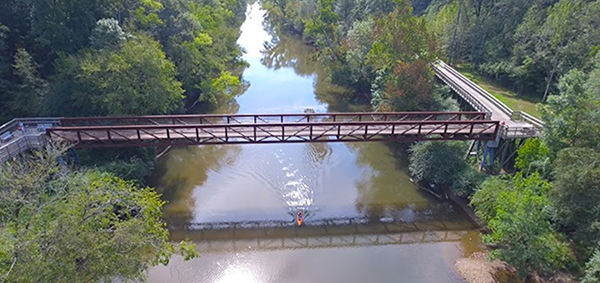
To help preserve these natural spaces and habitats for all who call them home, Johnston County organizes several stewardship efforts, including around Earth Day. On Saturday, April 26, the Friends of Johnston County Parks will host its annual Countywide Earth Day Clean-Up for volunteers to help remove litter from parks, trails and waterways. And for the first time this year, the county will host a Neuse River Clean-Up in Clayton on May 17, with volunteers removing trash by kayak, canoe or from the banks. Finally, in late May, guests can assist in maintaining and expanding local trails during a Mountains-to-Sea Trail Workday at Bentonville Battlefield State Historic Site.
Whether hiking greenways, paddling the Neuse, or volunteering for the benefit of local trails and waterways, guests of Johnston County can all play a role in preserving its landscapes for future generations to come.
|
| Tucked into the rolling hills of Person County are two lakes, Hyco and Mayo. Cast a line for bass and crappie at Mayo, or head to Hyco’s 30-acre Natural Learning Area to watch for songbirds, woodpeckers, and raptors. By leaving bird call recordings at home, we can minimize stress to these species and better observe natural behaviors. After, get your heart rate up on the mountain biking, hiking, and ADA-accessible trails at the new Roxboro Rotary Centennial Park, opening this summer, and refuel with a local brew in uptown Roxboro. |
| | Alamance County may be known for its historic main streets, but there are plenty of reasons to get outdoors here, too. One is Cane Creek Mountains Natural Area, a nature park and natural heritage area featuring the highest NC point east of Greensboro. Hike to the peak or new observation tower, opening this May, for views of rolling hills and creeks. By sticking to marked trails, we can help rare species not typically found in the Piedmont thrive, like highbush blueberries and the Southern blueberry bees that pollinate them. |
|
|
|
Explore our blog to find ways to celebrate Earth Day every day. |
|
| | Outdoor NC is part of Visit North Carolina
Visit North Carolina is part of the Economic Development Partnership of North Carolina
150 Fayetteville St., Ste. 1200, Raleigh, North Carolina, 27601, United States
Share | Manage Your Subscription | Outdoor NC |
|
|
|
|
|
| | | | |