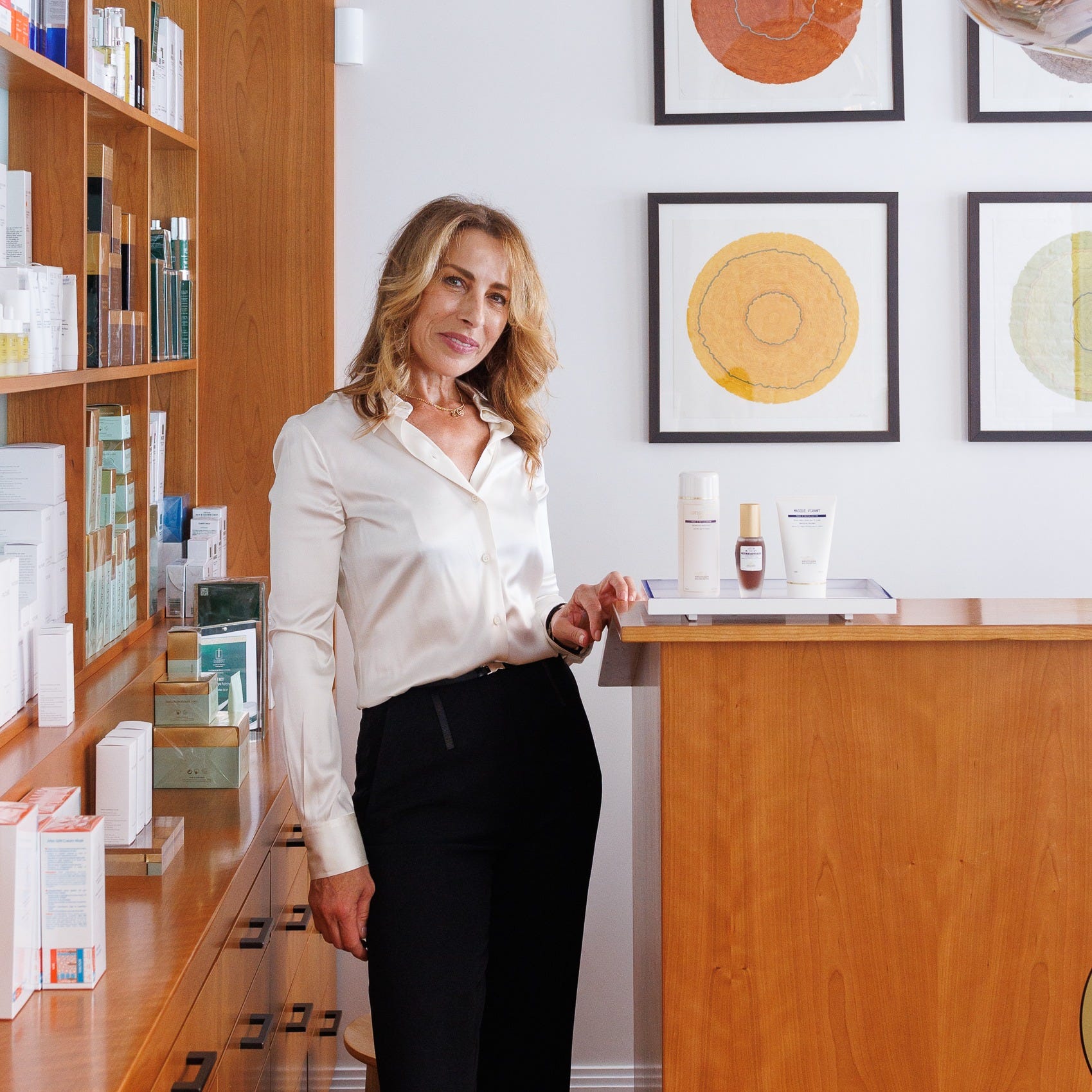
Aida Bicaj - March 30, 2026
Fast Results, Damaged Skin
What No One Tells You About Pigmentation Treatments͏ ͏ ...

There is no shortage of promises when it comes to pigmentation. Brightening serums that work overnight. Lasers that erase years of damage in a single session. Ingredients that bleach the skin into submission. And yes, they work, at least in the short term, and at least by the metrics we have been conditioned to measure: speed and visible change. But I have spent decades watching what happens next. Hydroquinone and the Cost of Fast Hydroquinone is the gold standard of conventional pigmentation treatment. It inhibits melanin production effectively and quickly, which is exactly why it became so widely used. For patients who need results on a deadline, it delivers. The problem is what it delivers over time. Prolonged use of hydroquinone has been linked to paradoxical darkening, a condition called ochronosis, where the skin develops a blue-black discoloration that is extraordinarily difficult to reverse. It thins the skin. It disrupts natural melanocyte function in ways that do not simply reset when you stop using it. You have essentially taught the skin to behave unnaturally, and at some point it no longer knows how to behave any other way. Lasers: The Illusion of Resolution This is the one that draws the most resistance when I bring it up. I understand why. Lasers are expensive, they are medical, and people want to believe that something that costs that much and requires that much recovery must be working. But I do not recommend lasers for pigmentation. I have not for a long time. And I want to explain exactly why. Lasers treat the symptom. They do not touch the source. And the skin you have after a laser session is not the same skin you had before, and not in the way you were promised. Here is what I see in my treatment room, repeatedly. A client comes in after one or two laser sessions. The pigmentation cleared initially. They felt hopeful. Then it came back, sometimes darker, sometimes in new places, sometimes more diffuse and harder to treat than what they started with. The laser created thermal injury in the skin, and injured skin is reactive skin. Melanocytes that have been disrupted by heat do not recover on a predictable schedule. They compensate. They overproduce. Melasma is so notoriously aggravated by laser that many dermatologists now caution against it for that condition specifically, and yet it is still being sold as a solution every single day. SPF does not fix this. My clients wear it without exception and so should you, but sunscreen cannot undo the internal vulnerability that thermal damage creates. You are not protected just because you applied it after a procedure that destabilized your melanocytes at the cellular level. And then comes the next treatment. And the one after that. I want to say this plainly: that cycle is not an unfortunate complication. It is the predictable result of a treatment model that was never designed to resolve the problem permanently. The dependency is built in. I have to ask myself, and I think consumers should ask too: are we here to help people achieve healthier skin, or to keep them returning indefinitely for a problem that was never truly resolved? The Biologique Recherche Approach: Slow, Cellular, Real This is why I trust the VIPO2 line and PIGM 400 in a way I trust very few pigmentation protocols. These formulas do not force the skin into compliance. They work at the cellular level, interrupting the melanogenesis pathway before excess pigment is even produced, regulating melanin transfer, and strengthening the skin’s barrier in the process. They are doing something fundamentally different from hydroquinone or laser. They are changing the behavior of the skin, not overriding it. Does it take longer? Yes. I tell every client this directly, because I will not set unrealistic expectations. You are not going to see a dramatic shift in three weeks. What you will see, over months of consistent use, is skin that is genuinely different. Not skin that has been temporarily altered and left more fragile than before. Serum PIGM400 works to brighten and even tone through a complex of active botanicals that act on multiple stages of melanin synthesis. The patented VIP O2 Complex combines melatonin with two cofactors to help support mitochondrial respiration and optimize ATP production, creating the conditions for visibly improved skin quality. Used together within a protocol built around your actual biology, it is the most intelligent approach to pigmentation I have found in my career. Patience Is Not a Flaw in the Protocol We have been trained to distrust slowness. If something does not produce visible results in four weeks, we assume it is not working. We reach for something stronger. We book the laser. We add the overnight retinol. And then we wonder why our skin is sensitized, reactive, and cycling through the same issues year after year. Skin is not a problem to be solved on a quarterly timeline. It is a living organ with memory. What you do to it accumulates, for better and for worse. My work has always been about the long game. Not because I lack access to aggressive treatments, but because I have seen what those treatments leave behind. My clients come to me because they want to understand their skin, not just manage it. They want to make choices they will not regret in ten years. The honest pigmentation conversation starts there.
Aida's Substack is free today. But if you enjoyed this post, you can tell Aida's Substack that their writing is valuable by pledging a future subscription. You won't be charged unless they enable payments.
|