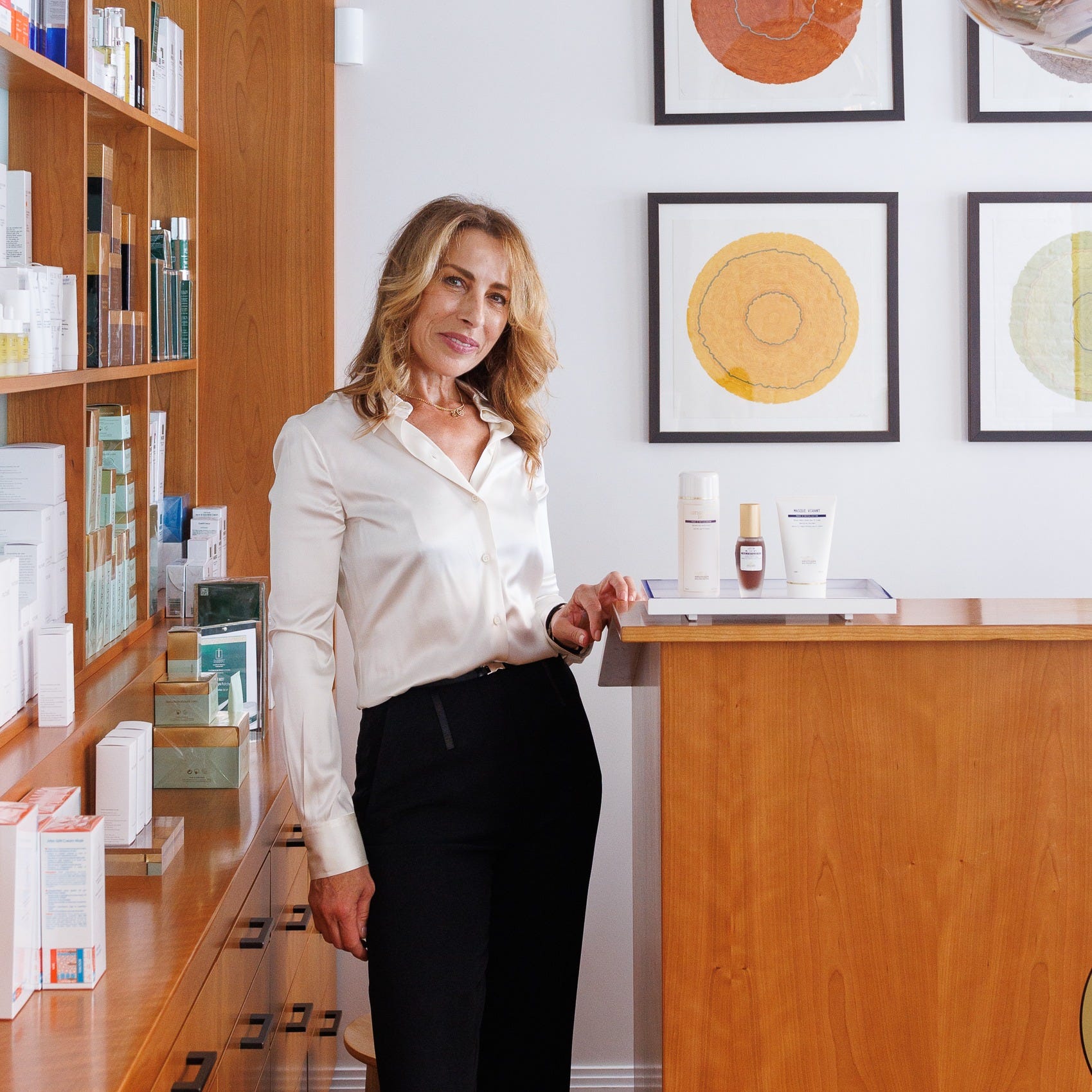
Aida Bicaj - May 18, 2026
The SPF Conversation We Should Be Having
A considered take on sunscreen, the four formulations I trust,...

The SPF Conversation We Should Be HavingA considered take on sunscreen, the four formulations I trust, and the part of sun care almost no one talks about.
I have been a master esthetician for over two decades, and no product category has been more misunderstood than sunscreen. Clients walk into my treatment rooms in Tribeca and the Upper East Side carrying tubes of SPF they were told were the best, and most of them are using products I would never recommend. I want to explain why. This is not an article arguing against sunscreen. I recommend SPF to clients every day. The question is which SPF, applied how, and at what point in the day. The answer is more considered than the American conversation has allowed it to be. The regulatory gap In Europe, sunscreens are regulated as cosmetics, which has allowed newer UV filters to be approved and brought to market over the last twenty-five years. In the United States, sunscreens are regulated as drugs, which has slowed approval to a standstill. The American framework has not been meaningfully updated since 1999. The result is that European formulators have access to a generation of UV filters, particularly those that protect against UVA radiation, that American formulators do not. UVA is the wavelength most associated with skin aging and long-term cellular damage. The gap is real, and it shows up on the skin. This is part of why I lean toward European brands for sun protection. They are working with better tools. Where I am cautious about American sunscreens The conversation around chemical sunscreens has become noisier than the science supports. There is no established evidence that sunscreen causes cancer in humans. What there is, is a growing body of research showing that certain chemical filters used in American formulations, particularly oxybenzone and octocrylene, are absorbed into the bloodstream at meaningful levels and have raised legitimate questions about hormone disruption. Octocrylene has been shown to break down into a compound classified as a probable carcinogen. None of this is settled science. It is enough, however, to make me cautious about what I recommend to clients who will apply sunscreen daily for the next forty years. When you are using a product every morning for that long, the bar for ingredient quality should be high. The skin cancer disparity The United States has higher rates of certain skin cancers than most of Europe. Squamous cell carcinoma rates here run roughly five to ten times higher than in Northern European countries like Norway and Finland. There are many reasons, including latitude, lifestyle, and tanning culture. It is not as simple as saying American sunscreens are the cause. But the disparity should at minimum prompt us to ask whether the products being sold in this country are doing the job they claim to do. I think the honest answer is that they could do better. My philosophy on daily wear I do not believe in twenty-four-seven sunscreen. This is my professional philosophy, not a clinical mandate. I believe in protective sunscreen during peak UV hours, which in New York generally means between eight in the morning and four in the afternoon. Outside those hours, I believe in brief, sensible, unprotected exposure for vitamin D synthesis. The skin is an organ that has evolved to interact with sunlight, and total avoidance is not, in my view, the same as health. Clients with a history of skin cancer or specific dermatological conditions should follow their physician’s guidance. For the average healthy adult, the conversation should be about smart exposure, not total avoidance. The sunscreens I recommend I have built our retail offerings carefully. These are the four I reach for most often. Vie de Mer Anti-Aging Sunblock. The one I recommend most for clients who want a single product that does the work of sun protection and active anti-aging at once. European formulation, sophisticated filter system, sits well under makeup with no white cast. Forlle’d UV Intense Protector SPF 50. The natural finishing step for clients on the Forlle’d hydration system. It is a lightweight, moisturizing sun-emulsion that offers broad-spectrum UVA/UVB protection and antioxidant defense—ideal for all skin types, including sensitive skin and post-procedure recovery. Colorescience Sunforgettable Total Protection. A tinted mineral formulation, which means the actives are zinc oxide and titanium dioxide rather than chemical absorbers. The one I recommend for clients who are pregnant, nursing, or prefer to avoid chemical filters entirely. The brushable version is also the most realistic reapplication tool for women who wear makeup. Valmont Daily Veil SPF. Valmont’s formulations are among the most elegant on the market, and the Daily Veil is the most refined daily SPF I have used. Worth every dollar. These are the four. When you are spending money on skincare, you should be spending it on formulations that reflect the current state of the science, not the current state of American regulation. What no one tells you about the body This is the most overlooked part of the conversation. Sunscreen, particularly the water-resistant formulations designed for body use, does not come off in the shower with soap alone. It sits in the pores, it accumulates across the season, and it is one of the leading reasons clients develop body breakouts on the chest, shoulders, and back during the summer. Body exfoliation in summer is not optional. If you are applying sunscreen daily on the body, you should be exfoliating two to three times a week. The three I recommend. MBR Cell-Power Lipo Peel. A refining body scrub, that improves the microcirculation of the skin, resulting in an accelerated cell renewal process. Resurfaces and addresses circulation at the same time. Two to three evenings a week during peak summer. OSEA Salt of the Earth Body Scrub. Mineral-rich salts from around the world buff away roughness, while shea butter and wild gigartina seaweed nourish for silky-smooth and glowing skin. Biologique Recherche Gommage P50 Corps is a multi-action exfoliating treatment that combines the power of chemical and mechanical exfoliation to refine skin texture, boost radiance, and stimulate renewal. Sun care beyond sunscreen Protection does not end with the SPF step. L’Huile de Leonor Greyl. A hair oil that provides genuine UV protection for the hair and scalp. The scalp is one of the most under-protected parts of the body, and hair color, scalp health, and density all suffer from sun exposure that no one thinks to address. Nescens Total Anti-Aging Body Oil. What I send clients home with to replenish the skin after a day in the sun. The lipids the skin needs to recover are best delivered through a high-quality oil rather than a thin lotion. MBR After Sun Cream. For evenings after meaningful sun exposure. Calms, rehydrates, and supports the skin’s overnight repair. The summary The American sunscreen conversation has been flattened into a single instruction. Wear it every day. I would offer a more considered version. Wear good sunscreen during the hours that matter, from formulations that reflect the current science. Allow your skin brief, sensible exposure outside those hours. Exfoliate the body to remove what protected it. Replenish what the day took out of it. This is the protocol I follow myself. It is the protocol I recommend to my clients. And it is the protocol I would offer to anyone who has been wondering, quietly, whether the answer is really as simple as the bottle on the drugstore shelf suggests. — Aida
Aida's Substack is free today. But if you enjoyed this post, you can tell Aida's Substack that their writing is valuable by pledging a future subscription. You won't be charged unless they enable payments.
|