About the Book
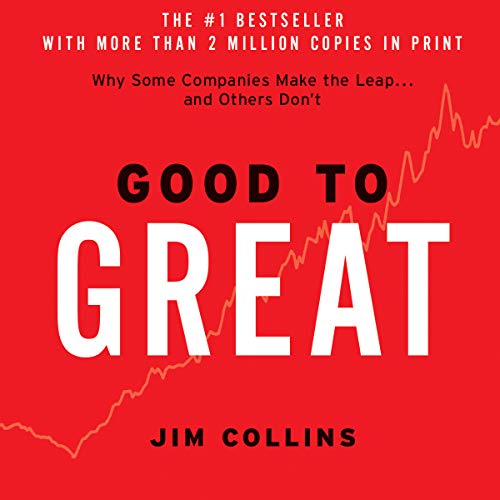
Good to Great is Jim Collins's 2001 research-based business book examining how certain companies managed to transition from average performance to sustained excellence. Collins and his research team identified a group of companies that made a dramatic and lasting leap in their financial results, then worked backward to find the common factors behind those transformations.
The book is built around a multi-year research project, not anecdote or opinion. Collins and his team screened hundreds of companies, selected a small group that met strict performance criteria, and compared them against similar companies that didn't make the same leap. The conclusions are organized into frameworks, including the now widely-referenced concepts of Level 5 Leadership, the Hedgehog Concept, and the Flywheel, which Collins presents as patterns observed across the data rather than prescriptive rules.
This is a business book that had significant staying power in management circles. Whether you're encountering it for the first time or returning to it, the structure is systematic and methodical, Collins walks through each concept with company case studies, which makes the material concrete even if some of the examples have dated since the book's original publication.
Narration & Audio Performance
Jim Collins narrates this himself, and it works reasonably well. His delivery is measured and conversational, he sounds like someone who has given a lot of lectures and knows how to pace a long explanation. He doesn't rush, which suits the book's research-heavy approach. Listeners who prefer high-energy narration may find his tone a little flat, but for a business book built around frameworks and data, the calm register is appropriate.
Character voice differentiation isn't relevant here, there are no characters, just case studies and arguments. Collins reads clearly, and the structure of the book means each chapter has a distinct focus, which helps with comprehension during audio listening. The main risk with author-narrated business nonfiction is that some authors drift into lecture mode, losing the natural rhythm of a professional narrator. Collins stays on the right side of that line, though he's not a notably charismatic reader.
If you're unsure about his narration style, the Audible sample will give you a clear sense quickly. There's no music or sound design, it's a straight reading.
The Audible Verdict
Good to Great is a legitimate business book with real research behind it, and Collins's narration is serviceable. The audio format works fine for the material, linear, framework-driven, no charts you need to see. That said, many readers find the print version easier to revisit and reference, since the frameworks and models benefit from being skimmable. This is a solid free trial use rather than a paid credit spend, unless you specifically prefer audio for business reading.
Listen on AudibleIs This Book a Good Fit for Audio?
Good to Great translates reasonably well to audio. The book is structured linearly, each chapter introduces a concept, supports it with case studies, and builds toward the next idea. There are no complex diagrams or visual elements that are essential to understanding the argument. Collins explains his frameworks in plain language that holds up when heard rather than read.
The main limitation is that this is the kind of book people highlight and return to. The Hedgehog Concept, the Flywheel, the Level 5 Leadership model, these are reference points that business readers tend to revisit. In audio, that kind of active engagement is harder. If you're planning to apply the ideas to your own work, a print or ebook copy may serve you better for long-term use. If you want a single pass through the material, commuting, exercising, traveling, the audiobook does the job.
Popular Listener Questions
Is this audiobook narrated by the author?
Yes. Jim Collins narrates the audiobook himself. His delivery is calm and academic in tone, clear and easy to follow, though not especially dynamic.
Is Good to Great part of a series?
It is a standalone book, though it shares thematic territory with Collins's earlier work Built to Last, which examined great companies from their founding. Good to Great focuses specifically on the transition from mediocrity to excellence and can be read independently.
What kind of listener is this book best suited for?
Primarily people in business, management, or leadership roles, or those studying those fields. It's also frequently assigned in MBA programs and executive education contexts. General nonfiction listeners curious about organizational research will find it accessible, though the subject matter is squarely business-focused.
Is the content still relevant given that some of the case study companies have since struggled or failed?
This is a fair concern. Several companies Collins held up as examples, including Circuit City and Fannie Mae, later ran into serious trouble. Collins has addressed this criticism publicly. Most business readers treat the frameworks as the durable content and the case studies as illustrative rather than definitive.
Similar Audiobooks
Built to Last
Collins's earlier research project, examining companies that sustained greatness from their founding, the natural companion to Good to Great.
The Effective Executive
Peter Drucker's classic on executive performance covers similar territory in management thinking and is frequently paired with Collins's work in business curricula.
John Doerr's book on OKRs is research-grounded business nonfiction aimed at leaders and managers, with a similar practical-framework approach.
Malcolm Gladwell uses a comparable structure of data-backed arguments supported by specific examples, making for a similar listening experience.
How the Mighty Fall
Collins's follow-up study examines why great companies decline, directly complements Good to Great and is available on Audible.
Audiobook Details
| Title | Good to Great |
|---|---|
| Author | Jim Collins |
| Narrator | Jim Collins |
| Genre | Business Management |
| Year | 2011 |
| Publisher | Harper Collins |
| Abridged | Unabridged |
| Cast | Single narrator |
| Author-narrated | Yes |
Ready to listen?
Good to Great is available on Audible and is a reasonable choice for a free trial credit, particularly if you do most of your business reading on audio.
Open on Audible