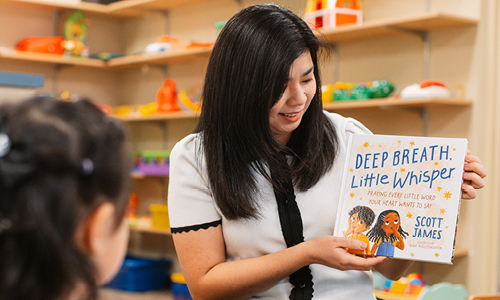
When talking with parents in his church, author and pediatrician Scott James often hears about a common struggle: prayer. If the parents in your church struggle with this, too, read on!
Most often, the moms and dads I’m speaking with have good intentions and a strong desire to model a rich prayer life in their homes. So what's the problem?
One of the issues is that, when faced with busy schedules, we tend to standardize and compartmentalize prayer into predefined, expected moments. You know the routine—grace before meals, a prayer at bedtime, and Sunday morning prayers gathered with the church. Before you object, let me be crystal clear: routines like this are a very good thing. Especially when our children are young, intentionally setting aside time to model prayer like this is an excellent habit to form. Why then does it sometimes begin to feel rote? Why do our preset prayer times begin to sound like a broken record? To feel like a box waiting to be checked?
To help parents develop sustainable, well-rounded rhythms of daily prayer, I offer four brief suggestions: two truths to remember and two practices to lean into.
Truths to remember:
1. Remember that Prayer Is a Privilege
At the heart of it, prayer is talking to God. Which, if you stop to think about it, is pretty mind-blowing. We get to talk to the Creator and King of the universe. What a privilege! When it feels dry, it’s good to remind ourselves that prayer is a royal invitation. Through faith in Jesus, we have access to the throne room of God (Hebrews 4:16).
Encourage parents to revel in the wonder of this astonishing truth with their children as we confidently approach our Lord, knowing full well he will hear us.
Even better, he wants to hear us. Because we are not just his subjects; we are his children. And that brings us to the second truth to remember.
2. Remember that Prayer Is Personal
When we are saved through faith in Jesus, we are brought into the kingdom of God, which the Bible describes in incredibly personal terms. We are brought in as members of the household of God (Ephesians 2:19), and, as adopted sons and heirs, God’s Spirit lets us cry out, “Abba, Father!” (Romans 8:15). Based on these descriptions, parents can help children see that prayer is first and foremost a relationship. That's why the Bible calls us to “pray without ceasing” (1 Thessalonians 5:17), and to pray “at all times in the Spirit”
(Ephesians 6:18). These calls to prayer are reflections of an intimate relationship with God, not a task to be accomplished.
If prayer is personal privilege we have at the invitation of God himself, then it stands to reason that prayer would find varied expression in our lives—just like our communication patterns in any healthy relationship.
To help us grow in this, here are two basic practices we can encourage families to lean into.