Warsh warning: Global selloff underway as Fed resets expectations - S&P 500 futures were down 1.37% this morning. The index slipped 0.37% yesterday.
- In Europe, the Stoxx 600 was down 1.09% in early trading and the U.K.’s FTSE 100 was down 0.76% before lunch.
- Asia: South Korea’s KOSPI was down 9.99%. Japan’s Nikkei 225 was down 3.55%. India’s Nifty 50 was down 0.82%. China’s CSI 300 was down 2.77%.
- Brent crude was $77 per barrel this morning, down from $79 the day before.
- Bitcoin was $62K.
U.S. futures were sharply down this morning, before the opening in New York, after markets in Asia and Europe all lost ground today. The declines followed a down day in the U.S., in which the S&P 500 lost 0.37%.
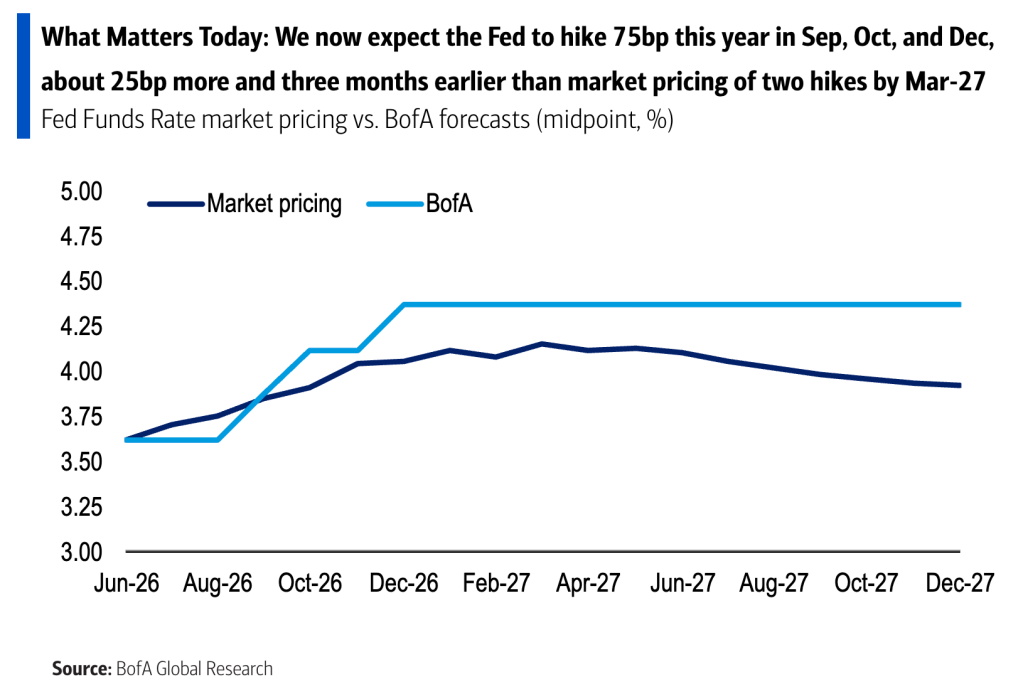
Tech stocks led the losses as investors reset their expectations around how the U.S. Federal Reserve might increase the future cost of money. Until recently, most analysts expected the Fed to hold interest rates where they are at the 3.5% level. However, new Fed chairman Kevin Warsh struck a surprisingly hawkish tone in his first rate-setting statement—and
traders now suspect rates will rise later this year, making money more expensive to obtain in the future.
Higher interest rates are bad for tech stocks because AI hyperscalers have increasingly been using debt to fund their AI capex.
Barclays estimates that $200 billion in new debt will be issued this year by hyperscalers.
SpaceX lost 16.43% yesterday, wiping $400 billion from its market cap,
the FT noted. The stock fell to $154.60, still above its $135 initial offering price.
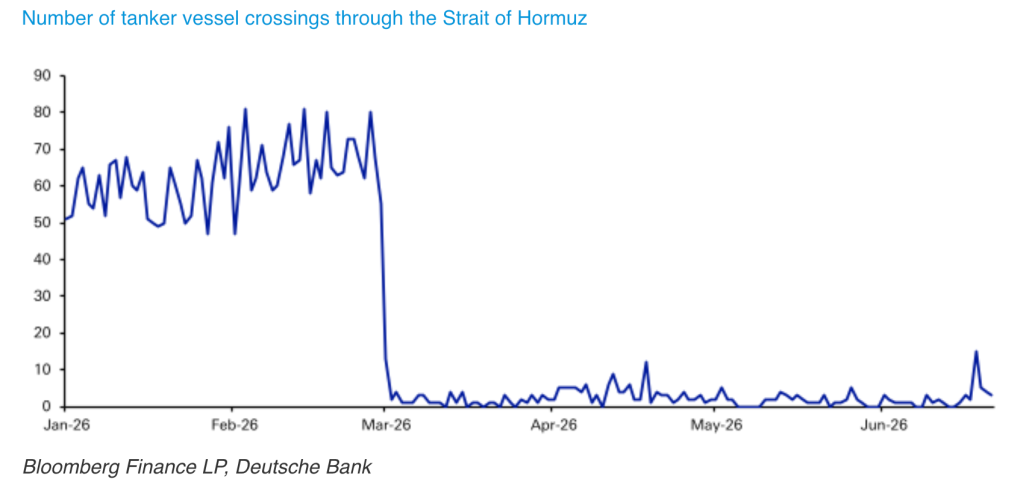
- The only good news for stocks came from the oil market, where prices continued to decline on expectations that Iran and the U.S. will be able to agree on a way to keep the Strait of Hormuz open. Brent crude was $77 per barrel this morning. "We suspect that crude prices could tumble further into the $50 to $60 per barrel range,” Alpine Macro’s Chen Zhao said in an email. "Crucially, declining crude prices may alter the Federal Reserve's ongoing calculus on structural inflation and, consequently, shift the trajectory of domestic monetary policy in due course."
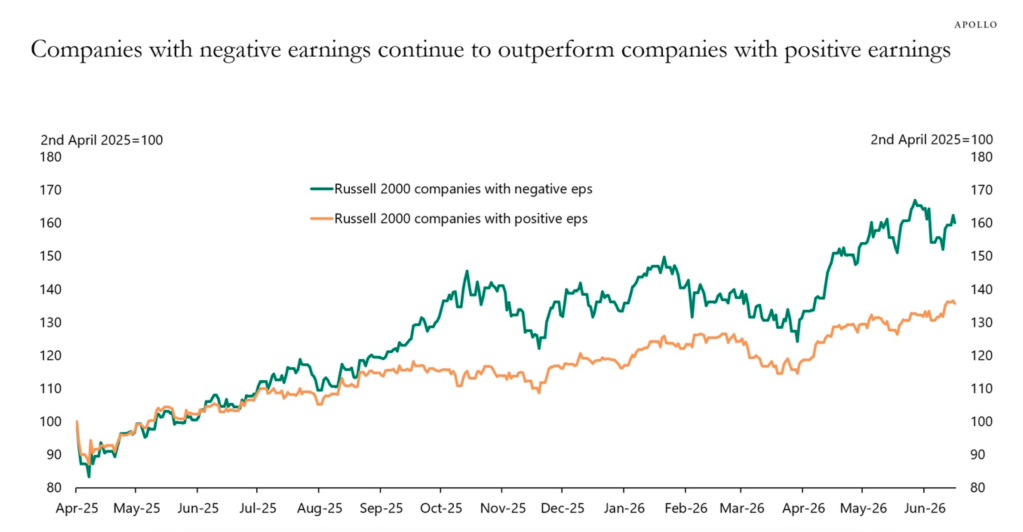
Heads up: There’s a questionable boom in stocks of companies that don’t make any moneyThis chart from Apollo Global Management’s Torsten Sløk shows a mystifying phenomenon that will surely unwind if the market goes into a correction: Shares in companies that lose money have done better over the last year than those of companies that have actually functioning businesses. “Something is broken in price discovery when companies with negative earnings keep outperforming companies with positive earnings,”
he said on his blog.