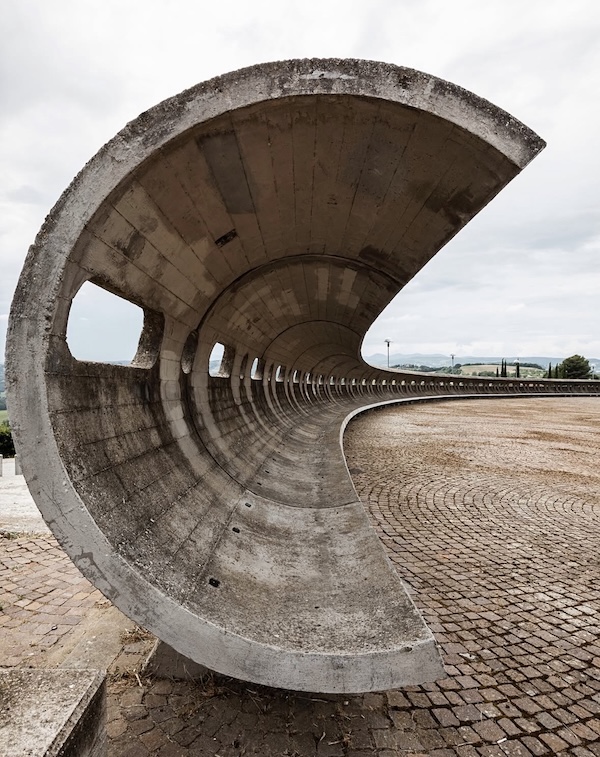
“This strategy worked because we don’t see the world objectively. We see it through categories — through what we expect to see. The thieves understood the social categories that we perceive as ‘normal’ and exploited them to avoid suspicion. Many artificial intelligence (AI) systems work in the same way and are vulnerable to the same kinds of mistakes as a result. The sociologist Erving Goffman would describe what happened at the Louvre using his concept of the presentation of self: people ‘perform’ social roles by adopting the cues others expect. Here, the performance of normality became the perfect camouflage.” |
|
|
The M1 handles the whole operation — filtering, heating, safety, and all the daily chaos control — so you never have to think about kettles, pitchers, or whatever mystery your tap is serving again. It clears out PFAS, TDS, chlorine, all the usual troublemakers, then hits your perfect temp for tea, formula, ramen, or your 11 p.m. life choices. No plumbing or guesswork or sad plastic pitchers. Just a countertop upgrade that’s well worth the cost for never having to think about water again. Black Friday savings are already live, now $265 (over $100 off). [Ad] |
|
|
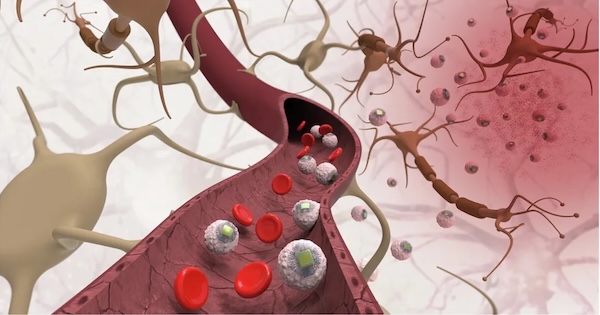
“While companies like Elon Musk’s Neuralink are hard at work on brain-computer interfaces that require surgery to cut open the skull and insert a complex array of wires into a person’s head, a team of researchers at MIT have been researching a wireless electronic brain implant that they say could provide a non-invasive alternative that makes the technology far easier to access. They describe the system, called Circulatronics, as more of a treatment platform than a one-off brain chip. Working with researchers from Wellesley College and Harvard University, the MIT team recently released a paper on the new technology, which they describe as an autonomous bioelectronic implant.” |
|
|
“A team of scientists from Shenzhen University in China has discovered the first evidence of a new type of cave on the Red Planet. The researchers claim these may have once provided the conditions required for harboring alien life. These underground caverns were likely formed by water dissolving rock — a type of rock formation known as a karstic cave on Earth. The team behind the discovery claims that future missions to the Red Planet should target these underground caverns. They could find traces of ancient life that once resided in the watery caves, whilst using them as a shelter and exploration base.” |
|
|
You bought “Atomic Habits” in 2019, and it’s still sitting on your nightstand? Same. 12min turns full-length books into bite-sized brilliance — smart, punchy summaries you can read or listen to in just 12 minutes. With 1,800+ titles across 24 categories, it’s like having a personal librarian who respects your short attention span. Lifetime access for $40? That’s basically the cost of 2-3 books. All the knowledge, none of the page guilt. That’s ROI, baby. [Ad] |
|
|
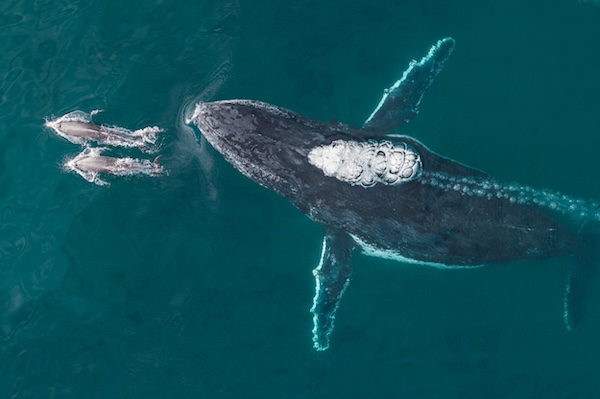
“Humpback whales can travel up to 5,000 miles on migrations. During these long-distance journeys, the majestic sea creatures can even give birth. Sometimes, they just make a new friend or two. Photographer Craig Parry captured an interspecies swim with his camera, documenting a truly awe-inspiring moment from above. The image (seen above) shows a humpback whale swimming behind two bottlenose dolphins off the coast of Australia during the whale’s northern migration. The photo earned commended honors in the Wildlife category of the 2025 Drone Photo Awards.” |
|
|
Interested in having one of your social posts featured in The Futurist? |
|
|
Powered by StackCommerce
17383 Sunset Blvd. Suite A345
Pacific Palisades, CA 90272
Copyright © 2025 StackCommerce
All rights reserved | |
|
|








![Waterdrop - This could be the last time you have to think about water | [Partner]](https://outgoing-img-cdn.s3.amazonaws.com/stacksocial/694321brl.jpg "Waterdrop - This could be the last time you have to think about water | [Partner]")




![StackSocial - For people who own books but never finish them | [Partner]](https://outgoing-img-cdn.s3.amazonaws.com/stacksocial/694321brr.jpg "StackSocial - For people who own books but never finish them | [Partner]")